Many people assume that air humidifiers and diffusers perform the same function because both release a fine mist into the air. However, they are designed for different purposes. Understanding the differences between air humidifier and diffuserwill help you choose the right appliance for your home, office, nursery, or relaxation space. While an air humidifier focuses on increasing indoor humidity, a diffuser is mainly designed to disperse essential oils and pleasant aromas. Knowing how each appliance works ensures you invest in the product that best suits your lifestyle and indoor environment.
What Is an Air Humidifier?
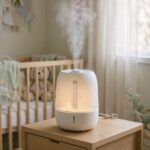
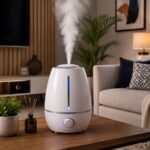
An air humidifier is an appliance that adds moisture to the air to maintain comfortable humidity levels.
It works by releasing water vapour or a fine mist into the room.
Air humidifiers are commonly used in:
Bedrooms
Living rooms
Offices
Nurseries
Hotels
Healthcare facilities
Their primary purpose is to reduce the discomfort associated with dry indoor air.
What Is a Diffuser?
A diffuser is a small appliance designed to disperse essential oils into the air.
Most diffusers combine water with a few drops of essential oil to produce a light aromatic mist.
Diffusers are commonly used in:
Bedrooms
Yoga studios
Home offices
Living rooms
Spas
Wellness centres
Unlike humidifiers, diffusers are primarily intended to spread fragrance rather than significantly increase indoor humidity.
Differences Between Air Humidifier and Diffuser
Understanding the differences between air humidifier and diffuser becomes easier when comparing their features side by side.
Primary Purpose
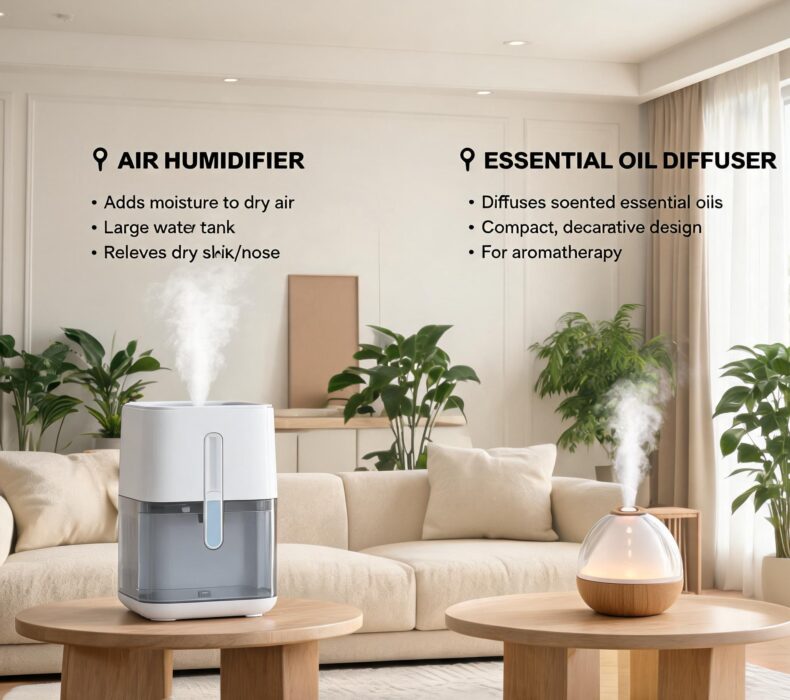
The main purpose of an air humidifier is to increase indoor humidity.
In contrast, a diffuser is designed to spread pleasant aromas from essential oils throughout a room.
Therefore, each appliance serves a different need.
Water Tank Capacity
One major difference is the size of the water tank.
Air humidifiers usually have:
Larger water tanks
Longer operating times
Greater moisture output
Diffusers generally have:
Smaller water tanks
Shorter operating times
Lower mist production
As a result, humidifiers are more suitable for maintaining humidity over extended periods.
Moisture Output
Humidifiers release enough moisture to noticeably increase humidity in a room.
Diffusers release only a small amount of mist because their primary goal is fragrance distribution.
Consequently, a diffuser should not be used as a replacement for a humidifier when humidity control is required.
Essential Oil Compatibility
Most diffusers are specifically designed for essential oils.
Many air humidifiers, however, are not intended for essential oils unless the manufacturer clearly states they are compatible.
Using essential oils in a humidifier that is not designed for them may damage the appliance or reduce its performance.
Always follow the manufacturer’s instructions before adding anything other than water.
Room Coverage
Air humidifiers are generally designed to cover larger spaces.
Depending on the model, they can effectively humidify:
Bedrooms
Living rooms
Offices
Large family rooms
Diffusers are usually intended for:
Small bedrooms
Personal workspaces
Meditation rooms
Bathrooms
Therefore, room size is an important consideration before buying either appliance.
Operating Time
Because humidifiers have larger water tanks, they often operate for several hours before needing a refill.
Diffusers typically require more frequent refilling because of their compact design.
If you need overnight operation, many humidifiers provide longer continuous use.
Maintenance Requirements
Both appliances require regular cleaning.
For humidifiers:
Empty remaining water daily.
Clean the tank regularly.
Follow the manufacturer’s maintenance recommendations.
For diffusers:
Clean the oil reservoir after use.
Remove any oil residue.
Prevent buildup that could affect performance.
Proper maintenance extends the lifespan of both appliances.
Benefits of an Air Humidifier
Air humidifiers provide several practical advantages.
These include:
Helps maintain comfortable humidity levels
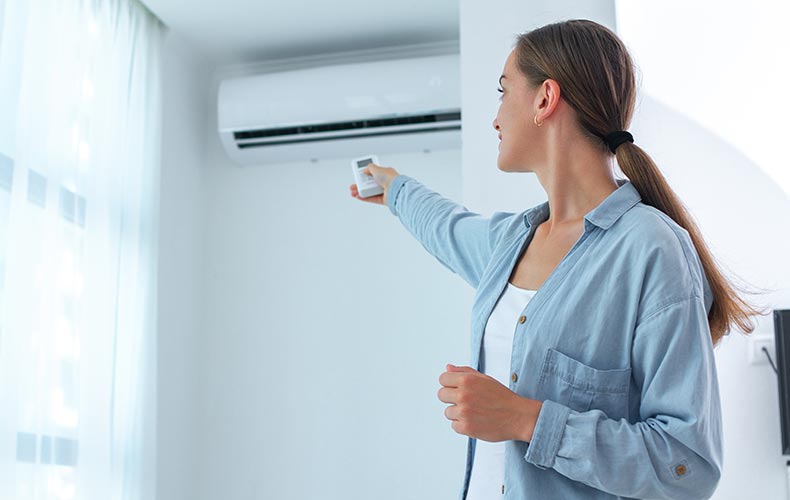
Complements air conditioner use
Creates a more comfortable indoor environment
Supports indoor plant care
Helps protect certain wooden furniture from excessive dryness
Suitable for larger rooms
Additionally, humidifiers can operate for long periods without frequent refilling.
Benefits of a Diffuser
Diffusers offer different advantages.
Some of their benefits include:
Disperses pleasant aromas
Creates a relaxing atmosphere
Compact and portable
Stylish decorative designs
Easy to operate
Suitable for personal spaces
Many people also appreciate diffusers for enhancing the ambiance of a room.
Which Appliance Is Better?
The answer depends entirely on your needs.
Choose an air humidifier if you want to:
Increase indoor humidity
Improve comfort in dry indoor environments
Use it for larger rooms
Run it for longer periods
Choose a diffuser if you want to:
Enjoy essential oil fragrances
Create a relaxing atmosphere
Freshen small rooms
Add a decorative touch to your space
Neither appliance is universally better—they simply serve different purposes.
Can You Use Both Together?
Yes, many homeowners use both an air humidifier and a diffuser.
For example:
The humidifier helps maintain comfortable humidity.
The diffuser spreads your preferred essential oil fragrance.
When used correctly, they complement each other and contribute to a more pleasant indoor environment.
Tips for Choosing the Right Appliance
Before making your purchase, consider these factors.
Room Size
Select a model that matches the size of the room where it will be used.
Ease of Cleaning
Choose appliances with removable parts that are simple to clean and maintain.
Noise Level
Quiet models are ideal for bedrooms, nurseries, and offices.
Operating Time
If you prefer longer operation without frequent refilling, consider a humidifier with a larger water tank.
Intended Use
Decide whether your main goal is increasing humidity or enjoying aromatic scents.
Knowing your priority makes choosing much easier.
Common Mistakes to Avoid
Many buyers purchase the wrong appliance because they misunderstand its purpose.
Avoid these common mistakes:
Expecting a diffuser to significantly increase humidity
Adding essential oils to a humidifier that is not oil-compatible
Ignoring cleaning schedules
Choosing the wrong size for the room
Failing to follow the manufacturer’s instructions
These simple precautions help improve performance and extend the lifespan of your appliance.
Conclusion
Understanding the differences between air humidifier and diffuser helps you make a smarter buying decision based on your specific needs. Although both appliances release a fine mist, they are designed for completely different purposes. An air humidifier adds moisture to improve indoor comfort, while a diffuser disperses essential oils to create a pleasant fragrance and relaxing atmosphere.









 Get it on
  Download on the