Blackheads are one of the most common skincare concerns, especially for people with oily or combination skin. Those tiny dark spots commonly appear around the nose, forehead, chin and other areas where oil and dead skin cells can build up inside pores.
While exfoliation can help improve the appearance of clogged pores, using a face scrub for blackheads incorrectly can leave your skin irritated, dry, red or uncomfortable. Scrubbing harder does not necessarily mean cleaner skin. In fact, aggressive exfoliation can damage your skin barrier and potentially make some skin concerns worse.
The good news is that you can incorporate exfoliation into your skincare routine without being harsh on your skin. The key is choosing an appropriate exfoliating product, using it correctly and avoiding excessive scrubbing.
In this guide, you’ll learn what causes blackheads, how face scrubs work, how to exfoliate safely and what mistakes to avoid.
What Are Blackheads?
Blackheads are a type of clogged pore that develops when oil, dead skin cells and other debris accumulate inside a hair follicle.
When the material inside the pore is exposed to air, it undergoes oxidation, giving the plug its characteristic dark appearance. This is why blackheads are usually black or dark brown.
Importantly, the dark color does not mean that the pore is filled with dirt. This is a common misconception.
Blackheads are particularly common in areas with many oil-producing glands, including:
Nose
Forehead
Chin
Cheeks
Around the mouth
People with oily skin may be more prone to blackheads because excess sebum can contribute to clogged pores.
Can a Face Scrub Help Remove Blackheads?
A face scrub for blackheads can help exfoliate the surface of the skin by loosening and removing dead skin cells.
However, physical scrubs primarily work on the skin’s surface. They may make clogged pores look cleaner and improve skin texture, but they don’t necessarily remove every blackhead.
Some exfoliating ingredients can work deeper inside pores. For example, salicylic acid is a beta hydroxy acid (BHA) that can help exfoliate inside pores and is commonly used in products designed for oily or blemish-prone skin.
For this reason, your skincare routine may benefit from either a gentle physical exfoliant, a chemical exfoliant or, depending on your skin type and tolerance, carefully selected products that combine approaches.
How to Choose the Best Face Scrub for Blackheads
Not every face scrub is suitable for blackhead-prone skin.
Some scrubs contain large or rough particles that can feel abrasive. Using these products aggressively may cause irritation rather than improving your complexion.
When choosing a face scrub for blackheads, consider the following:
1. Look for Gentle Exfoliating Particles
A facial scrub should feel relatively gentle rather than painfully rough.
Avoid products that feel like they are scratching your skin when massaged.
The goal is to remove surface buildup—not physically scrape the skin.
2. Consider Your Skin Type
Your skin type should influence your choice.
Oily skin: Look for lightweight, non-heavy formulations designed for excess oil and clogged pores.
Dry skin: Choose a gentle exfoliant and avoid frequent scrubbing.
Sensitive skin: Look for mild formulations and use them less frequently.
Combination skin: You may need to pay particular attention to oily areas such as the nose and forehead while keeping exfoliation gentle elsewhere.
Acne-prone skin: Avoid aggressive scrubbing, particularly if you have inflamed pimples.
3. Look for Helpful Ingredients
Depending on your skincare needs, ingredients such as salicylic acid, glycolic acid or gentle exfoliating agents may be useful.
Salicylic acid is particularly popular for oily and blackhead-prone skin because it can penetrate into pores and help loosen oil and dead skin-cell buildup.
However, stronger does not always mean better. Your skin’s tolerance matters.
How to Use a Face Scrub for Blackheads Correctly
Using your scrub properly is just as important as choosing the right product.
Step 1: Cleanse Your Face
Start with a gentle facial cleanser to remove sweat, excess oil, sunscreen and surface impurities.
Use lukewarm water rather than very hot water, which can leave some skin feeling dry or irritated.
Pat your face gently with a clean towel.
Step 2: Apply a Small Amount of Scrub
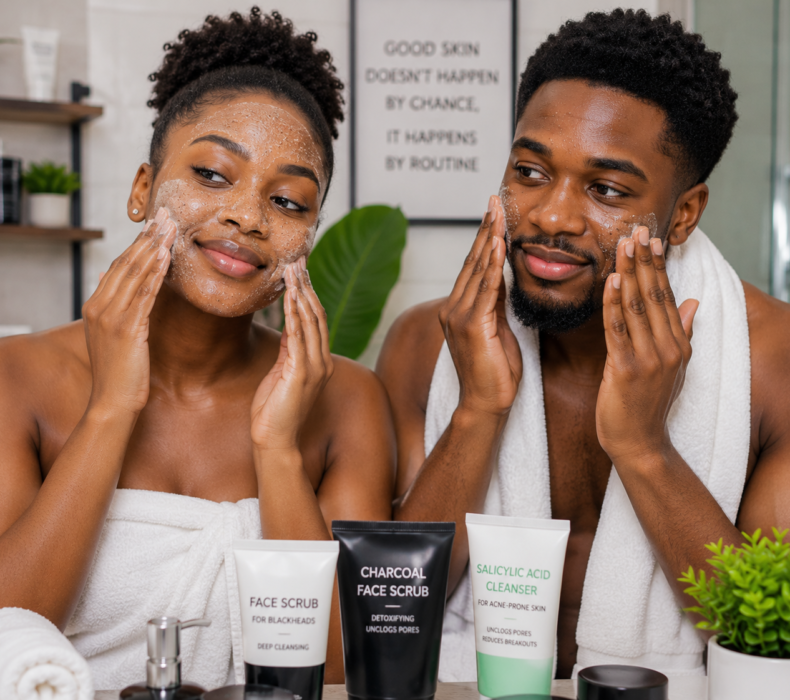
Take a small amount of your face scrub for blackheads and gently apply it to your skin.
You don’t need a large quantity.
Concentrate on areas where you commonly experience clogged pores, such as the nose, forehead and chin.
Step 3: Massage Gently
This is one of the most important steps.
Use your fingertips to massage the product gently using small circular movements.
Do not press hard.
You also don’t need to scrub for several minutes. Excessive friction can irritate the skin.
A short, gentle massage is usually sufficient when using a physical scrub.
Step 4: Rinse Thoroughly
Rinse your face with lukewarm water until the product is completely removed.
Avoid using extremely hot water.
Step 5: Moisturize
After exfoliating, apply a suitable facial moisturizer.
Moisturizing helps support the skin barrier and can reduce the uncomfortable tight feeling that some people experience after exfoliation.
If you’re exfoliating during the day, finish your routine with sunscreen.
How Often Should You Use a Face Scrub for Blackheads?
One of the biggest mistakes people make is exfoliating too frequently.
Using a face scrub every day is generally unnecessary and can increase the risk of irritation, especially if you have sensitive or dry skin.
Depending on the product and your skin’s tolerance, starting with once a week can be a reasonable approach. If your skin handles it well, you may adjust your routine according to the product’s directions.
Pay attention to how your skin responds.
If you experience persistent redness, burning, excessive dryness, peeling or discomfort, reduce the frequency or stop using the product.
Physical Scrub vs Chemical Exfoliation for Blackheads
There are two broad approaches to exfoliation: physical and chemical.
Physical Exfoliation
Physical exfoliation uses particles or tools to manually remove dead skin cells.
Examples include:
Facial scrubs
Exfoliating brushes
Cleansing tools
The advantage is that you can immediately feel the exfoliating action.
The disadvantage is that excessive pressure or frequent use can cause irritation.
Chemical Exfoliation
Chemical exfoliants use ingredients that help loosen dead skin cells.
Common examples include:
Salicylic acid
Glycolic acid
Lactic acid
Salicylic acid is particularly relevant for blackheads because it is oil-soluble and can work within pores.
However, chemical exfoliants can also cause irritation if overused, especially when combined with other strong skincare products.
Can You Scrub Blackheads Out of Your Skin?
Not exactly.
A scrub can help remove dead skin cells from the surface and improve the appearance and feel of your skin. However, blackheads are formed inside pores, so aggressively scrubbing the surface isn’t an effective way to force them out.
Trying to physically remove blackheads by squeezing, scratching or repeatedly scrubbing the area can cause:
Redness
Irritation
Skin damage
Dark marks
Inflammation
Possible scarring
A consistent skincare routine is generally a better approach than aggressive removal.
Common Face Scrub Mistakes to Avoid
Scrubbing Too Hard
More pressure doesn’t mean better exfoliation.
Use gentle movements and allow the product to do the work.
Exfoliating Every Day
Daily physical exfoliation may be too much for many people.
Give your skin time to recover between exfoliation sessions.
Using a Body Scrub on Your Face
Body scrubs can be formulated differently from facial products and may be too abrasive for delicate facial skin.
Use products specifically designed for facial use.
Combining Too Many Exfoliating Products
Using a face scrub together with several strong acids, retinoids or other active ingredients can increase irritation.
Introduce products gradually.
Ignoring Moisturizer
Some people avoid moisturizer because they believe it will make blackheads worse.
However, maintaining a healthy skin barrier is important. Choose a moisturizer appropriate for your skin type rather than skipping it completely.
Picking or Squeezing Blackheads
It can be tempting to squeeze visible blackheads, but repeatedly picking at your skin can cause inflammation and leave marks.
A Simple Skincare Routine for Blackheads
You don’t need a complicated routine to care for blackhead-prone skin.
Morning
1. Gentle cleanser
Remove excess oil and overnight buildup.
2. Lightweight moisturizer
Choose a product suitable for your skin type.
3. Sunscreen
Use broad-spectrum sunscreen during the day.
Evening
1. Cleanser
Remove sunscreen, makeup, oil and daily buildup.
2. Blackhead-focused treatment
Depending on your skin’s tolerance, this could include a suitable exfoliating product.
3. Moisturizer
Finish with a moisturizer to support the skin barrier.
Weekly
If your skin tolerates physical exfoliation, use your face scrub for blackheads according to the product’s directions rather than automatically using it every day.
What About Blackheads on the Nose?
The nose is one of the most common places for blackheads because it contains many sebaceous glands.
However, not every dark spot on the nose is necessarily a blackhead.
Some people have sebaceous filaments, which are normal structures within pores that help move sebum toward the skin’s surface. They can look like tiny gray, yellowish or dark dots.
Unlike blackheads, sebaceous filaments are a normal part of skin and will naturally refill after being removed.
A gentle skincare routine can make them less noticeable, but trying to permanently squeeze them out is unlikely to work.
How to Prevent Blackheads From Coming Back
While you may not be able to prevent every blackhead, several habits can help reduce clogged pores.
Cleanse Consistently
Wash your face regularly with a gentle cleanser appropriate for your skin type.
Avoid Overwashing
Washing aggressively or repeatedly throughout the day can irritate your skin.
Choose Suitable Skincare Products
If you’re prone to clogged pores, consider lightweight skincare products that are appropriate for oily or combination skin.
Don’t Pick Your Skin
Avoid squeezing blackheads with your fingers or using unclean extraction tools.
Keep Your Routine Consistent
Skincare results rarely happen overnight. Consistency is more useful than repeatedly changing products.
When Should You See a Dermatologist?
If blackheads are persistent, widespread or accompanied by painful acne, inflammation or scarring, consider consulting a dermatologist.
A professional can help determine whether you’re dealing with blackheads, sebaceous filaments, acne or another skin concern and recommend appropriate treatment.
Professional extraction may also be considered when necessary, particularly if you have stubborn clogged pores that aren’t responding to your normal skincare routine.
Final Thoughts
Using a face scrub for blackheads can be a useful part of a skincare routine when done gently and appropriately. The goal isn’t to scrub your skin until every pore looks completely clear. Instead, focus on maintaining clean, balanced and healthy-looking skin.
Choose a gentle product, avoid excessive pressure, exfoliate according to your skin’s tolerance and always follow up with moisturizer. If blackheads remain stubborn, consider other evidence-based ingredients such as salicylic acid rather than increasing the intensity of physical scrubbing.
Most importantly, remember that healthy skincare is about consistency. A simple routine that you can maintain is often more beneficial than an aggressive routine that leaves your skin irritated.














 Get it on
  Download on the