Skincare has become increasingly popular among teenagers, with social media introducing young people to products designed for hydration, acne, brightening, anti-aging, and skin repair. Among the many trending skincare ingredients available today,peptide serum has gained attention for its potential benefits for maintaining healthy-looking skin.
But this raises an important question: Can teenagers use peptide serum?
The short answer is yes, some teenagers can use peptide serum, but it is not necessarily an essential part of every teenager’s skincare routine. Peptides are generally considered gentler than many strong active ingredients, but the overall formulation of the product matters. Teenagers should prioritize a simple skincare routine designed around their actual skin needs rather than using products simply because they are popular online.
According to the American Academy of Dermatology (AAD), teenagers generally benefit from keeping their skincare routine simple, focusing on gentle cleansing, moisturizing and daily sun protection.
Let’s explore whether peptide serum is appropriate for teenagers, its potential benefits, possible concerns, and how young people can use it safely.
What Is Peptide Serum?
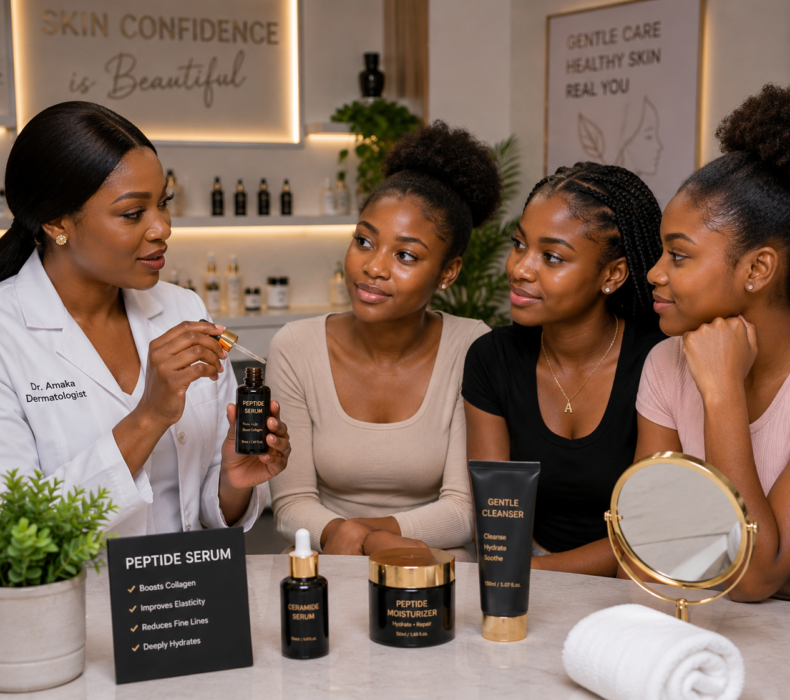
A peptide serum is a skincare product containing peptides, which are short chains of amino acids. Amino acids are important building blocks involved in the formation of proteins.
In skincare, peptides are commonly included in formulations designed to support the appearance of healthy, hydrated and firm-looking skin. Some peptide formulations may also have soothing or skin-conditioning properties.
Peptides are different from stronger exfoliating ingredients such as alpha-hydroxy acids (AHAs), beta-hydroxy acids (BHAs), and retinoids. Cleveland Clinic notes that peptides are used in skincare products for potential effects including supporting the skin and helping with inflammation, although the benefits can vary depending on the specific peptide and formulation.
This makes peptide-containing products potentially attractive to people looking for a relatively gentle addition to their skincare routine.
However, teenagers do not usually need an extensive anti-aging routine.
So, Can Teenagers Use Peptide Serum?
Yes. Teenagers can generally use a peptide serum, particularly when the product has a simple, gentle formulation and is appropriate for their skin type.
However, “can use” does not necessarily mean “need to use.”
Teenage skin is often affected by hormonal changes that can increase oil production, clogged pores, blackheads and acne. Therefore, the most appropriate skincare routine should address these concerns first.
The AAD recommends that teenagers focus on age-appropriate skincare rather than complicated routines containing numerous products. Dermatologists generally emphasize gentle cleansing, moisturizing and broad-spectrum sunscreen as the foundation of teenage skincare.
If a teenager already has a healthy, simple routine, adding a peptide serum may be optional rather than necessary.
Potential Benefits of Peptide Serum for Teenagers
Although peptides are frequently marketed as anti-aging ingredients, their potential skincare benefits are not limited to mature skin.
1. May Support Skin Hydration
Some peptide serums are formulated alongside hydrating ingredients such as hyaluronic acid, glycerin and ceramides.
A well-formulated hydrating serum can help support comfortable, moisturized skin, particularly when teenagers experience dryness from acne treatments or environmental factors.
However, teenagers should remember that a good moisturizer may already provide sufficient hydration.
2. May Support the Skin Barrier
The skin barrier helps protect the skin from environmental stressors and helps reduce excessive water loss.
Teenagers who frequently wash their faces, use acne treatments or experiment with numerous skincare products may sometimes experience dryness or irritation.
A simple routine containing a gentle cleanser and moisturizer can help maintain the skin barrier. The AAD recommends fragrance-free and gentle products for younger skin, particularly because irritation can occur when too many harsh products are introduced.
A peptide serum may complement such a routine, depending on its formulation.
3. May Help Skin Look Smoother
Peptide products are often formulated to support smoother-looking skin.
For teenagers, however, this should be viewed as a cosmetic benefit rather than an anti-aging necessity. Fine lines and wrinkles are generally not the primary skincare concern during the teenage years.
4. May Provide a Soothing Skincare Step
Some peptide formulations contain additional ingredients intended to support calm and comfortable-looking skin.
This can be useful for teenagers who want a hydrating serum without immediately turning to stronger active ingredients.
Nevertheless, anyone experiencing persistent redness, burning, itching or irritation should discontinue the product and consider consulting a dermatologist.
Does Every Teenager Need Peptide Serum?
No.
This is one of the most important points parents and teenagers should understand.
A teenager does not need a 10-step skincare routine simply because influencers or celebrities promote one. The AAD specifically advises young people to avoid unnecessarily complicated skincare routines and emphasizes that consistency is more important than using many products.
For most teenagers, a basic routine can include:
Gentle cleanser
Lightweight moisturizer
Broad-spectrum sunscreen
Acne treatment when appropriate
A peptide serum can be an optional addition if there is a specific reason to use it and the teenager’s skin tolerates it well.
Peptide Serum vs. Stronger Active Ingredients for Teenagers
Teenagers should be particularly careful when combining multiple active skincare ingredients.
Social media skincare trends often encourage young people to use products containing retinol, exfoliating acids, vitamin C and other concentrated ingredients simultaneously.
The AAD’s recent guidance for tweens and teens recommends avoiding unnecessary active ingredients aimed at concerns such as wrinkles and sun damage because younger skin can be more sensitive and these products may cause irritation without providing a meaningful benefit.
This does not mean that teenagers can never use active ingredients.
For example, dermatologists may recommend ingredients such as salicylic acid or benzoyl peroxide for teenagers with acne. However, these should be selected according to the person’s skin condition and used appropriately.
A peptide serum is generally a different category and may be a gentler option, but its necessity depends on the individual.
How Should Teenagers Use Peptide Serum?
If a teenager decides to add peptide serum to their routine, simplicity is key.
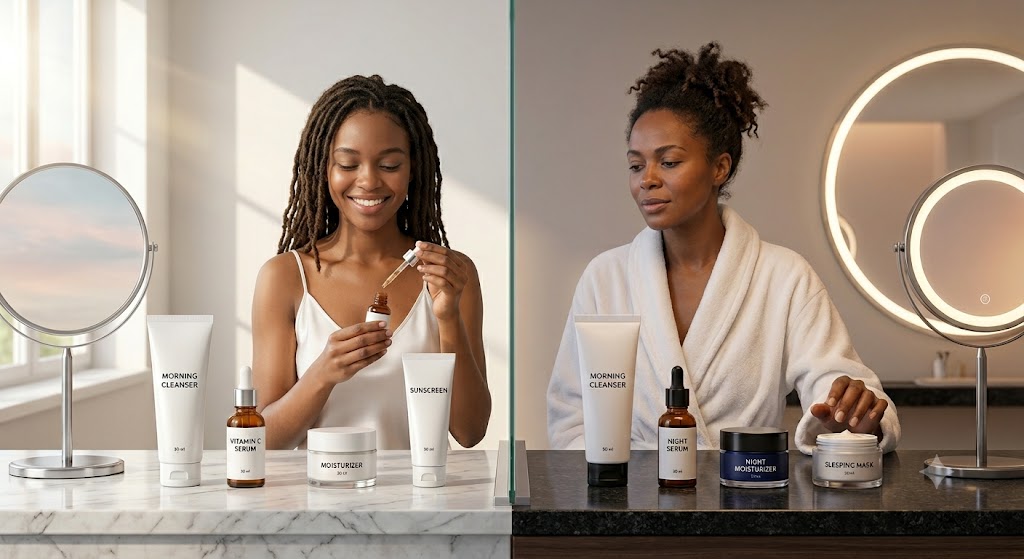
Step 1: Cleanse Gently
Begin with a gentle cleanser suitable for the teenager’s skin type.
Avoid aggressive scrubbing or repeatedly washing the face throughout the day. The AAD recommends limiting face washing to twice daily and after sweating to help reduce irritation.
Step 2: Apply Peptide Serum
After cleansing, apply a small amount of peptide serum according to the product’s instructions.
There is no need to apply a large quantity. More serum does not automatically mean better results.
Step 3: Moisturize
Follow with a suitable moisturizer.
Teenagers with oily or acne-prone skin may prefer lightweight, oil-free or non-comedogenic moisturizers.
The AAD recommends looking for labels such as “oil-free” or “non-comedogenic” when selecting moisturizers for acne-prone skin.
Step 4: Apply Sunscreen During the Day
If the routine is being used in the morning, sunscreen should be the final skincare step before makeup, if applicable.
Dermatologists recommend broad-spectrum sunscreen with SPF 30 or higher as part of daily sun protection.
Should Teenagers Use Peptide Serum Every Day?
It depends on the specific product and how the teenager’s skin responds.
Many peptide serums are formulated for regular use, but teenagers should follow the manufacturer’s directions rather than automatically applying the product multiple times every day.
When introducing a new skincare product, dermatologists recommend testing it first. The AAD suggests applying a product to small test areas twice daily for seven to 10 days to help identify potential reactions before using it more broadly.
Introducing one new product at a time also makes it easier to identify which product is responsible if irritation develops.
Can Peptide Serum Cause Acne?
A peptide itself is not necessarily the cause of acne. However, the complete formulation of a skincare product matters.
A serum may contain other ingredients, oils, fragrances or textures that may not work well for every teenager’s skin.
Teenagers with acne-prone skin should look for products labeled non-comedogenic where possible.
If a teenager notices new or worsening breakouts after introducing a serum, stop using it temporarily and assess whether the product could be contributing to the problem.
Persistent or severe acne should be evaluated by a dermatologist, particularly when breakouts are causing scarring or dark marks.
What Should Teenagers Look for in a Peptide Serum?
If a peptide serum is appropriate, teenagers and parents should focus on the formulation rather than choosing a product simply because it is expensive or trending.
Consider looking for:
Peptides
Hydrating ingredients
Fragrance-free formulations for sensitive skin
Non-comedogenic formulas for acne-prone skin
Simple ingredient lists
Products appropriate for the user’s skin type
Avoid choosing a serum based solely on claims such as “instant anti-aging” or “10 years younger.”
The AAD advises consumers to have realistic expectations from skincare products and to be cautious about exaggerated anti-aging claims.
Peptide Serum for Teenagers With Acne
If acne is the main concern, peptide serum should not replace proven acne-focused treatment.
Teenage acne is often associated with hormonal changes that increase oil production. The AAD notes that ingredients such as salicylic acid and benzoyl peroxide may be appropriate for acne management, while moisturizing remains important because acne treatments can cause dryness and irritation.
Therefore, a teenager with acne might benefit more from an appropriate acne routine than from purchasing an expensive peptide serum.
A peptide serum can be considered an optional addition rather than the central treatment.
When Should a Teenager Avoid Peptide Serum?
A teenager should stop using a peptide serum if it causes:
Burning
Persistent redness
Itching
Swelling
Peeling
New irritation
Significant breakouts
Teenagers with eczema, persistent rashes, severe acne or unexplained skin reactions should speak with a qualified healthcare professional or dermatologist before adding multiple skincare products.
It is also important to check the full ingredient list because a reaction may be caused by another ingredient in the formulation rather than the peptide itself.
Frequently Asked Questions About Teenagers and Peptide Serum
Can a 13-year-old use peptide serum?
A 13-year-old may technically be able to tolerate a gentle peptide product, but it is usually unnecessary unless there is a specific skincare reason. A simple cleanser, moisturizer and sunscreen routine is generally a better foundation.
Can a 15-year-old use peptide serum?
Yes, a 15-year-old may use a gentle peptide serum if their skin tolerates it. However, it should be considered optional rather than an essential anti-aging product.
Can a 16-year-old use peptide serum?
Yes. A 16-year-old can generally use a peptide serum, particularly a simple, gentle formulation. Those with acne should prioritize appropriate acne care.
Is peptide serum safe for teenage acne?
Peptide serum is not an acne treatment by itself. Teenagers with acne should choose products based on their actual skin concerns and consider dermatologist-recommended acne treatments when necessary.
Should teenagers use anti-aging skincare?
Generally, teenagers do not need an anti-aging routine. Preventive skincare is better focused on gentle cleansing, moisturizing and daily sun protection. The AAD emphasizes age-appropriate skincare and cautions against unnecessary active ingredients for younger skin.
Final Expert Advice: Should Teenagers Use Peptide Serum?
So,can teenagers use peptide serum? Yes, in many cases they can, particularly when the serum has a gentle formulation and is suitable for their skin type.
However, teenagers should not feel pressured to use peptide serum simply because it is trending on social media.
The foundation of healthy teenage skincare remains simple: cleanse gently, moisturize, protect the skin from the sun, and address acne appropriately when necessary.
Peptide serum may provide additional hydration or skin-conditioning benefits, but it should be viewed as an optional skincare product rather than a necessity.
Parents and teenagers should also introduce new products gradually, avoid combining too many potentially irritating ingredients and stop using any product that causes a reaction. For persistent acne, severe irritation or other skin concerns, professional dermatological advice is the safest approach.
Ultimately, healthy teenage skin does not require a complicated skincare routine. Choosing fewer, appropriate products and using them consistently is often a much better strategy than following every skincare trend.










 Get it on
  Download on the