Healthy, glowing skin has become a top skincare goal for many Nigerians. With increasing awareness of skincare ingredients, two products consistently dominate conversations: retinol serum and vitamin C serum. Both are dermatologist-recommended skincare ingredients known for transforming the skin, but they serve different purposes.
If you’ve ever wondered whether to invest in a retinol serum or a vitamin C serum, you’re not alone. Choosing the wrong product for your skin type or concern can lead to irritation, disappointment, or wasted money. Understanding how these powerful ingredients work will help you make an informed decision.
This guide compares Retinol Serum vs Vitamin C Serum specifically for Nigerian skin, considering our tropical climate, higher UV exposure, common skin concerns, and diverse skin tones.
What Is Retinol Serum?
Retinol is a derivative of Vitamin A and is widely regarded as one of the most effective skincare ingredients for improving skin texture and reducing visible signs of aging.
Unlike moisturizers that simply hydrate the skin, retinol works deep within the skin by increasing cell turnover and stimulating collagen production.
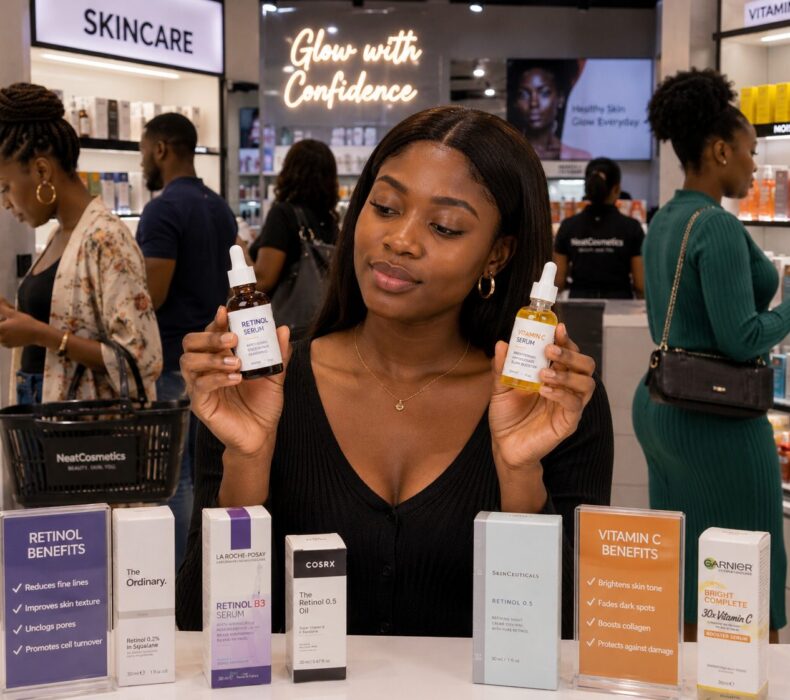
Benefits of Retinol Serum
Reduces wrinkles and fine lines
Improves uneven skin texture
Clears acne and prevents future breakouts
Fades acne scars
Reduces hyperpigmentation
Minimizes enlarged pores
Boosts collagen production
Improves skin firmness
Retinol is often called the gold standard in anti-aging skincare because of its scientifically proven effectiveness.
What Is Vitamin C Serum?
Vitamin C serum is a powerful antioxidant that protects the skin against environmental damage while brightening dull complexions.
It helps prevent free radical damage caused by sunlight, pollution, and stress—all common factors affecting skin in Nigeria.
Most high-quality Vitamin C serums contain ingredients like:
L-Ascorbic Acid
Sodium Ascorbyl Phosphate
Magnesium Ascorbyl Phosphate
Ascorbyl Glucoside
These ingredients help brighten the skin while improving overall complexion.
Benefits of Vitamin C Serum
Vitamin C provides numerous skincare benefits including:
Brightens dull skin
Reduces dark spots
Fades post-acne marks
Protects against UV-induced damage
Improves skin radiance
Evens skin tone
Supports collagen production
Hydrates skin when combined with hyaluronic acid
Vitamin C is ideal for anyone wanting healthier, glowing skin.
Higher risk of post-inflammatory hyperpigmentation (PIH)
People with darker skin tones often experience stubborn pigmentation after acne or skin irritation. Therefore, choosing ingredients that improve skin without triggering irritation is especially important.
Retinol Serum vs Vitamin C Serum: Major Differences
Feature
Retinol Serum
Vitamin C Serum
Primary Function
Anti-aging
Brightening
Best Time to Use
Night
Morning
Reduces Wrinkles
Excellent
Good
Brightens Skin
Moderate
Excellent
Fades Dark Spots
Excellent
Excellent
Treats Acne
Excellent
Moderate
Boosts Collagen
Excellent
Good
Beginner Friendly
Moderate
Excellent
Sun Sensitivity
High
Low
Suitable for Daily Use
Gradually
Yes
Which Is Better for Hyperpigmentation?
Hyperpigmentation is one of the biggest skincare concerns among Nigerians.
Retinol
Retinol speeds up skin cell turnover, helping fade pigmentation over time.
It works particularly well for:
Acne scars
Melasma
Sun spots
Age spots
Results usually become noticeable after several weeks of consistent use.
Vitamin C
Vitamin C prevents excess melanin production before pigmentation becomes severe.
It is especially effective for:
Fresh acne marks
Uneven complexion
Dull skin
Sun-induced pigmentation
Winner
For severe pigmentation, combining both ingredients (used at different times of day) often delivers the best results.
Which Is Better for Acne?
Many Nigerians struggle with acne due to:
Humidity
Excess oil production
Hormonal changes
Environmental pollution
Retinol
Retinol is considered one of the best ingredients for acne because it:
Prevents clogged pores
Reduces inflammation
Speeds healing
Prevents future breakouts
Vitamin C
Vitamin C does not directly treat acne but helps reduce redness and fade acne marks after pimples heal.
Winner
Retinol wins for active acne treatment.
Which Is Better for Dark Spots?
Dark spots are extremely common among darker skin tones.
Retinol removes pigmented skin through faster cell turnover.
Vitamin C blocks excess melanin production.
Together, they provide excellent results.
Winner
A combination of both is ideal.
Which Is Better for Anti-Aging?
As collagen production slows with age, skin begins to show:
Wrinkles
Fine lines
Sagging
Rough texture
Retinol directly stimulates collagen production.
Vitamin C supports collagen while protecting against free radical damage.
Winner
Retinol is the clear winner for reducing visible signs of aging.
Which Serum Gives More Glow?
If your skin appears tired, dull, or uneven, Vitamin C works faster to brighten the complexion.
Many users notice increased radiance within a few weeks.
Retinol also improves glow but mainly by renewing skin over time.
Vitamin C formulations using gentler derivatives are generally easier to tolerate.
Retinol may initially cause:
Dryness
Peeling
Redness
Mild irritation
Beginners should start with low-strength retinol (0.2–0.3%) once or twice weekly before increasing frequency.
Winner
Vitamin C.
Can Nigerians Use Both?
Absolutely.
Dermatologists often recommend using both because they complement each other.
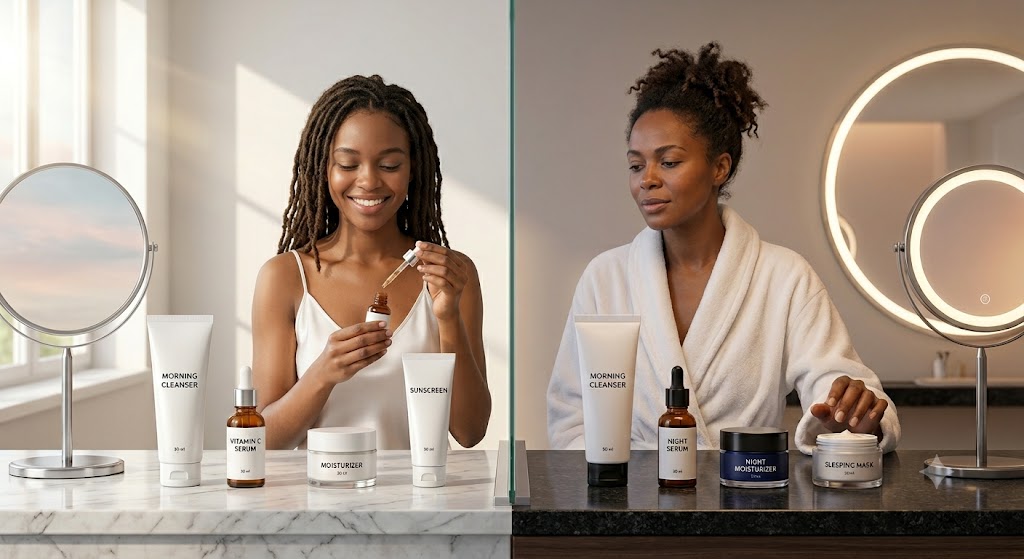
Morning Routine
Gentle cleanser
Vitamin C Serum
Moisturizer
Sunscreen (SPF 30 or higher)
Vitamin C protects against environmental damage during the day.
Night Routine
Cleanser
Retinol Serum
Moisturizer
Retinol repairs and renews the skin while you sleep.
Avoid applying both products at the exact same time if your skin is sensitive, as this may increase irritation.
Which Skin Types Benefit Most?
Oily Skin
Best choice:
Retinol
Vitamin C
Both perform well.
Dry Skin
Best choice:
Vitamin C
Low-strength retinol with moisturizer
Combination Skin
Either ingredient works well depending on your skincare goals.
Acne-Prone Skin
Retinol is the better option.
Mature Skin
Retinol provides superior anti-aging benefits.
Dull Skin
Vitamin C offers faster brightening results.
Common Mistakes Nigerians Make
Avoid these common skincare mistakes:
Using retinol every night immediately
Skipping sunscreen
Mixing too many active ingredients
Buying counterfeit products
Using high concentrations too quickly
Expecting overnight results
Consistency is more important than using the strongest formula.
How Long Before Results Appear?
Vitamin C
Most people notice:
Brighter skin within 2–4 weeks
Improved tone after 6–8 weeks
Retinol
Visible improvements usually appear after:
6–12 weeks for acne
3–6 months for wrinkles
Several months for stubborn pigmentation
Patience is essential, as skin renewal takes time.
Tips for Nigerian Weather
Nigeria’s warm climate can influence how skincare products perform. Keep these tips in mind:
Store serums away from direct sunlight and excessive heat.
Apply sunscreen every morning, especially when using retinol.
Stay hydrated to support healthy skin.
Use lightweight, non-comedogenic moisturizers in humid weather.
Introduce one active ingredient at a time to monitor your skin’s response.
How to Choose the Right Serum
Choose Retinol Serum if your goal is to:
Treat acne
Reduce wrinkles
Improve skin texture
Minimize pores
Fade stubborn pigmentation
Boost collagen production
Choose Vitamin C Serum if your goal is to:
Brighten dull skin
Achieve a radiant complexion
Fade recent dark spots
Protect against environmental damage
Even out skin tone
Add antioxidant protection to your routine
If you want comprehensive skincare benefits, incorporating both into your routine—Vitamin C in the morning and Retinol at night—can provide outstanding long-term results.
Retinol excels in treating acne, reducing wrinkles, improving skin texture, and fading long-standing pigmentation. Vitamin C shines when it comes to brightening the complexion, evening skin tone, protecting against environmental damage, and maintaining a healthy glow.
For many Nigerians dealing with intense sun exposure, humidity, and hyperpigmentation, the most effective approach is not choosing one over the other but using both correctly. Apply Vitamin C Serum every morning to defend your skin from daily environmental stressors, and use Retinol Serum at night to promote skin renewal and collagen production.
With consistent use, patience, and daily sunscreen, these two powerhouse ingredients can work together to help you achieve clearer, brighter, smoother, and healthier-looking skin regardless of your skin type. Investing in authentic, high-quality serums and following a simple, consistent skincare routine will give you the best chance of achieving long-lasting results and maintaining beautiful, radiant skin in Nigeria.













 Get it on
  Download on the