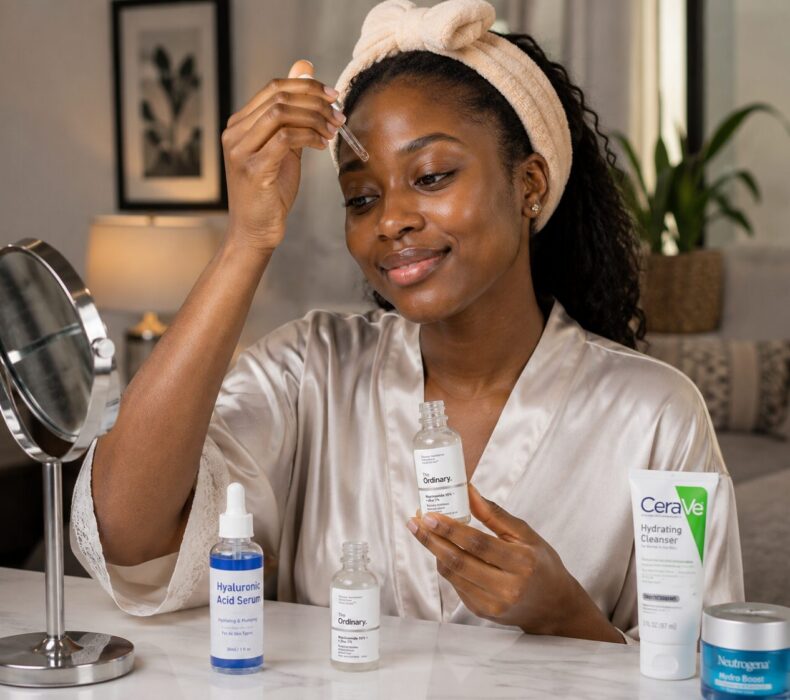
If you’re building a skincare routine, you’ve probably come across two of the most recommended ingredients: niacinamide serum and hyaluronic acid serum. Both are praised by dermatologists, skincare experts, and beauty enthusiasts for delivering healthier, smoother, and more radiant skin. However, one question continues to confuse many skincare users in Nigeria and around the world: Should you apply niacinamide serum or hyaluronic acid serum first?
The good news is that these two ingredients work exceptionally well together. They are not competitors but complementary skincare ingredients that target different skin concerns. Knowing the correct order of application can help maximize their benefits and improve the overall effectiveness of your skincare routine.
Whether you have oily skin, dry skin, combination skin, sensitive skin, or acne-prone skin, understanding the difference between these serums will help you achieve better results.
In this comprehensive guide, we’ll compare Niacinamide Serum vs Hyaluronic Acid Serum, explain how each works, discuss their benefits, identify who should use them, and reveal the best layering order for healthy, glowing skin.
What Is Niacinamide Serum?
Niacinamide, also known as Vitamin B3, is a water-soluble vitamin that improves the overall health and appearance of your skin. It is one of the most versatile skincare ingredients because it addresses multiple concerns without causing significant irritation.
A niacinamide serum penetrates deep into the skin to strengthen the skin barrier, regulate oil production, reduce inflammation, and improve uneven skin tone.
Benefits of Niacinamide Serum
1. Controls Excess Oil
People with oily skin often produce too much sebum, leading to clogged pores and acne. Niacinamide helps regulate oil production without over-drying the skin.
2. Reduces Acne Breakouts
Its anti-inflammatory properties calm active acne while preventing future breakouts.
3. Minimizes Enlarged Pores
Consistent use makes pores appear smaller by improving skin elasticity and reducing excess oil.
4. Brightens Hyperpigmentation
Niacinamide gradually fades acne scars, dark spots, and post-inflammatory hyperpigmentation, making it ideal for many Nigerians dealing with uneven skin tone.
5. Strengthens the Skin Barrier
A healthy skin barrier locks in moisture and protects against pollution, UV damage, and environmental stress.
6. Reduces Fine Lines
By improving collagen production, niacinamide softens the appearance of wrinkles over time.
What Is Hyaluronic Acid Serum?
Hyaluronic acid is a naturally occurring substance found in the skin that holds up to 1,000 times its weight in water. Its primary role is hydration.
As we age, natural hyaluronic acid levels decline, causing dryness, dullness, and fine lines.
A hyaluronic acid serum replenishes moisture, leaving skin soft, smooth, plump, and youthful.
Benefits of Hyaluronic Acid Serum
1. Deep Hydration
It attracts moisture into the skin, providing instant hydration.
2. Plumps the Skin
Hydrated skin appears fuller and healthier while reducing the appearance of wrinkles.
3. Reduces Dryness
Perfect for dry and dehydrated skin, especially during Nigeria’s Harmattan season.
4. Improves Skin Texture
Well-hydrated skin feels smoother and softer.
5. Supports the Skin Barrier
Hydrated skin functions better and is less likely to become irritated.
6. Suitable for Every Skin Type
Unlike many active ingredients, hyaluronic acid is gentle enough for oily, acne-prone, sensitive, and mature skin.
Niacinamide Serum vs Hyaluronic Acid Serum
Although both are water-based serums, they serve different purposes.
Feature
Niacinamide Serum
Hyaluronic Acid Serum
Main Function
Controls oil and repairs skin
Hydrates skin
Best For
Acne, oily skin, dark spots
Dry, dehydrated skin
Active Ingredient
Vitamin B3
Hyaluronic Acid
Hydration
Moderate
Excellent
Brightening
Excellent
Minimal
Oil Control
Excellent
None
Anti-Aging
Good
Excellent through hydration
Skin Barrier
Strengthens barrier
Supports hydration barrier
Which Serum Should You Apply First?
The simple answer is:
Apply Hyaluronic Acid Serum first, followed by Niacinamide Serum.
Here’s why.
Hyaluronic acid works best when applied to slightly damp skin. It immediately attracts moisture into the skin, creating a hydrated base.
Once your skin is hydrated, niacinamide can penetrate more effectively and strengthen the skin barrier while locking in that moisture.
Recommended Layering Order
Cleanser
Toner (optional)
Hyaluronic Acid Serum
Niacinamide Serum
Moisturizer
Sunscreen (morning routine)
This order allows each product to perform its intended function efficiently.
Why Hyaluronic Acid Comes First
Think of hyaluronic acid as giving your skin a drink of water.
Applying niacinamide afterward helps seal in hydration while repairing and protecting the skin barrier.
Many skincare experts recommend this layering method because it provides maximum hydration without reducing niacinamide’s effectiveness.
Can You Mix Niacinamide and Hyaluronic Acid?
Absolutely.
These ingredients are considered one of the safest skincare combinations available.
Unlike some active ingredients that may cause irritation when layered, niacinamide and hyaluronic acid complement each other perfectly.
Together they provide:
Long-lasting hydration
Stronger skin barrier
Reduced irritation
Better moisture retention
Improved skin texture
Healthier complexion
Many modern skincare brands even formulate both ingredients into one serum.
Who Should Use Niacinamide Serum?
Niacinamide is ideal if you have:
Oily skin
Acne-prone skin
Enlarged pores
Dark spots
Hyperpigmentation
Uneven skin tone
Redness
Sensitive skin
Fine lines
Who Should Use Hyaluronic Acid Serum?
Hyaluronic acid is best for people with:
Dry skin
Dehydrated skin
Mature skin
Sensitive skin
Tight skin
Flaky skin
Rough texture
Dull complexion
Can Oily Skin Use Hyaluronic Acid?
Yes.
Many people mistakenly believe oily skin doesn’t need hydration.
In reality, dehydrated oily skin often produces even more oil to compensate.
Using hyaluronic acid provides lightweight hydration without clogging pores, helping balance the skin.
Can Dry Skin Use Niacinamide?
Definitely.
Although niacinamide is famous for oil control, it also strengthens the skin barrier, reducing moisture loss.
When paired with hyaluronic acid, it becomes an excellent solution for dry skin.
Morning Routine Using Both Serums
Step 1
Wash your face using a gentle cleanser.
Step 2
Apply a hydrating toner if desired.
Step 3
Apply Hyaluronic Acid Serum on damp skin.
Step 4
Wait about 30–60 seconds.
Step 5
Apply Niacinamide Serum.
Step 6
Apply moisturizer.
Step 7
Finish with SPF 30 or higher sunscreen.
Night Routine Using Both Serums
Evening skincare follows the same order.
Cleanser
Toner
Hyaluronic Acid Serum
Niacinamide Serum
Moisturizer
At night, your skin repairs itself, making this routine especially effective for improving hydration, reducing pigmentation, and strengthening the skin barrier.
Common Mistakes to Avoid
Applying Hyaluronic Acid on Dry Skin
Always apply it to damp skin. Otherwise, it may draw moisture from the deeper layers of your skin instead of the environment, potentially leaving skin feeling drier.
Skipping Moisturizer
Serums alone aren’t enough. A moisturizer helps lock in hydration and prevent water loss.
Using Too Much Product
A few drops of each serum are sufficient. Applying more won’t necessarily produce faster or better results.
Expecting Overnight Results
Niacinamide typically takes 4–8 weeks of consistent use to noticeably improve pigmentation, oiliness, and skin texture. Hydration from hyaluronic acid can be felt immediately, but long-term improvements also require regular use.
Forgetting Sunscreen
If you’re treating dark spots and uneven skin tone, daily sunscreen is essential. Without it, UV exposure can undo much of your progress.
Choosing the Right Serum for Your Skin Type
Oily Skin
Hyaluronic Acid Serum
Niacinamide Serum
Oil-free moisturizer
Dry Skin
Hyaluronic Acid Serum
Niacinamide Serum
Rich moisturizer
Combination Skin
Both serums work well together to balance hydration and oil production.
Sensitive Skin
Choose fragrance-free formulas with minimal added ingredients, and introduce new products gradually.
Mature Skin
Layering hyaluronic acid and niacinamide can improve hydration, elasticity, and the appearance of fine lines over time.
Are There Any Side Effects?
Both ingredients are generally well tolerated.
However, some people may experience:
Mild redness
Temporary tingling
Irritation from very high niacinamide concentrations (such as 15–20%)
If you’re new to active skincare ingredients, start with lower concentrations and patch-test before applying them to your entire face.
Final Verdict: Niacinamide Serum vs Hyaluronic Acid Serum
When comparing Niacinamide Serum vs Hyaluronic Acid Serum, it’s important to remember that they serve different but complementary roles. Hyaluronic acid focuses on attracting and retaining moisture, while niacinamide helps regulate oil, improve the skin barrier, reduce pigmentation, and refine skin texture.
For most people, the best routine is to apply hyaluronic acid serum first on damp skin, then follow with niacinamide serum, moisturize, and finish with sunscreen during the day. This layering approach helps your skin stay hydrated while maximizing the benefits of both ingredients.
Whether your goal is clearer skin, improved hydration, a stronger skin barrier, or a brighter complexion, using these two serums together can help you achieve healthier-looking skin with consistent use.
Frequently Asked Questions
Can I use niacinamide and hyaluronic acid every day?
Yes. Both ingredients are gentle enough for daily use, morning and night, for most skin types.
How long should I wait between applying them?
Wait about 30–60 seconds, or until the first serum has mostly absorbed before applying the next.
Which serum is better for acne?
Niacinamide is generally more effective for acne because it helps regulate oil production and reduces inflammation. Hyaluronic acid can still be beneficial by keeping acne-prone skin hydrated.
Can I use them with Vitamin C?
Yes. Many modern formulations are designed to be compatible. If your skin is sensitive, you can use Vitamin C in the morning and niacinamide in the evening, while using hyaluronic acid in either routine.
Are these serums suitable for Nigerian weather?
Yes. Lightweight niacinamide and hyaluronic acid serums work well in Nigeria’s warm climate. During the dry Harmattan season, pairing them with a good moisturizer helps prevent dehydration.















 Get it on
  Download on the