






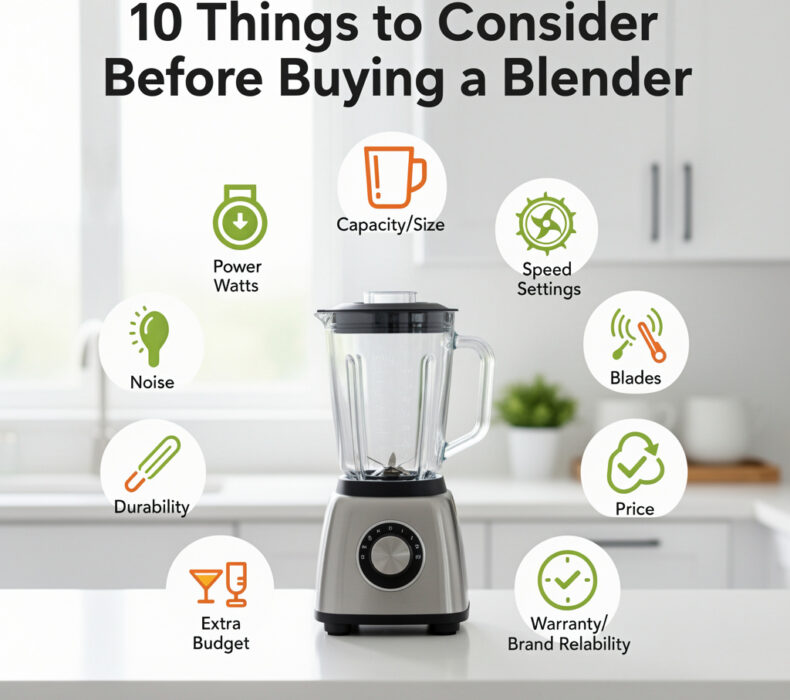
Buying a blender may seem simple at first. However, with so many models, sizes, and features available today, making the right choice can be challenging. Understanding the 10 Things to Consider Before Buying a Blender will help you invest in a machine that matches your cooking habits, budget, and lifestyle. Whether you love smoothies, soups, sauces, or frozen drinks, selecting the right blender ensures better performance and long-lasting value.
1. Determine Your Blending Needs
First of all, think about how you plan to use your blender. Will you prepare smoothies every morning, crush ice for drinks, make baby food, or blend hot soups? Different tasks require different levels of power and functionality. Therefore, identifying your primary needs will narrow down your options.
2. Check the Motor Power
Motor power plays a significant role in a blender’s performance. Generally, higher wattage means better blending efficiency.
For light tasks such as mixing soft fruits, a 300 to 500-watt blender may be enough. On the other hand, if you frequently crush ice, nuts, or frozen fruits, look for a blender with at least 800 to 1,500 watts.
As a result, you’ll enjoy smoother blends and a longer-lasting appliance.
3. Consider the Blade Quality
The blades are the heart of every blender. Stainless steel blades are usually the best choice because they resist rust and remain sharp for years.
Additionally, strong blades blend ingredients faster and more evenly, reducing preparation time and improving consistency.
4. Choose the Right Jar Material
Blender jars come in different materials, including plastic, glass, and stainless steel.
Plastic jars are lightweight and affordable but may scratch over time.
Glass jars are heavier yet resist stains and odors.
Stainless steel jars are durable and ideal for commercial or heavy-duty use.
Therefore, choose a jar material that suits your daily routine.
5. Select the Appropriate Capacity
Another important factor is jar size.
If you live alone, a personal blender with a small jar may be sufficient. However, larger families often benefit from jars with capacities of 1.5 to 2 liters.
Choosing the right size helps reduce waste while making meal preparation more convenient.
6. Look for Speed Settings and Controls
Modern blenders often include multiple speed settings and pulse functions.
These controls allow you to blend delicate ingredients gently while providing enough power for tougher foods.
Moreover, preset programs can simplify blending by automatically adjusting speed and timing.
7. Evaluate Ease of Cleaning
Cleaning should never become a frustrating task.
Many blenders feature dishwasher-safe parts or self-cleaning functions. Simply add warm water and a drop of dish soap, then blend for a few seconds.
Consequently, maintenance becomes quicker and more convenient.
8. Consider Noise Levels
Some blenders are significantly louder than others.
If you prepare breakfast early in the morning or have young children at home, consider a quieter model. Although powerful motors naturally create some noise, premium blenders often include sound-reducing designs.
This feature can make your kitchen experience much more enjoyable.
9. Compare Safety Features
Safety should always come first.
Look for features such as non-slip feet, secure locking lids, overload protection, and automatic shut-off systems.
These additions not only protect the appliance but also provide peace of mind during everyday use.
10. Compare Price and Warranty
Finally, compare prices without sacrificing quality.
Although budget-friendly blenders may seem attractive, investing a little more often results in better durability and performance. Likewise, a longer warranty reflects the manufacturer’s confidence in the product.
Before making your purchase, carefully review warranty terms and customer support options.
Why These Factors Matter
Understanding the 10 Things to Consider Before Buying a Blender helps you avoid costly mistakes. Instead of choosing a blender based only on price or appearance, you can evaluate its performance, durability, and features.
Furthermore, taking time to compare different models ensures you purchase an appliance that meets your expectations for years to come.
Common Mistakes to Avoid
Many buyers make purchasing decisions too quickly.
Avoid these common mistakes:
- Choosing the cheapest option without checking quality
- Ignoring motor power
- Buying a jar that’s too small
- Overlooking warranty coverage
- Forgetting to consider cleaning convenience
- Selecting unnecessary features that increase the price
By avoiding these mistakes, you’ll make a smarter investment.
Conclusion
Choosing the right blender doesn’t have to be difficult. By following these 10 Things to Consider Before Buying a Blender, you can confidently select a model that fits your needs and budget. From motor power and blade quality to safety features and warranty, every detail contributes to your overall satisfaction.


 Get it on
  Download on the