






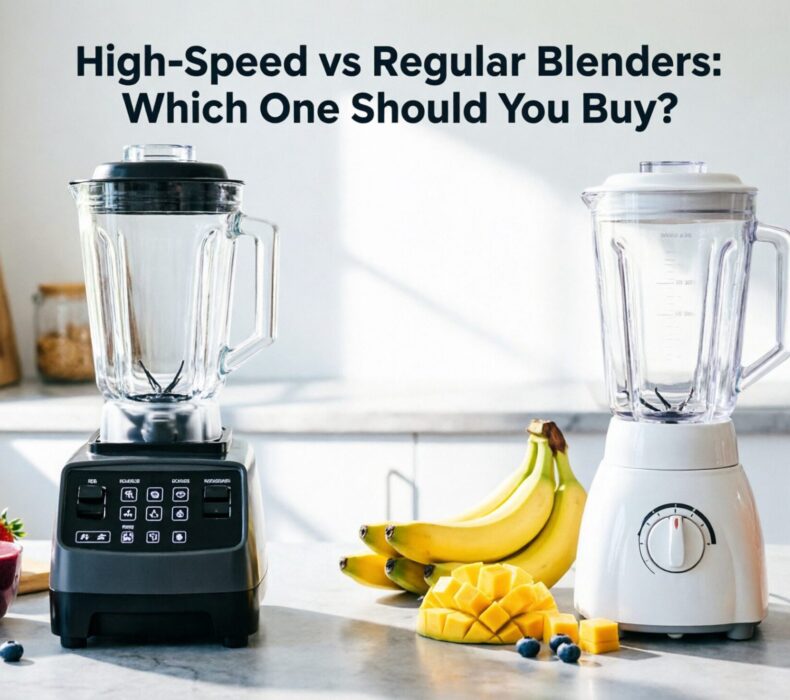
Choosing the right blender can make meal preparation faster and more enjoyable. However, many buyers struggle to decide between a high-speed blender and a regular blender. If you’re wondering High-Speed vs Regular Blenders: Which One Should You Buy?, you’re in the right place. Understanding their differences will help you invest in a blender that matches your cooking habits, budget, and lifestyle.
What Is a High-Speed Blender?
A high-speed blender features a powerful motor, typically ranging from 1,000 to over 1,500 watts. These machines are designed to handle demanding tasks like crushing ice, blending frozen fruits, grinding nuts, making nut butter, and even preparing hot soups through friction heat.
Because of their impressive performance, high-speed blenders are popular among health enthusiasts, professional chefs, and home cooks who prepare smoothies and recipes daily.
What Is a Regular Blender?
A regular blender usually comes with a motor between 300 and 800 watts. It is perfect for everyday blending tasks such as making milkshakes, mixing sauces, blending soft fruits, and preparing simple soups.
Additionally, regular blenders are generally more affordable, making them an excellent choice for households with basic blending needs.
High-Speed vs Regular Blenders: Performance Comparison
Performance is one of the biggest differences between these two blender types.
A high-speed blender can effortlessly crush ice, pulverize seeds, and blend tough vegetables into silky-smooth drinks. In contrast, a regular blender may leave small chunks behind when processing harder ingredients.
Therefore, if you frequently prepare smoothies with frozen fruits or fibrous vegetables, a high-speed blender offers better results.
Power and Motor Strength
Motor power directly affects blending performance.
High-speed blenders typically feature motors exceeding 1,000 watts, allowing them to process ingredients quickly and efficiently. On the other hand, regular blenders use less powerful motors that perform well for lighter tasks but may struggle with heavy-duty blending.
Consequently, your intended use should determine which option suits your kitchen.
Versatility
Another important factor is versatility.
High-speed blenders can prepare:
- Smoothies
- Nut butter
- Frozen desserts
- Hot soups
- Flour from grains
- Dips and spreads
- Ice cream
Meanwhile, regular blenders are better suited for:
- Milkshakes
- Fruit juices
- Sauces
- Pancake batter
- Soft vegetable soups
If versatility matters, high-speed models clearly offer more capabilities.
Ease of Cleaning
Fortunately, both blender types are relatively easy to clean.
Many high-speed blenders feature self-cleaning functions. Simply add warm water and a drop of dish soap, then blend for about one minute.
Similarly, most regular blenders have removable jars and dishwasher-safe components, making cleanup convenient.
Noise Level
One drawback of high-speed blenders is noise.
Since they operate with powerful motors at high speeds, they tend to be much louder than regular blenders. Conversely, regular blenders produce less noise during operation, making them more suitable for quieter households.
Durability of High-Speed vs Regular Blenders
High-speed blenders are usually built using premium materials and heavy-duty components. As a result, they often last for many years with proper maintenance.
Regular blenders also provide good durability, although they may wear out sooner if used for heavy blending tasks beyond their intended capacity.
Price Comparison
Price is often a deciding factor.
Regular blenders are significantly more affordable, making them ideal for budget-conscious shoppers.
In contrast, high-speed blenders require a larger upfront investment. Nevertheless, their durability, power, and versatility often justify the higher price for frequent users.
Who Should Buy a High-Speed Blender?
A high-speed blender is ideal if you:
- Make smoothies every day
- Blend frozen fruits regularly
- Enjoy homemade nut butter
- Prepare soups from scratch
- Need professional-quality blending
- Want a long-lasting kitchen appliance
Who Should Buy a Regular Blender?
A regular blender is perfect if you:
- Blend occasionally
- Prepare simple recipes
- Have a limited budget
- Mostly use soft ingredients
- Need a blender for everyday family meals
Pros and Cons
High-Speed Blender
Pros
- Extremely powerful
- Smooth blending results
- Highly versatile
- Durable construction
- Handles tough ingredients easily
Cons
- Higher price
- Louder operation
- Larger size
Regular Blender
Pros
- Budget-friendly
- Easy to use
- Quieter operation
- Suitable for everyday blending
- Compact design
Cons
- Less powerful
- Limited versatility
- May struggle with hard ingredients
Conclusion
When deciding High-Speed vs Regular Blenders: Which One Should You Buy?, think about your lifestyle rather than simply choosing the most expensive option. High-speed blenders deliver exceptional performance and versatility, while regular blenders offer excellent value for everyday kitchen tasks. By understanding your needs, you’ll be able to purchase a blender that serves you well for years to come.
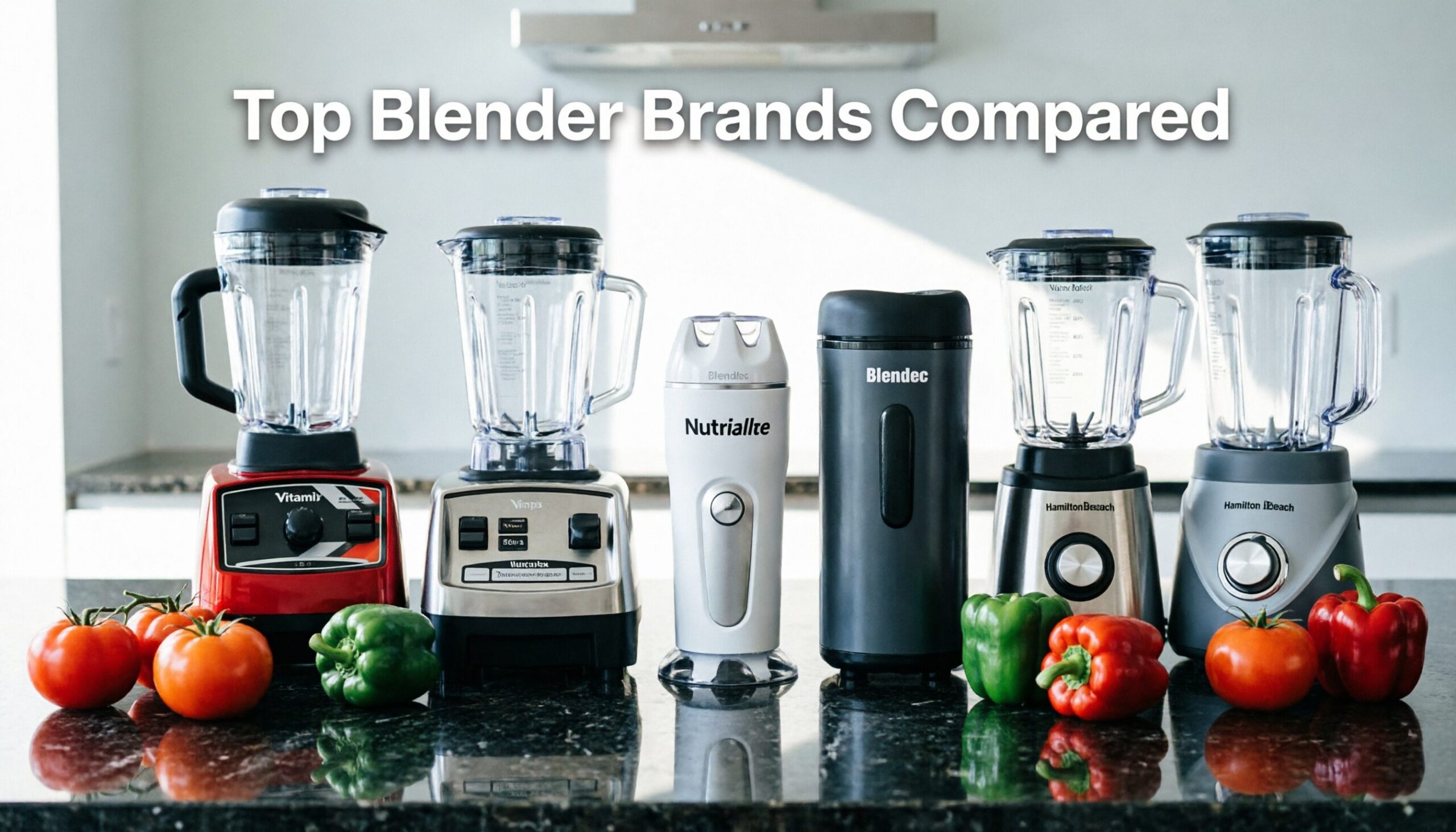
Image Alt Text: High-Speed vs Regular Blenders: Which One Should You Buy? comparison showing a high-speed blender beside a regular kitchen blender with fresh fruits and smoothies.



 Get it on
  Download on the