





Introduction
At first glance, cheap cleaning chemicals seem like a smart choice.
They are affordable. They are easy to find. And they appear to do the job.
However, what many businesses do not realize is this:
Low-quality cleaning chemicals can cost far more than they save.
From health risks to damaged surfaces, the hidden dangers can affect your staff, your customers, and your business reputation.
In a fast-growing market like Lagos, where hygiene standards are rising, using poor-quality products is no longer just a mistake—it is a risk.
In this guide, we will explore the hidden dangers of low-quality cleaning chemicals and show you how to make safer, smarter choices.
🧠 Why Cleaning Chemical Quality Matters
Cleaning is not just about removing dirt.
It is about:
- Safety
- Hygiene
- Protection
The chemicals you use directly affect:
- Human health
- Surface durability
- Air quality
👉 This is why quality matters.
⚠️ 1. Health Risks to Staff and Customers
One of the biggest dangers is health-related.
Low-quality chemicals often contain harmful substances.
Possible effects:
- Skin irritation
- Breathing problems
- Eye irritation
- Allergic reactions
In poorly ventilated spaces, the risk becomes even higher.
👉 This can lead to staff complaints and customer discomfort.
🫁 2. Poor Indoor Air Quality
Cheap chemicals can release strong fumes.
These fumes:
- Pollute indoor air
- Cause headaches
- Reduce comfort
👉 This is especially dangerous in offices and hospitals.
🧴 3. Ineffective Disinfection
Not all cleaning chemicals kill germs effectively.
Low-quality products may:
- Fail to eliminate bacteria
- Leave harmful microorganisms behind
👉 This creates a false sense of cleanliness.
🦠 4. Increased Risk of Disease Spread
If disinfectants are ineffective, germs can spread easily.
This can lead to:
- Workplace illness
- Customer complaints
- Reduced productivity
👉 Proper disinfection is critical.
🧼 5. Damage to Surfaces and Equipment
Cheap chemicals can be too harsh or poorly formulated.
Common damage includes:
- Faded surfaces
- Corrosion
- Material breakdown
👉 This leads to costly repairs and replacements.
⚙️ 6. Reduced Equipment Lifespan
Low-quality chemicals can damage cleaning machines.
For example:
- Vacuum components may degrade
- Scrubber parts may corrode
👉 This increases maintenance costs.
💰 7. Higher Long-Term Costs
Cheap products are not always cost-effective.
Why?
- You use more product
- You clean more often
- You replace damaged items
👉 The total cost becomes higher over time.
🏢 8. Negative Impact on Business Image
Cleanliness affects perception.
If your space looks:
- Streaky
- Smelly
- Poorly cleaned
Customers may lose trust.
👉 First impressions matter.
⚠️ 9. Safety Hazards
Improper chemicals can create safety risks.
Examples:
- Slippery floors
- Chemical burns
- Toxic reactions
👉 Safety should never be compromised.
🧪 10. Chemical Incompatibility Risks
Mixing low-quality chemicals can be dangerous.
Some combinations produce:
- Toxic gases
- Harmful reactions
👉 This can be very dangerous for staff.
🌍 11. Environmental Damage
Low-quality chemicals may not be eco-friendly.
They can:
- Pollute water
- Harm ecosystems
- Increase environmental impact
👉 Sustainability is becoming important.
🧠 12. Lack of Regulatory Compliance
Some cheap products do not meet standards.
This can lead to:
- Legal issues
- Failed inspections
- Business penalties
👉 Compliance is essential.
🏢 Real-World Insight
Professional companies avoid these risks.
For example:
Cleaneat Integrated Services uses high-quality cleaning chemicals to ensure:
- Safety
- Efficiency
- Consistent results
Also, NeatSpace Cleaning Company carefully selects products based on surface type and cleaning needs.
Suppliers like Neatstore provide reliable, tested cleaning chemicals that meet professional standards.
👉 This is why they maintain high-quality service.
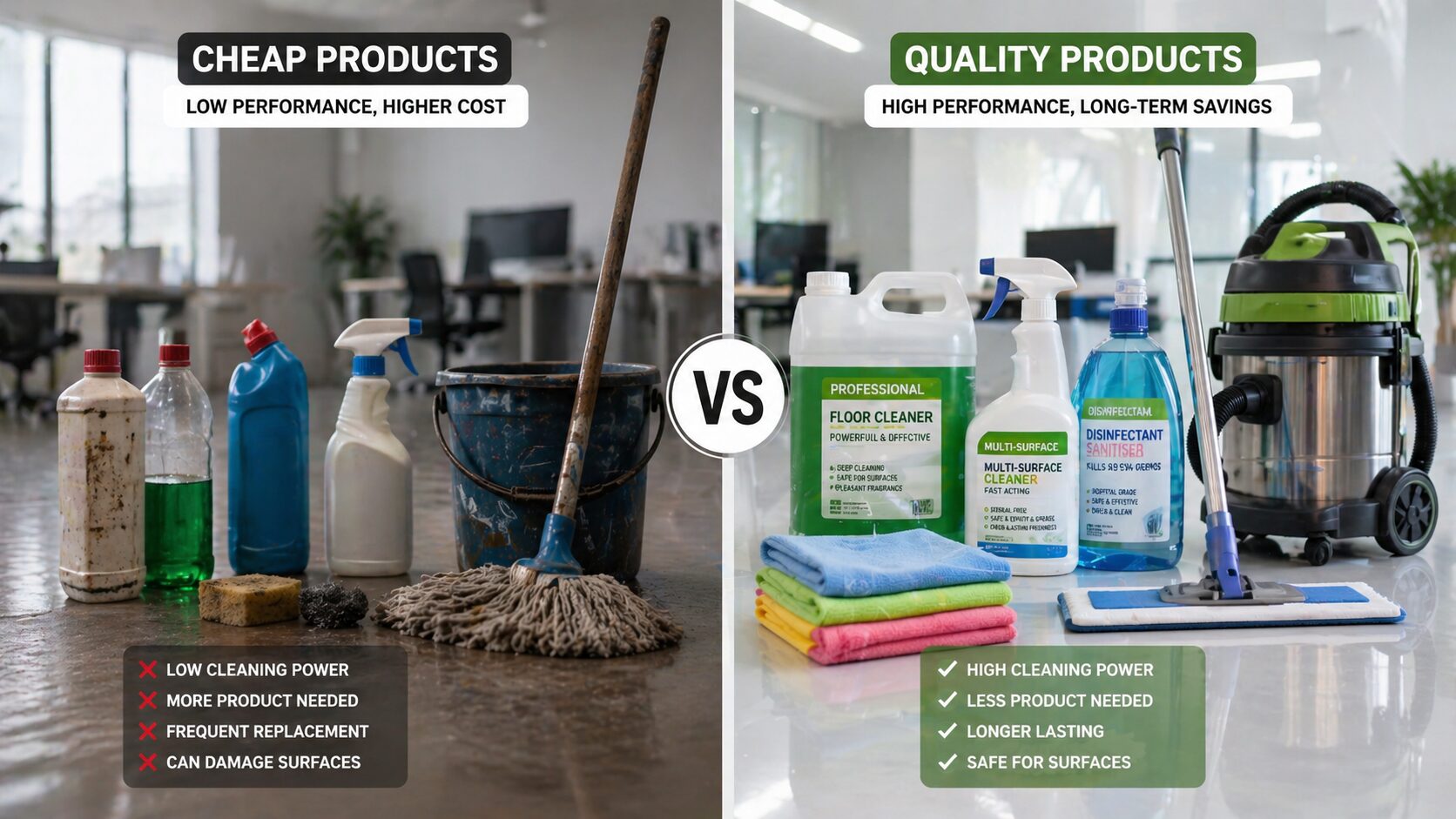
📊 Quality vs Cheap Chemicals Comparison
| Factor | Low-Quality Chemicals | High-Quality Chemicals |
|---|---|---|
| Price | Low | Higher |
| Effectiveness | Poor | High |
| Safety | Risky | Safer |
| Long-term cost | High | Lower |
| Surface impact | Damaging | Protective |
👉 Quality always wins in the long run.
⚠️ Common Mistakes to Avoid
Avoid these:
- Choosing based on price only
- Ignoring product labels
- Mixing chemicals
- Buying from unknown suppliers
👉 These mistakes can be dangerous.
🧠 How to Choose Safe Cleaning Chemicals
Follow these tips:
- Check product certification
- Read usage instructions
- Choose trusted brands
- Test before bulk purchase
- Buy from reliable suppliers
👉 Smart choices reduce risk.
🔐 Best Practices for Safe Use
To stay safe:
- Use protective gear
- Store chemicals properly
- Train staff
- Follow instructions
👉 Safety should always come first.
🧾 Conclusion
Low-quality cleaning chemicals may look like a good deal, but they come with hidden dangers.
They can:
- Harm health
- Damage surfaces
- Increase costs
- Affect your business reputation
On the other hand, high-quality products provide:
- Better cleaning
- Safer environments
- Long-term savings
👉 The choice is simple: invest in quality and protect your business.
Related Posts:

- Tags:
- Business Hygiene Solutions
- Cleaning Chemical Safety
- Cleaning Chemicals Nigeria
- Commercial Cleaning Supplies
- Hazardous Cleaning Chemicals
- Health Risks of Cleaning Chemicals
- Industrial Cleaning Chemicals
- Low Quality Cleaning Chemicals
- Professional Cleaning Products
- Quality Cleaning Supplies
- Safe Cleaning Practices
- Workplace Hygiene


 Get it on
  Download on the