






Introduction
Lighting can completely change the way a room looks and feels. The right light can make a space feel warm, relaxing, bright, modern, or productive. However, choosing between warm and cool light can sometimes be confusing, especially when you are decorating different rooms in your home.
Warm and cool light have different colour temperatures, appearances, and uses. Therefore, understanding their differences can help you create a comfortable and functional home.
What Is Warm Light?
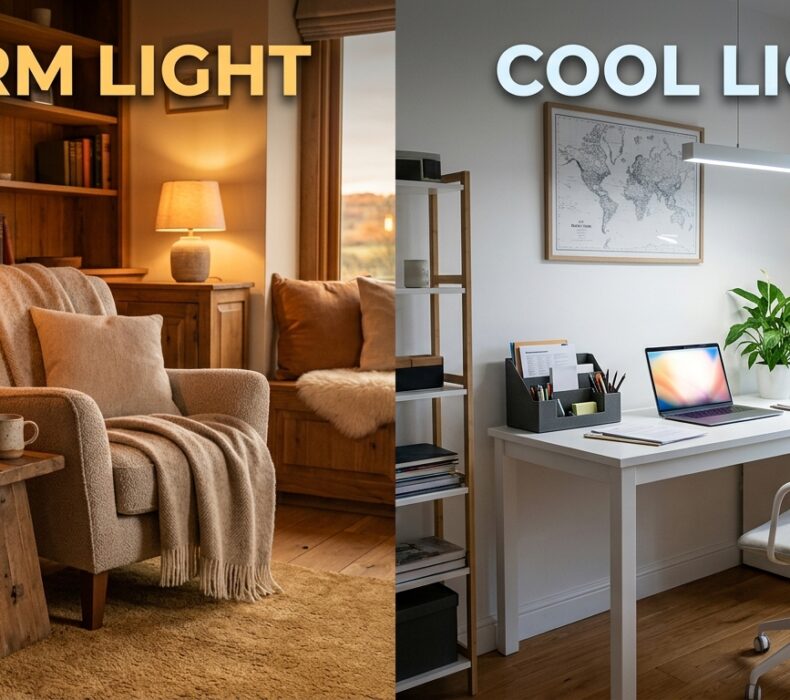
Warm light has a soft, yellowish or golden appearance. It creates a cosy and relaxing atmosphere, which makes it popular in bedrooms, living rooms, dining areas, and other spaces designed for relaxation.
Warm lighting generally has a lower colour temperature, usually around 2,700K to 3,000K. The lower the Kelvin number, the warmer and more yellow the light tends to appear.
For example, a warm table lamp beside a sofa can make a living room feel more inviting in the evening. Similarly, warm bedside lighting can create a calm atmosphere before bedtime.
Benefits of Warm Light
Warm light offers several advantages for home interiors.
- It creates a cosy and welcoming atmosphere.
- It works well with wood, beige, cream, and earthy colours.
- It is suitable for relaxing in the evening.
- It can make living spaces feel more comfortable.
- It works beautifully with decorative lamps and accent lighting.
Consequently, warm lighting is an excellent choice when comfort and ambience are your main priorities.
What Is Cool Light?
Cool light has a whiter or slightly bluish appearance. Unlike warm lighting, it creates a brighter and more energetic atmosphere. As a result, it is often used in kitchens, bathrooms, home offices, garages, and work areas.
Cool light usually falls within the 4,000K to 6,500K range. Because it appears closer to natural daylight, it can make details and surfaces look clearer.
For instance, cool lighting can be useful in a kitchen when preparing food because it provides a bright environment. Likewise, it can work well in a study area where you need focused illumination.
Benefits of Cool Light
Cool lighting can be particularly useful when visibility and concentration are important.
- It provides a bright, clean appearance.
- It works well in workspaces.
- It can make rooms appear fresh and modern.
- It helps highlight details and surfaces.
- It is suitable for kitchens, bathrooms, and utility areas.
Therefore, cool light is often a practical option for areas where tasks require good visibility.
Warm Light vs Cool Light: What Is the Difference?
The main difference between warm and cool light is their colour appearance and the atmosphere they create.
Warm light looks yellow or golden, while cool light appears whiter and sometimes slightly blue. In addition, warm lighting tends to create a relaxed mood, whereas cool lighting gives a more energetic and focused feeling.
| Feature | Warm Light | Cool Light |
|---|---|---|
| Appearance | Yellow/golden | White/bluish |
| Typical range | 2,700K–3,000K | 4,000K–6,500K |
| Atmosphere | Cosy and relaxing | Bright and energetic |
| Best for | Bedrooms and living rooms | Kitchens and workspaces |
| Interior style | Traditional, cosy, elegant | Modern, clean, minimalist |
However, neither option is automatically better. The best choice depends on the purpose of the room and the mood you want to create.
Which Light Should You Choose for Your Living Room?
For most living rooms, warm light is an excellent choice. A warm floor lamp, table lamp, pendant light, or wall sconce can make the space feel comfortable and inviting.
Furthermore, warm lighting works especially well in living rooms where people relax, watch television, read, or spend time with family.
You can also combine different fixtures. For example, use warm ceiling lighting as the main source and add table lamps or floor lamps for softer accent lighting.
Which Light Is Best for a Bedroom?
Warm light is usually a strong choice for bedrooms because it creates a peaceful and relaxing atmosphere.
Bedside lamps with warm bulbs can provide gentle illumination without making the room feel overly bright. Additionally, warm lighting complements bedding, curtains, wooden furniture, and neutral décor.
For a bedroom, consider using several smaller light sources rather than relying on one extremely bright fixture. This approach creates layers of light and gives you more control over the atmosphere.
Which Light Is Best for a Kitchen?
Cool or neutral-white lighting can work well in kitchens because it provides clear illumination for everyday tasks.
For example, cool light can be useful above kitchen counters, sinks, and preparation areas. It can also help a modern kitchen look clean and bright.
Nevertheless, you do not have to use cool lighting throughout the entire kitchen. You could use brighter task lighting in work areas and warmer decorative lighting around dining or seating spaces.
Which Light Should You Use in a Home Office?
If you work or study at home, cooler or neutral lighting can help create a focused environment. It provides clear illumination, which can make a workspace feel more active and organised.
However, avoid making your entire office excessively bright. Instead, combine general room lighting with a suitable desk lamp. This allows you to direct light where you need it most.
Can You Mix Warm and Cool Light?
Yes, you can mix warm and cool light, but it should be done intentionally.
Using different colour temperatures in the same room can create useful lighting zones. For example, a kitchen could have cool task lighting over the worktops and warm lighting above a dining area.
Similarly, a large open-plan home could use cooler lighting in the workspace and warmer lighting in the relaxation area.
The key is balance. Too many different colour temperatures in one small area can make the lighting feel inconsistent. Therefore, choose your lighting temperatures according to the function of each zone.
Consider Your Interior Décor
Your furniture and colour scheme should also influence your lighting decision.
Warm light can enhance earthy tones, wooden furniture, cream walls, and traditional décor. On the other hand, cool light can complement white surfaces, grey colours, metallic finishes, and contemporary interiors.
Therefore, before choosing a bulb, consider how its colour will interact with the rest of your room.
How to Choose the Right Light for Every Room
A simple way to choose your lighting is to think about what you do in each space.
For bedrooms, choose warm light for a calm atmosphere.
For living rooms, use warm lighting to create comfort and ambience.
For dining areas, warm lighting can make meals feel more inviting.
For kitchens, choose cool or neutral lighting for task areas.
For bathrooms, bright neutral or cool lighting can provide useful visibility.
For home offices, neutral or cool lighting can support a focused environment.
For hallways, warm or neutral lighting can create a welcoming transition between rooms.
Final Thoughts
Choosing between warm and cool light does not have to be difficult. Instead of asking which one is better, consider which one is more suitable for your particular space.
Warm light is ideal for creating cosy, relaxing, and welcoming interiors. Cool light, meanwhile, is useful when you need brighter illumination and clearer visibility.
Ultimately, the best approach is to use warm and cool light strategically throughout your home. By matching the colour temperature to each room’s purpose, you can create an interior that is both beautiful and functional.






 Get it on
  Download on the