






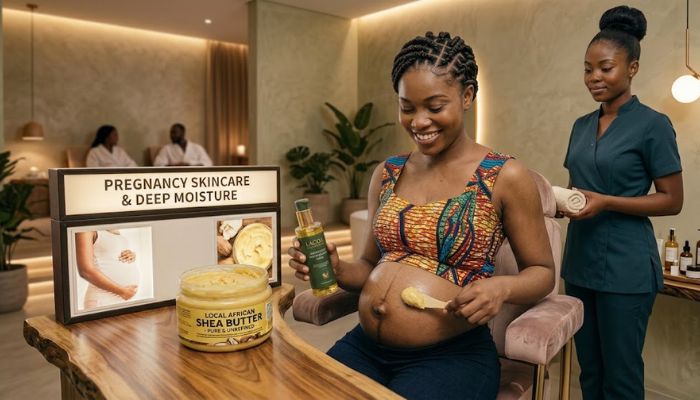
Stretch marks are one of the most common skin concerns experienced during pregnancy, puberty, weight gain, weight loss and periods of rapid muscle growth. They can appear as red, purple, pink, brown or silvery lines on areas such as the stomach, thighs, hips, breasts, buttocks and upper arms.
Because keeping the skin moisturised may help reduce dryness, itching and discomfort associated with stretching skin, many people wonder whether stretch mark cream or shea butter is better for preventing stretch marks.
Both options can help keep the skin soft and moisturised, but they are not exactly the same. Stretch mark creams are usually formulated with multiple skincare ingredients, while shea butter is a rich plant-based moisturiser that helps support the skin barrier.
So, which one should you choose?
In this guide, we compare stretch mark cream vs shea butter, their benefits, limitations and how to use them as part of a daily skincare routine.
What Are Stretch Marks?
Stretch marks are a type of scar that develops when the skin stretches or changes rapidly. They occur when the deeper layers of the skin are affected by stretching, causing visible lines on the surface.
Common situations associated with stretch marks include:
- Pregnancy
- Rapid weight gain
- Rapid weight loss
- Puberty and growth spurts
- Muscle growth
- Hormonal changes
- Genetic factors
Stretch marks can develop even when you take excellent care of your skin. Genetics, hormones and the speed at which the skin changes can influence whether you develop them.
This is important because no cream, butter or oil can guarantee that stretch marks will never develop.
However, moisturising products can help maintain smoother, softer and more comfortable skin.
What Is Stretch Mark Cream?
Stretch mark cream is a skincare product specifically formulated for areas of the body that may be prone to stretching. Depending on the product, it may contain ingredients such as shea butter, cocoa butter, plant oils, vitamin E, hyaluronic acid, glycerin and other moisturising or skin-conditioning ingredients.
Some products are designed specifically for pregnancy, while others are marketed for use during weight changes, puberty or general body skincare.
Benefits of Stretch Mark Cream
One of the biggest advantages of a dedicated stretch mark cream is its formulation.
Instead of containing only one moisturising ingredient, a stretch mark cream may combine several ingredients designed to hydrate and condition the skin.
Potential benefits include:
- Helps keep the skin moisturised
- Supports the skin barrier
- Helps reduce skin dryness
- Can make stretched skin feel softer
- May help relieve the feeling of tight, dry skin
- Convenient for targeted application
- May contain multiple skin-conditioning ingredients
However, it is important to distinguish between moisturising the skin and preventing stretch marks. A product may improve the skin’s hydration and appearance without completely preventing stretch marks.
What Is Shea Butter?
Shea butter is a natural fat extracted from the nuts of the shea tree. It has long been used in African skincare and is popular for moisturising dry skin.
Because it is rich and emollient, shea butter can help reduce moisture loss and leave the skin feeling soft and smooth.
For people who prefer simple skincare products, shea butter can be an attractive alternative to a specially formulated stretch mark cream.
Benefits of Shea Butter for Stretch-Prone Skin
Shea butter can provide several skincare benefits, particularly when the skin becomes dry or tight.
These include:
- Deep moisturising
- Softening dry skin
- Supporting the skin barrier
- Helping reduce moisture loss
- Improving the feeling of skin flexibility
- Providing a rich protective layer
- Being suitable for full-body moisturising
Shea butter is also relatively easy to incorporate into a daily skincare routine. It can be massaged onto the stomach, hips, thighs, breasts, buttocks and other areas where the skin feels dry.
Stretch Mark Cream vs Shea Butter: Which Is Better?
The answer depends on what you want from your skincare product.
If your priority is simple, rich moisturisation, shea butter can be an excellent choice.
If you want a product containing multiple ingredients specifically formulated for stretch-prone skin, a dedicated stretch mark cream may be more convenient.
Here is a simple comparison:
| Feature | Stretch Mark Cream | Shea Butter |
|---|---|---|
| Moisturisation | Yes | Yes |
| Supports skin barrier | Often | Yes |
| Multiple ingredients | Usually | No |
| Simple formulation | Depends on product | Yes |
| Easy to apply | Usually | Yes, but can feel rich |
| Targeted stretch-mark skincare | Yes | Not specifically |
| Can guarantee prevention | No | No |
| Suitable for dry skin | Usually | Excellent |
| Can be used during pregnancy | Depends on ingredients | Generally used, but check with your healthcare professional |
The most important point is that neither product can guarantee prevention of stretch marks.
Is Stretch Mark Cream Better Than Shea Butter?
A stretch mark cream may be the better option if you want a product formulated specifically for stretch-prone areas.
Many stretch mark creams combine several moisturising ingredients, allowing you to benefit from different types of skin conditioning in one product.
For example, a formula may contain humectants that attract water to the skin, emollients that soften the skin and occlusive ingredients that help reduce moisture loss.
This can make a dedicated cream a practical option for people who want a complete body moisturising product.
However, the quality of the formulation matters more than the words “stretch mark cream” on the packaging.
A basic stretch mark cream with poor moisturising ingredients may not necessarily be better than high-quality shea butter.
Is Shea Butter Better Than Stretch Mark Cream?
Shea butter may be better for someone who wants a natural, straightforward and affordable moisturiser.
It is especially useful for people who experience dry skin around the abdomen, hips, thighs or breasts.
Another advantage is that shea butter can be used over large areas of the body. You do not necessarily need a separate product for every part of your skin.
However, raw shea butter does not contain the additional ingredients that may be included in specialised stretch mark products.
For example, some formulated creams may contain ingredients designed to provide hydration, improve skin texture or support overall skin conditioning.
Therefore, choosing between the two often comes down to your skin’s needs and your personal preference.
Can Shea Butter Prevent Stretch Marks?
Shea butter can help moisturise and soften the skin, but there is not enough evidence to say that applying shea butter alone can reliably prevent stretch marks.
This distinction is important.
When skin becomes dry, moisturising can make it feel more comfortable and supple. However, stretch marks are influenced by factors beyond surface dryness, including genetics, hormones and how quickly the skin stretches.
Therefore, you should use shea butter as a skin moisturiser rather than a guaranteed stretch mark prevention treatment.
Can Stretch Mark Cream Prevent Stretch Marks?
Despite their name, stretch mark creams cannot guarantee that stretch marks will not develop.
Their primary benefit is usually moisturisation and skin conditioning. Keeping the skin hydrated may help reduce dryness and discomfort, but it does not completely control the biological processes responsible for stretch marks.
If you are pregnant, gaining weight or going through another period of rapid body change, you may still develop stretch marks even if you regularly use a moisturiser.
This does not mean your skincare routine has failed.
Stretch marks are extremely common and are not an indication that your skin is unhealthy.
How to Use Stretch Mark Cream
For the best moisturising benefits, consistency is more important than applying a large amount once in a while.
Follow these steps:
1. Clean Your Skin
Take a shower or bath using a gentle cleanser or body wash.
2. Pat the Skin Dry
Avoid aggressively rubbing the skin with a towel.
3. Apply the Cream
Apply a moderate amount of stretch mark cream to areas such as your stomach, hips, thighs, breasts or buttocks.
4. Massage Gently
Use gentle circular movements until the product is absorbed.
5. Repeat Consistently
Follow the directions on the product. Consistent moisturisation can help keep the skin soft and comfortable.
How to Use Shea Butter for Stretch-Prone Skin
Shea butter is particularly easy to use as part of a body care routine.
After bathing, take a small amount of shea butter and warm it between your palms. Apply it gently to areas where the skin feels dry or tight.
For better spreadability, you can apply it while the skin is slightly damp.
Avoid excessive rubbing, particularly if your skin is sensitive or irritated.
If you are using raw or unrefined shea butter for the first time, consider testing a small area of skin first to make sure you tolerate it well.
Stretch Mark Cream vs Shea Butter During Pregnancy
Pregnancy is one of the most common times for stretch marks to appear, particularly around the abdomen, breasts, thighs and hips.
During pregnancy, moisturising products can help keep the skin comfortable and reduce dryness and itching.
However, pregnant women should pay close attention to product ingredients.
Not every skincare ingredient is appropriate during pregnancy. If you are unsure about a particular stretch mark cream, check its ingredient list and speak with your doctor, midwife or pharmacist before using it.
Simple shea butter can be an appealing moisturising option, but it should also be used according to your individual skincare needs.
What Should You Look for in a Stretch Mark Cream?
If you decide to purchase a dedicated stretch mark cream, look for a product that provides effective moisturisation.
Useful ingredients may include:
- Shea butter
- Cocoa butter
- Glycerin
- Hyaluronic acid
- Vitamin E
- Plant-based oils
- Ceramides
- Other skin-conditioning ingredients
The exact formulation matters more than marketing claims.
If you have sensitive skin, consider choosing a fragrance-free option and avoid products containing ingredients that have previously caused irritation.
What Should You Look for in Shea Butter?
When purchasing shea butter, consider:
- Purity
- Ingredient list
- Product freshness
- Texture
- Packaging
- Reputation of the seller
Unrefined shea butter generally has a stronger natural scent and a thicker texture, while refined versions may have a milder smell and smoother appearance.
For skincare, choose a product intended for cosmetic use and purchase from a reputable seller.
Can You Use Stretch Mark Cream and Shea Butter Together?
Yes, you can potentially incorporate both into your body care routine.
For example, you could use a stretch mark cream during the day and shea butter at night when you want richer moisturisation.
Alternatively, you could use a stretch mark cream on targeted areas and shea butter on other dry areas of your body.
There is no requirement to use both, though. If one product keeps your skin comfortable, moisturised and soft, you may not need another.
Other Ways to Care for Stretch-Prone Skin
Your skincare routine does not have to focus exclusively on creams and butters.
Other useful habits include:
Stay Hydrated
Drinking enough water supports normal body functions and helps maintain overall wellbeing. However, drinking water alone cannot prevent stretch marks.
Maintain Healthy Skin Moisture
Regular moisturisation can help prevent excessive dryness and improve how the skin feels.
Avoid Rapid Weight Changes When Possible
Rapid changes in body size can increase skin stretching. Maintaining a healthy, sustainable approach to weight management may help reduce rapid skin changes.
Protect Your Skin
Use appropriate sunscreen on exposed areas of the body. Sun exposure can make existing stretch marks more noticeable because surrounding skin may tan while stretch-marked areas respond differently.
Be Patient
Stretch marks often become less noticeable with time. Their appearance can change naturally as they mature.
So, Which Is Better: Stretch Mark Cream or Shea Butter?
If your main goal is rich and simple moisturisation, shea butter is an excellent option.
If you prefer a specially formulated product containing multiple skincare ingredients, stretch mark cream may be more suitable.
For many people, the best choice is not necessarily one product over the other. It is the product they will use consistently and that works well with their skin.
Most importantly, neither shea butter nor stretch mark cream can promise complete prevention of stretch marks.
Stretch marks are a normal skin change and can occur even when you maintain an excellent skincare routine. The goal should therefore be to keep the skin moisturised, comfortable and well cared for rather than expecting a product to provide guaranteed protection.
Final Verdict
Stretch mark cream vs shea butter is not necessarily a competition with one universal winner.
Shea butter is a simple, rich and affordable moisturiser that can help soften dry skin and support the skin barrier. Stretch mark creams offer the advantage of specially formulated combinations of moisturising and skin-conditioning ingredients.
If you want simplicity and natural moisturisation, choose shea butter. If you prefer a targeted body-care formulation with multiple ingredients, choose a stretch mark cream.
Whichever option you select, consistency is key. Apply your chosen moisturiser regularly, take care of your overall skin health and remember that developing stretch marks is not a sign that you have done anything wrong.






 Get it on
  Download on the