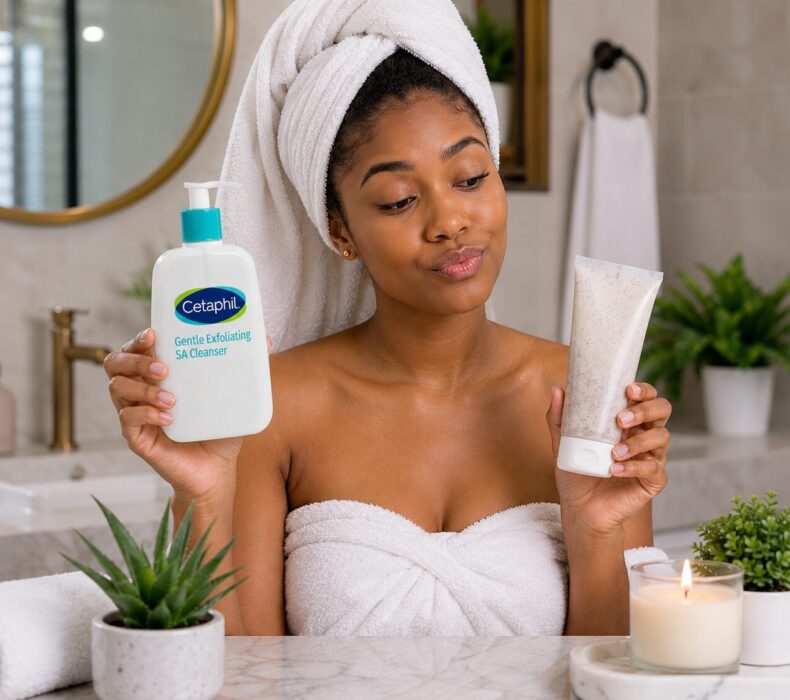
When it comes to achieving healthy, glowing skin, exfoliation plays a vital role in removing dead skin cells, unclogging pores, and promoting skin renewal. However, one of the most common questions skincare enthusiasts ask is: Exfoliating Cleanser vs Facial Scrub: Which Is Better for Your Skin?
Although both products are designed to exfoliate the skin, they work in different ways and offer unique benefits. Choosing the wrong one can lead to irritation, dryness, or even breakouts, while selecting the right exfoliating product can leave your skin smoother, brighter, and healthier.
In this comprehensive guide, we’ll compare exfoliating cleansers and facial scrubs, explain how they work, discuss their pros and cons, and help you determine which option is best for your skin type.
What Is an Exfoliating Cleanser?
An exfoliating cleanser is a facial cleanser formulated to both cleanse and gently exfoliate the skin in one step. Unlike regular face washes that only remove dirt, oil, and makeup, exfoliating cleansers contain ingredients that help eliminate dead skin cells during cleansing.
These cleansers may use:
Mild exfoliating beads
Enzymes
Alpha Hydroxy Acids (AHAs)
Beta Hydroxy Acids (BHAs)
Polyhydroxy Acids (PHAs)
Most exfoliating cleansers are designed to be gentle enough for regular use while still improving skin texture.
Benefits of an Exfoliating Cleanser
1. Removes Dirt and Dead Skin Together
Since it cleanses and exfoliates simultaneously, your skincare routine becomes quicker and more effective.
2. Unclogs Pores
Ingredients like salicylic acid penetrate pores to remove excess oil and debris, reducing blackheads and acne.
3. Brightens Dull Skin
Regular use reveals newer skin cells, giving the face a healthy glow.
4. Improves Product Absorption
Removing dead skin allows serums and moisturizers to penetrate more effectively.
5. Gentle Enough for Frequent Use
Many exfoliating cleansers are suitable for use two to four times weekly, depending on your skin type.
What Is a Facial Scrub?
A facial scrub is a physical exfoliating product containing tiny particles that manually remove dead skin cells when massaged onto the skin.
Common exfoliating particles include:
Sugar crystals
Jojoba beads
Rice powder
Bamboo powder
Walnut shell powder
Apricot kernels
Facial scrubs rely on mechanical friction rather than chemical ingredients.
Benefits of a Facial Scrub
Instantly Smooth Skin
One use often leaves skin feeling softer.
Removes Surface Build-Up
Scrubs effectively eliminate flaky skin caused by dryness.
Improves Skin Texture
Regular exfoliation can reduce rough patches.
Encourages Better Circulation
Massaging the skin during exfoliation stimulates blood flow, giving a temporary healthy glow.
Helps Prevent Ingrown Hairs
Gentle scrubbing before shaving can reduce ingrown hairs.
Exfoliating Cleanser vs Facial Scrub: The Main Differences
Feature
Exfoliating Cleanser
Facial Scrub
Primary Purpose
Cleansing and exfoliating
Physical exfoliation
Exfoliation Type
Chemical, enzyme, or gentle physical
Physical only
Daily Use
Often suitable (depending on formula)
Usually 1–2 times weekly
Skin Feel
Gentle and refreshing
Deeply polished
Suitable for Sensitive Skin
Usually yes
Sometimes too harsh
Acne-Friendly
Excellent with BHAs
Can worsen inflamed acne if used aggressively
Risk of Irritation
Low
Higher if overused
Which Works Better?
The answer depends entirely on your skin type and skincare goals.
An exfoliating cleanser offers gradual, gentle improvement, while a facial scrub delivers immediate smoothness but requires careful use.
Best for Oily Skin
People with oily skin produce excess sebum, which can clog pores and cause acne.
Recommended Choice:
Exfoliating Cleanser
Why?
Controls oil
Prevents clogged pores
Reduces blackheads
Minimizes acne breakouts
Look for ingredients like:
Salicylic acid
Tea tree
Glycolic acid
Niacinamide
Facial scrubs can still be used once weekly for deeper exfoliation but should not replace your daily cleanser.
Best for Dry Skin
Dry skin easily becomes flaky and rough.
Recommended Choice:
Gentle Exfoliating Cleanser
It removes dead skin without excessive rubbing.
Avoid harsh scrubs containing large particles because they may create tiny skin tears.
Hydrating ingredients include:
Hyaluronic acid
Ceramides
Glycerin
Aloe vera
Best for Sensitive Skin
Sensitive skin reacts easily to friction.
Winner:
Exfoliating Cleanser
Chemical exfoliants in low concentrations are generally much gentler than abrasive scrubs.
Look for:
PHAs
Lactic acid
Oat extract
Chamomile
Avoid rough walnut or apricot scrubs.
Best for Acne-Prone Skin
Acne develops when pores become blocked with oil and dead skin.
Best Choice:
Exfoliating Cleanser with Salicylic Acid
Benefits include:
Penetrates pores
Dissolves excess oil
Reduces pimples
Prevents future breakouts
Avoid aggressive scrubbing over inflamed acne, as this can spread bacteria and worsen irritation.
Best for Combination Skin
Combination skin has both oily and dry areas.
The ideal routine includes:
Exfoliating cleanser two to four times weekly
Gentle facial scrub once every week if needed
This balanced approach prevents over-exfoliation.
Best for Mature Skin
As we age, skin cell turnover slows.
An exfoliating cleanser containing AHAs such as glycolic or lactic acid can help:
Improve skin texture
Reduce fine lines
Brighten dull skin
Enhance collagen production over time
Harsh scrubs may aggravate mature skin.
Chemical vs Physical Exfoliation
Chemical Exfoliation
Uses acids or enzymes to dissolve dead skin cells.
Examples:
Glycolic Acid
Lactic Acid
Salicylic Acid
Mandelic Acid
Pros
Gentle
Even exfoliation
Less skin damage
Ideal for acne
Physical Exfoliation
Uses particles or tools to manually remove dead skin.
Examples:
Facial scrub
Exfoliating brush
Silicone cleansing pad
Pros
Immediate smoothness
Easy to use
Great before makeup application
Common Mistakes to Avoid
Over-Exfoliating
Too much exfoliation damages the skin barrier.
Signs include:
Redness
Burning
Tightness
Dry patches
Increased sensitivity
Scrubbing Too Hard
Pressure does not improve exfoliation.
Gentle circular motions work best.
Using Harsh Scrubs Daily
Daily scrubbing can create microscopic tears and irritation.
Limit facial scrubs to one or two uses weekly unless the manufacturer advises otherwise.
Skipping Moisturizer
Always follow exfoliation with a moisturizer to restore hydration.
Forgetting Sunscreen
Freshly exfoliated skin becomes more sensitive to sunlight.
Use SPF 30 or higher every morning.
Can You Use Both?
Yes.
Many dermatologists recommend combining both products carefully.
Example routine:
Monday
Exfoliating cleanser
Wednesday
Exfoliating cleanser
Saturday
Gentle facial scrub
This routine provides thorough exfoliation without damaging the skin barrier.
Ingredients to Look For
In an Exfoliating Cleanser
Salicylic Acid
Glycolic Acid
Lactic Acid
Niacinamide
Ceramides
Aloe Vera
In a Facial Scrub
Choose scrubs with smooth particles like:
Jojoba beads
Rice powder
Bamboo powder
Avoid sharp, irregular particles that may scratch the skin.
Who Should Avoid Facial Scrubs?
Avoid physical scrubs if you have:
Active acne
Rosacea
Eczema
Sunburn
Broken skin
Extremely sensitive skin
In these cases, a mild exfoliating cleanser or a gentle chemical exfoliant is usually a better option.
Tips for Safe Exfoliation
Start slowly, using exfoliating products one or two times per week.
Increase frequency only if your skin tolerates it well.
Avoid using multiple exfoliating products on the same day.
Follow with a hydrating moisturizer.
Wear sunscreen daily to protect newly exposed skin.
Stop using the product if you experience persistent redness, irritation, or peeling.
Exfoliating Cleanser vs Facial Scrub: Which One Should You Choose?
If your goal is healthier skin with minimal irritation, an exfoliating cleanser is the better long-term choice for most people. It combines cleansing and gentle exfoliation, making it ideal for oily, acne-prone, sensitive, and mature skin.
A facial scrub can still be a valuable addition to your skincare routine when used sparingly. It provides instant smoothness and effectively removes surface buildup, especially for normal or combination skin. However, overuse or harsh scrubbing can compromise the skin barrier.
Ultimately, the best choice depends on your skin type, concerns, and how your skin responds to exfoliation. Listening to your skin and avoiding excessive exfoliation will help you achieve a clearer, brighter, and healthier complexion.
Conclusion
The debate over Exfoliating Cleanser vs Facial Scrubdoesn’t have a one-size-fits-all answer. Both products can improve your skin when used correctly, but they serve slightly different purposes. Exfoliating cleansers offer a gentler, more consistent approach to maintaining healthy skin, while facial scrubs provide occasional deep exfoliation and immediate smoothness.
For most people, especially those with sensitive, acne-prone, or mature skin, an exfoliating cleanser is the safer and more effective everyday option. If you enjoy the polished feel of a facial scrub, choose a gentle formula and limit its use to once or twice a week.
By selecting the right exfoliating product for your skin type and following a balanced skincare routine that includes cleansing, moisturizing, and daily sun protection, you’ll be well on your way to achieving smoother, clearer, and more radiant skin.














 Get it on
  Download on the