



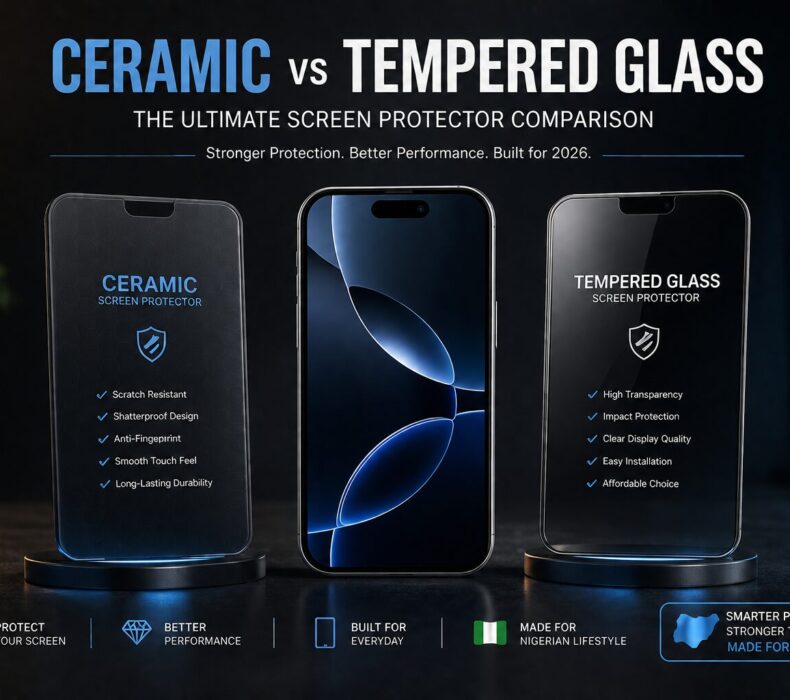
Choosing the right screen protector for your smartphone has become one of the most confusing decisions Nigerian buyers face today, which is why understanding the ceramic vs tempered glass debate is essential before spending your hard-earned Naira in 2026. Furthermore, both materials claim superior protection, better clarity, and longer durability, making the choice genuinely challenging without proper guidance. However, real-world performance, pricing, and use-case suitability differ significantly between these two popular protection technologies. Therefore, this carefully researched comparison guide breaks down every important factor to help every Nigerian buyer choose the truly strongest screen protector for their specific needs.
Understanding Both Screen Protector Technologies
First and foremost, understanding what each material actually is helps establish the right context for this important comparison.
What Is Tempered Glass?
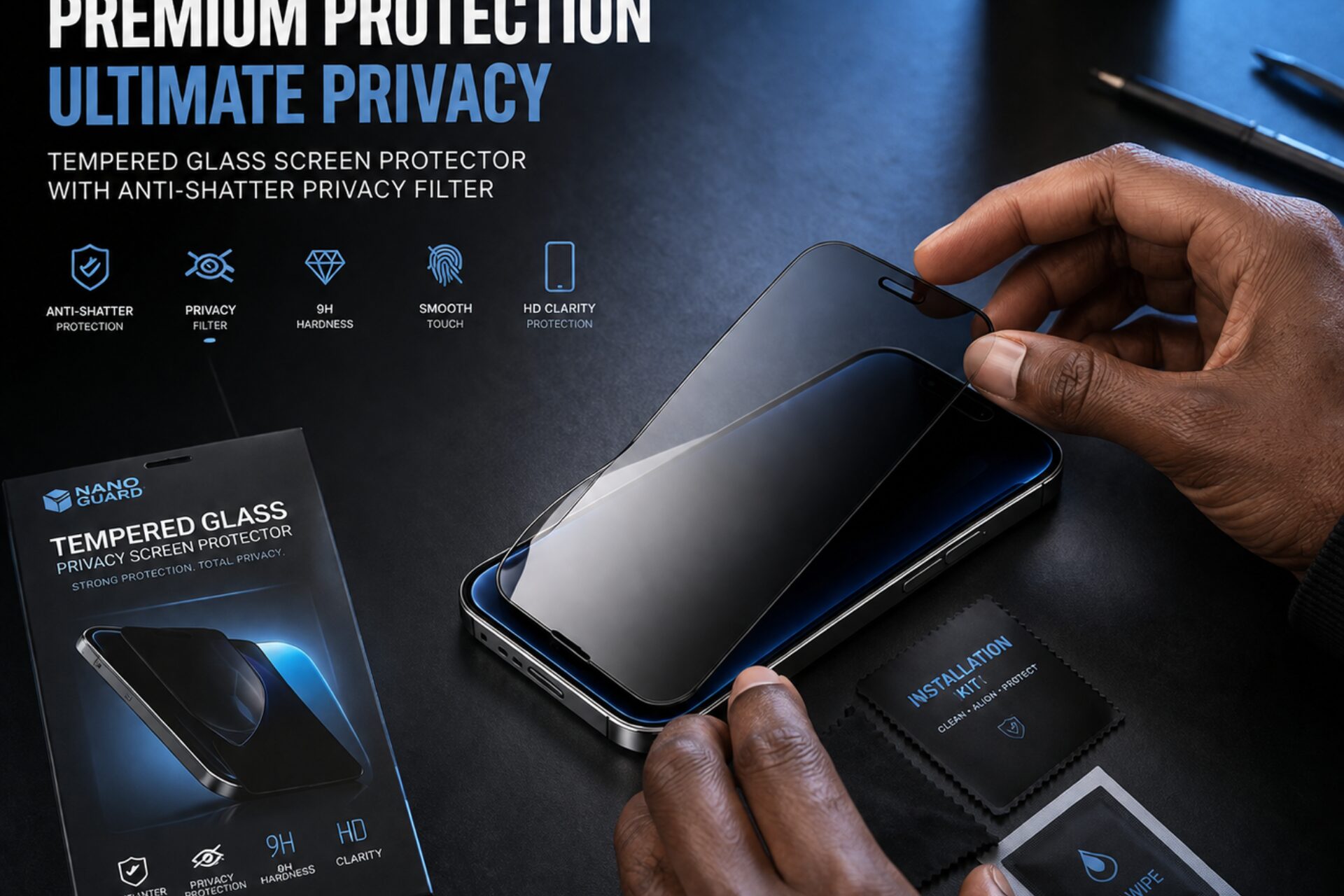
Tempered glass screen protectors are made from real glass that undergoes chemical strengthening through controlled heating and rapid cooling processes. Consequently, this treatment creates a genuinely tough surface layer that resists scratches and absorbs impacts significantly better than untreated glass.
Moreover, tempered glass protectors typically feature 9H hardness ratings, oleophobic coatings, and precise 2.5D edges that deliver premium fit and finish on modern smartphones.
What Is Ceramic Screen Protector?
On the other hand, ceramic screen protectors are made from flexible composite materials that combine ceramic particles with polymer films. Furthermore, this hybrid construction creates an unbreakable flexible protector that bends without shattering and absorbs impact through material flexibility.
Additionally, ceramic protectors typically feature enhanced scratch resistance, matte or glossy finishes, and full edge-to-edge coverage that works exceptionally well on curved smartphone displays.
Protection Performance Comparison
Now let us examine how each material actually performs when it matters most.
Tempered Glass Protection Performance
Specifically, quality tempered glass protectors deliver exceptional protection against direct impacts, sharp objects, and everyday scratches. Furthermore, their rigid construction distributes impact energy across the entire protector surface, effectively absorbing shock before it reaches the smartphone screen underneath.
Moreover, premium tempered glass options like Whitestone Dome Glass survive drops from up to 2 meters onto hard surfaces without transferring damage to the actual device screen.
Impact Rating: Excellent
Scratch Resistance: 9H hardness
Drop Protection: Up to 2 meters
Ceramic Screen Protector Performance
Meanwhile, ceramic protectors offer impressive flexibility-based protection that absorbs impact through material bending rather than rigid shock distribution. Consequently, ceramic protectors never shatter dangerously, even when subjected to severe impacts.
Additionally, ceramic protectors handle curved displays and foldable smartphones significantly better than tempered glass alternatives that struggle with non-flat surfaces.
Impact Rating: Very Good
Scratch Resistance: 8H equivalent hardness
Drop Protection: Up to 1.5 meters
Clarity and Touch Sensitivity Comparison
Furthermore, daily user experience factors significantly influence which protector best suits Nigerian buyers.
Tempered Glass Clarity
Above all, quality tempered glass delivers near-perfect display clarity with 99.9% light transmission that preserves original screen brightness and color accuracy. Moreover, tempered glass maintains crisp responsive touch sensitivity that matches the naked smartphone experience.
Clarity Rating: ⭐⭐⭐⭐⭐
Touch Response: Excellent
Ceramic Screen Protector Clarity
On the other hand, ceramic protectors typically offer slightly reduced clarity compared to tempered glass, with approximately 95% light transmission. However, modern premium ceramic options have significantly improved clarity performance throughout 2025 and into 2026.
Additionally, ceramic protectors maintain excellent touch sensitivity through their thin flexible construction, though some users report slightly different tactile feel compared to tempered glass alternatives.
Clarity Rating: ⭐⭐⭐⭐
Touch Response: Very Good
Installation and Durability Comparison
Similarly, installation experience and long-term durability significantly impact overall value.
Tempered Glass Installation
Specifically, tempered glass installation requires careful alignment, dust removal, and bubble prevention that can frustrate first-time users. Furthermore, incorrect installation often results in permanent air bubbles or misalignment that ruins the protector entirely.
However, premium options like Spigen Glas.tR EZ Fit include installation frames that make perfect placement virtually foolproof for any Nigerian buyer.
Installation Difficulty: Moderate
Long-term Durability: Cracks upon severe impact but continues protecting
Ceramic Screen Protector Installation
Moreover, ceramic protectors offer significantly easier installation through their flexible construction that self-adjusts during application. Consequently, air bubbles rarely form permanently, and slight misalignment can often be corrected after initial placement.
Additionally, ceramic protectors never crack or shatter dangerously, maintaining continuous protection even after multiple severe impacts.
Installation Difficulty: Easy
Long-term Durability: Excellent — never shatters
Price Comparison in Nigerian Naira 2026
Perhaps the most decisive factor for Nigerian buyers is pricing across equivalent quality options.
Premium Tempered Glass Options:
₦12,000 – ₦38,000
Premium Ceramic Protector Options:
₦8,000 – ₦25,000
Therefore, ceramic protectors typically offer more accessible Nigerian pricing across similar quality tiers. However, tempered glass remains dominant in the ultra-premium category where products like Whitestone Dome Glass command premium prices for edge-to-edge protection excellence.
Complete Side-By-Side Comparison Table 2026
| Feature | Tempered Glass | Ceramic |
|---|---|---|
| Material | Real glass | Flexible ceramic composite |
| Hardness Rating | 9H | 8H equivalent |
| Impact Protection | Excellent | Very Good |
| Drop Rating | Up to 2 meters | Up to 1.5 meters |
| Clarity | 99.9% transmission | 95% transmission |
| Touch Sensitivity | Excellent | Very Good |
| Installation | Moderate | Easy |
| Shatters on Impact | Yes | No |
| Curved Display Fit | Poor | Excellent |
| Foldable Compatible | No | Yes |
| Price Range (₦) | ₦12,000–₦38,000 | ₦8,000–₦25,000 |
| Overall Rating | ⭐⭐⭐⭐⭐ | ⭐⭐⭐⭐½ |
Which Screen Protector Should Nigerian Buyers Choose?
Now that every important factor has been examined, matching the right choice to your specific needs becomes clear.
Choose Tempered Glass If:
First and foremost, choose tempered glass if you own a flat-display smartphone and want maximum impact protection combined with premium clarity. Furthermore, choose tempered glass if you regularly drop your phone on hard surfaces and need the strongest rigid protection barrier available.
Moreover, choose tempered glass if you value premium touch sensitivity that matches the naked smartphone experience exactly.
Choose Ceramic Screen Protector If:
On the other hand, choose ceramic if you own a curved-display smartphone, foldable device, or any phone where tempered glass struggles with proper edge coverage. Additionally, choose ceramic if you want a shatterproof protection experience that never leaves dangerous glass fragments after impact.
Furthermore, choose ceramic if easy installation and accessible Nigerian pricing matter significantly for your specific budget and installation confidence level.
Top Recommendations by Category
Best Tempered Glass Option
Without any doubt, Whitestone Dome Glass leads the tempered glass category through UV-activated liquid adhesive delivering edge-to-edge protection and superior impact resistance.
Price: ₦25,000 – ₦38,000
Rating: ⭐⭐⭐⭐⭐
Best Ceramic Screen Protector
Similarly, Nillkin Impact Resistant Ceramic leads the ceramic category through its premium flexible construction, excellent clarity performance, and reliable protection at accessible Nigerian pricing.
Price: ₦12,000 – ₦20,000
Rating: ⭐⭐⭐⭐½
The Final Verdict: Which Screen Protector Reigns Supreme?
In truth, both materials deliver genuine value depending on specific buyer priorities. However, for maximum overall protection on flat-display flagship smartphones, tempered glass reigns supreme in 2026 through its combination of rigid impact absorption, premium clarity, and battle-tested reliability.
Meanwhile, for curved-display smartphones, foldable devices, and buyers prioritizing shatterproof safety, ceramic protectors deliver superior overall value.
Where to Buy in Nigeria
Both screen protector types are readily available through Jumia Nigeria, Konga, Slot, and authorized brand retailers nationwide. Furthermore, always purchase exclusively from verified sellers providing original packaging and authenticity documentation to avoid the counterfeit protectors flooding Nigerian markets.
Final Thoughts
In conclusion, the ceramic vs tempered glass comparison reveals that Nigerian smartphone buyers have two exceptional screen protection technologies available in 2026. Whether you invest in the industry-leading Whitestone Dome Glass tempered from ₦25,000 or the shatterproof Nillkin Impact Ceramic from ₦12,000, every option on this list delivers genuine screen protection worth every Naira spent.

 Get it on
  Download on the