Proper installation and regular maintenance are essential if you want your air conditioner to perform efficiently for many years. Air Conditioner Maintenance and installation tips can help homeowners and businesses avoid costly repairs, reduce electricity bills, and enjoy consistent cooling throughout Nigeria’s hot seasons. Even the most advanced air conditioner can experience poor performance if it is installed incorrectly or neglected over time. Fortunately, following a few practical maintenance and installation practices can keep your cooling system operating at its best.
Why Proper Installation Matters
Many people focus only on choosing the right air conditioner, but proper installation is equally important.
A professionally installed air conditioner offers several advantages, including:
Better cooling performance
Lower energy consumption
Longer equipment lifespan
Reduced maintenance costs
Quieter operation
Improved indoor comfort
On the other hand, poor installation can lead to refrigerant leaks, water drainage problems, higher electricity bills, and frequent breakdowns.
An undersized air conditioner will struggle to cool the room and may run continuously, increasing electricity costs.
Conversely, an oversized unit will cool the room too quickly without removing enough humidity, resulting in reduced comfort.
Always consider:
Room dimensions
Ceiling height
Number of windows
Sunlight exposure
Number of occupants
Heat-producing appliances
Choosing the correct cooling capacity ensures efficient and reliable performance.
Select the Best Installation Location
The position of your air conditioner affects its efficiency.
For indoor units:
Install high on a wall for better airflow.
Keep the unit away from direct sunlight.
Avoid placing it above heat-producing appliances.
Ensure nothing blocks the airflow.
For outdoor units:
Place the condenser in a well-ventilated area.
Protect it from excessive rain and direct sunlight where possible.
Leave enough space around the unit for proper airflow.
Keep it away from dust and debris.
Proper placement helps the system cool more efficiently while reducing strain on the compressor.
Hire Qualified Installation Professionals
Although some people attempt DIY installation, professional installation offers significant advantages.
Certified technicians can:
Install refrigerant lines correctly.
Test electrical connections.
Ensure proper drainage.
Check refrigerant pressure.
Verify safe operation.
As a result, professional installation minimizes future maintenance issues and protects your manufacturer’s warranty.
Use a Voltage Stabilizer
Power fluctuations are common in many parts of Nigeria.
Sudden voltage changes can damage compressors, control boards, and other electrical components.
Installing a quality voltage stabilizer helps:
Protect sensitive electronics
Reduce electrical damage
Improve equipment lifespan
Minimize unexpected repair costs
This simple investment can save significant money over time.
Clean Air Filters Regularly
One of the easiest Air Conditioner Maintenance and installation tips is cleaning the air filters.
Dirty filters restrict airflow and reduce cooling performance.
Additionally, clogged filters force the air conditioner to work harder, increasing electricity consumption.
For best results:
Clean filters every two to four weeks.
Replace damaged filters immediately.
Follow the manufacturer’s cleaning instructions.
Regular filter maintenance improves indoor air quality while keeping the system efficient.
Keep the Outdoor Unit Clean
The outdoor condenser plays a vital role in releasing heat from your home.
Leaves, dust, and debris can reduce its efficiency.
To maintain optimal performance:
Remove leaves and dirt regularly.
Keep nearby plants trimmed.
Ensure adequate airflow around the condenser.
Clean condenser fins carefully.
A clean outdoor unit allows the compressor to operate more efficiently.
Schedule Routine Professional Servicing
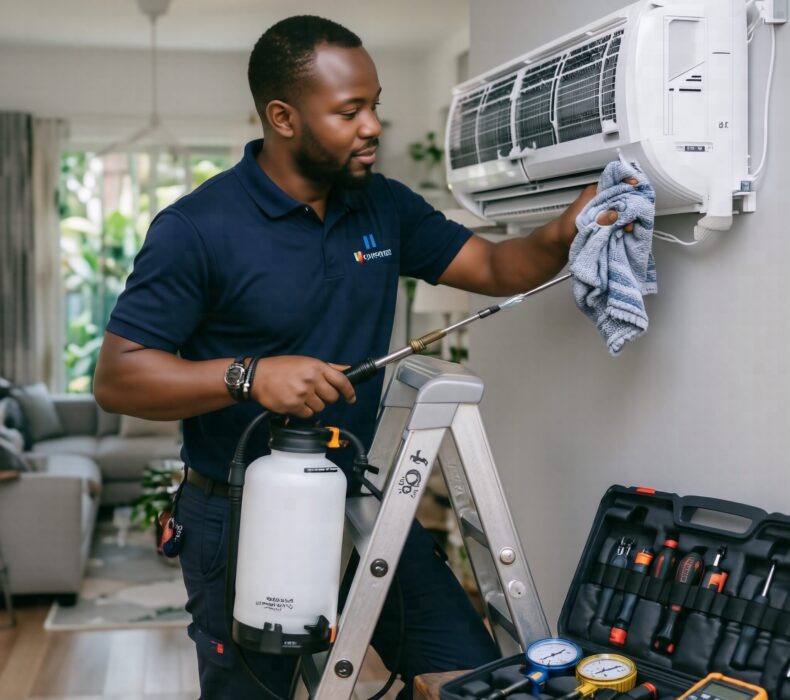
While basic cleaning can be done at home, professional servicing remains essential.
A qualified technician should:
Inspect refrigerant levels.
Clean evaporator and condenser coils.
Test electrical components.
Check drainage systems.
Tighten electrical connections.
Examine compressor performance.
Regular servicing helps identify small issues before they become expensive repairs.
Monitor Refrigerant Levels
Refrigerant is responsible for absorbing and transferring heat.
Low refrigerant levels reduce cooling performance and place extra strain on the compressor.
Signs of low refrigerant include:
Weak cooling
Ice on indoor coils
Longer cooling cycles
Higher electricity bills
If you notice these symptoms, contact a certified technician immediately.
Keep Air Vents Unobstructed
Blocked air vents reduce airflow and cooling efficiency.
Avoid placing:
Curtains
Furniture
Shelves
Decorative items
in front of indoor air vents.
Proper airflow allows cool air to circulate evenly throughout the room.
Maintain Proper Temperature Settings
Many people mistakenly set their air conditioner to the lowest possible temperature.
However, extremely low settings force the system to work harder without significantly improving comfort.
Instead, choose a comfortable temperature that balances cooling performance with energy efficiency.
This approach helps reduce electricity costs while extending the lifespan of the unit.
Inspect Drainage Systems
Air conditioners remove moisture from indoor air, and this water exits through a drainage pipe.
Blocked drainage lines can cause:
Water leakage
Damp walls
Mould growth
Unpleasant odours
Regularly inspecting and cleaning drainage systems helps prevent these issues.
Keep Doors and Windows Closed
When your air conditioner is operating, keep doors and windows closed.
This prevents warm outdoor air from entering the room and allows the system to cool more efficiently.
Additionally, closing curtains during sunny afternoons helps reduce indoor heat.
Protect the Outdoor Unit During Harsh Weather
Although outdoor units are designed to withstand weather conditions, basic protection improves their lifespan.
You should:
Install the condenser on a stable platform.
Protect it from flooding.
Avoid covering ventilation openings.
Keep heavy objects away from the unit.
These precautions help prevent accidental damage.
Signs Your Air Conditioner Needs Maintenance
Knowing when your air conditioner requires servicing can prevent costly repairs.
Watch for:
Weak airflow
Poor cooling
Unusual noises
Water leaks
Bad odours
High electricity bills
Frequent cycling
If any of these issues occur, schedule professional maintenance as soon as possible.
Common Installation Mistakes to Avoid
Proper installation is just as important as buying a quality air conditioner.
Avoid these common mistakes:
Choosing the wrong cooling capacity
Installing the indoor unit too close to the ceiling
Blocking airflow around the outdoor unit
Ignoring drainage requirements
Using poor-quality electrical wiring
Skipping professional installation
Avoiding these errors helps ensure reliable performance from the very beginning.
Benefits of Regular Air Conditioner Maintenance
Following proper maintenance practices provides numerous long-term benefits.
These include:
Lower electricity bills
Better cooling performance
Improved indoor air quality
Longer equipment lifespan
Reduced repair costs
Increased reliability
Greater overall comfort
Furthermore, well-maintained air conditioners often retain their performance for many years.
Conclusion
Following these Air Conditioner Maintenance and installation tips will help you enjoy reliable cooling, lower operating costs, and a longer-lasting air conditioning system. Proper installation lays the foundation for efficient performance, while routine maintenance keeps every component working as it should.
Whether you are installing a new unit or maintaining an existing one, investing in professional installation, regular servicing, and simple cleaning routines will protect your investment and ensure your air conditioner continues to provide dependable comfort throughout Nigeria’s warm climate.









 Get it on
  Download on the