Exfoliating pads have become a popular addition to modern skincare routines because they offer a convenient way to remove dead skin cells, improve skin texture, and promote a smoother-looking complexion. Unlike traditional facial scrubs that rely on physical particles, many exfoliating pads contain chemical exfoliants such as alpha hydroxy acids (AHAs), beta hydroxy acids (BHAs), or polyhydroxy acids (PHAs).
However, knowing when to use exfoliating pads in your skincare routineis just as important as choosing the right product. Using them at the wrong time, too frequently, or alongside too many active ingredients can leave the skin dry, irritated, sensitive, or uncomfortable.
For Nigerian skincare shoppers dealing with concerns such as oily skin, uneven texture, clogged pores, dullness, and post-acne marks, understanding how exfoliating pads work can help create a more effective skincare routine.
This guide explains the best time to use exfoliating pads, how often to use them, how to layer other skincare products, and the mistakes to avoid.
What Are Exfoliating Pads?
Exfoliating pads are pre-soaked facial pads designed to exfoliate the skin. Depending on the formula, they may contain ingredients such as glycolic acid, lactic acid, salicylic acid, mandelic acid, or other exfoliating ingredients.
The pads can help loosen and remove dead skin cells from the surface of the skin. Some formulas are also designed to help clear excess oil from pores and improve the appearance of uneven skin texture.
There are generally three types of exfoliating acids commonly found in these products:
AHA Exfoliating Pads
Alpha hydroxy acids, including glycolic acid and lactic acid, primarily work on the skin’s surface. They are often used to improve the appearance of dullness, rough texture, and uneven-looking skin tone.
BHA Exfoliating Pads
Beta hydroxy acids, particularly salicylic acid, are oil-soluble and can penetrate into pores. This makes them popular for oily and blemish-prone skin.
PHA Exfoliating Pads
Polyhydroxy acids have larger molecular structures and are generally considered gentler exfoliating options. They can be suitable for people who find stronger acids irritating.
When Should You Use Exfoliating Pads in Your Skincare Routine?
The best time to use exfoliating pads depends on the product’s instructions, the ingredients it contains, and your skin’s tolerance.
For many people, exfoliating pads are best incorporated into an evening skincare routine. Night-time use can make it easier to keep the rest of your routine focused on hydration and skin barrier support.
A simple order can be:
Cleanser
Exfoliating pad
Hydrating serum
Moisturizer
If the product instructions specifically recommend morning use, follow those directions. Regardless of when you exfoliate, daily sunscreen is especially important because some exfoliating acids can increase skin sensitivity to sunlight.
Should You Use Exfoliating Pads Before or After Cleansing?
Exfoliating pads are generally used after cleansing.
Start by washing your face with a gentle cleanser to remove sweat, oil, makeup, sunscreen, and surface impurities. Pat the skin dry if the product instructions recommend applying it to dry skin.
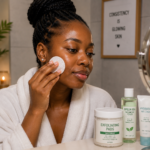
Then gently swipe the exfoliating pad across the face, avoiding the eye area and any broken or irritated skin.
Allow the product to absorb before applying your next skincare products.
Should You Use Exfoliating Pads in the Morning or at Night?
For most routines, evening use is a convenient choice, particularly when using stronger exfoliating acids.
Using exfoliating pads at night allows you to follow with moisturizing and barrier-supporting products without immediately exposing freshly exfoliated skin to environmental factors.
However, some exfoliating pads are specifically formulated for daytime use. Always read the manufacturer’s instructions.
If you use exfoliating acids, broad-spectrum sunscreen should be part of your morning routine. This is especially important in sunny climates such as Nigeria.
How Often Should You Use Exfoliating Pads?
There is no single exfoliation schedule that works for everyone.
If you are new to exfoliating pads, starting once or twice per week can be a reasonable approach. Monitor how your skin responds before gradually increasing frequency.
Some gentle products may be suitable for more frequent use, while stronger formulations may need to be used less often.
Signs that you may be exfoliating too frequently include:
Persistent dryness
Burning or stinging
Increased redness
Tight-feeling skin
Flaking
Increased sensitivity
A noticeably irritated skin barrier
More exfoliation does not necessarily mean better results. Consistency and moderation are usually more useful than aggressive exfoliation.
How to Add Exfoliating Pads to Your Skincare Routine
Introducing exfoliating pads gradually can help your skin adjust.
Step 1: Cleanse Your Face
Use a gentle cleanser to remove dirt, oil, makeup, and other buildup.
Avoid using a harsh cleanser immediately before a strong exfoliating pad because combining irritating products may increase dryness.
Step 2: Apply the Exfoliating Pad
Gently sweep the pad across the skin. Do not aggressively scrub your face.
Pay attention to areas where you experience roughness or congestion, but avoid the delicate eye area.
Step 3: Apply Hydrating Skincare
After exfoliating, consider applying a hydrating serum or moisturizer. Ingredients such as hyaluronic acid, glycerin, ceramides, and other moisturizing ingredients can complement an exfoliation routine.
Step 4: Moisturize
A good moisturizer helps support the skin barrier and reduce the uncomfortable feeling of dryness after exfoliation.
Step 5: Apply Sunscreen the Next Morning
Use broad-spectrum sunscreen during the day. This step should not be skipped simply because you exfoliated the previous night.
Can You Use Exfoliating Pads Every Day?
Whether you can use exfoliating pads every day depends on the formulation.
Some products are designed for daily use and contain relatively gentle exfoliating ingredients. Others are much stronger and may be intended for occasional use.
Even if a product claims to be suitable for frequent use, your skin’s response matters.
If daily use causes dryness, irritation, or sensitivity, reduce the frequency or stop temporarily until your skin feels comfortable again.
Can You Use Exfoliating Pads With Vitamin C?
This depends on the specific formulations and your skin’s tolerance.
Using multiple active ingredients at the same time can increase the risk of irritation. If you use a strong exfoliating pad, you may prefer to keep the rest of that routine simple.
For example, you could use your exfoliating pad at night and use a vitamin C serum in your morning routine, followed by moisturizer and sunscreen.
This approach allows you to enjoy both products without unnecessarily layering several strong actives at once.
Can You Use Exfoliating Pads With Retinol?
Retinol and exfoliating acids can both be effective skincare ingredients, but using them together can be irritating for some people.
If you are new to either product, avoid introducing both at the same time. Consider alternating nights instead.
For example:
Monday: Exfoliating pad Tuesday: Hydrating routine Wednesday: Retinol Thursday: Hydrating routine Friday: Exfoliating pad Weekend: Recovery and hydration
This is only an example. Your ideal schedule should depend on your skin type, the strength of each product, and the manufacturer’s directions.
Can You Use Exfoliating Pads With Niacinamide?
Niacinamide is commonly used alongside exfoliating products because it is a versatile skincare ingredient that can support a balanced routine.
However, irritation can still occur if you overload your routine with too many active products.
If your skin is sensitive, keep your exfoliation night simple: cleanser, exfoliating pad, moisturizer, and other gentle hydrating products.
Who Can Benefit From Exfoliating Pads?
Exfoliating pads may be helpful for people concerned about:
Dull-looking skin
Uneven skin texture
Rough patches
Excess oil
Clogged pores
The appearance of enlarged pores
Mild post-acne marks
Uneven-looking skin tone
The best product depends on your individual skin type and concern.
For example, someone with oily, congested skin may prefer a salicylic-acid-based pad, while someone primarily concerned with dullness and surface texture may consider an AHA-based option.
Exfoliating Pads for Oily Skin
If your skin tends to become oily, BHA-based exfoliating pads containing salicylic acid may be worth considering.
Salicylic acid is oil-soluble, making it particularly useful in routines focused on clogged pores and excess oil.
However, oily skin can still become dehydrated or irritated. Avoid assuming that oily skin requires aggressive exfoliation.
A balanced routine should include cleansing, appropriate exfoliation, hydration, moisturizing, and sunscreen.
Exfoliating Pads for Dry Skin
People with dry skin should approach exfoliation carefully.
Choose a gentler exfoliating product and start with low frequency. Follow exfoliation with moisturizing products that support the skin barrier.
If your skin is already severely dry, cracked, peeling, or irritated, it may be better to focus on gentle cleansing and hydration rather than exfoliating immediately.
Exfoliating Pads for Sensitive Skin
Sensitive skin requires extra caution.
Look for gentle formulations and avoid combining exfoliating pads with several other potentially irritating active ingredients.
Patch testing a new product can also help you determine how your skin responds before incorporating it fully into your routine.
If you experience persistent burning, swelling, severe redness, or discomfort, discontinue the product and seek professional dermatological advice.
Common Mistakes to Avoid When Using Exfoliating Pads
1. Using Them Too Often
Daily exfoliation is not automatically better. Excessive exfoliation can compromise the skin barrier.
2. Scrubbing Too Hard
Let the product do the work. Aggressive rubbing can create unnecessary friction and irritation.
3. Combining Too Many Active Ingredients
Using exfoliating acids alongside strong retinoids, other acids, or irritating treatments can increase the likelihood of sensitivity.
4. Skipping Moisturizer
Exfoliation should be balanced with hydration. Always follow with an appropriate moisturizer.
5. Forgetting Sunscreen
A skincare routine that includes exfoliation should also include consistent daytime sun protection.
6. Applying to Damaged Skin
Do not apply exfoliating acids to cuts, abrasions, severely irritated areas, or recently damaged skin.
How Long Does It Take to See Results?
Results vary depending on the product, active ingredient, skin type, and frequency of use.
Some people may notice smoother-feeling skin relatively quickly, while improvements in the appearance of uneven texture or post-acne marks can take longer.
The goal should be gradual improvement rather than trying to achieve dramatic changes overnight.
Using exfoliating pads consistently and appropriately is generally more beneficial than applying them excessively.
How to Choose the Right Exfoliating Pads
When shopping for exfoliating pads, consider the following:
Skin type: Choose a formulation that suits oily, dry, combination, or sensitive skin.
Active ingredient: Glycolic acid, lactic acid, salicylic acid, and PHAs have different properties.
Strength: Beginners may benefit from starting with a gentler formulation.
Additional ingredients: Hydrating ingredients can make a formula more comfortable to use.
Usage instructions: Always follow the manufacturer’s recommended frequency.
Skin concern: Select a product based on whether your main concern is texture, dullness, congestion, or excess oil.
Final Thoughts
Knowing when to use exfoliating pads in your skincare routine can make a major difference in how effectively and comfortably you exfoliate.
For many people, using exfoliating pads at night after cleansing and before hydrating skincare is a practical approach. Beginners should generally start slowly, such as once or twice weekly, and increase frequency only if their skin tolerates the product well.
Remember that exfoliating pads are only one part of a complete skincare routine. Gentle cleansing, adequate hydration, moisturizer, and consistent sunscreen are equally important.
If you are shopping for skincare products in Nigeria, choose exfoliating pads according to your skin type, concerns, and the strength of the active ingredients rather than simply choosing the strongest product available.
The key to successful exfoliation is balance. When used correctly, exfoliating pads can help create skin that looks smoother, brighter, and more refined without unnecessarily irritating your skin.















 Get it on
  Download on the