If your skin looks dull, feels rough, or has clogged pores despite following a regular skincare routine, adding an exfoliating pad may help improve its appearance. Exfoliating pads are convenient skincare products soaked with active ingredients that help remove accumulated dead skin cells, excess oil and surface impurities.
Unlike traditional face scrubs that rely mainly on physical particles, many modern exfoliating pads use chemical exfoliants such as glycolic acid, lactic acid, salicylic acid, mandelic acid and PHAs. These ingredients can help improve skin texture, brighten the appearance of dull skin and keep pores looking clearer when used appropriately.
For Nigerian skincare shoppers, choosing the right exfoliating pad is particularly important. Hot and humid weather can contribute to sweating and excess oil, while concerns such as acne, uneven skin tone, dark spots and rough texture are common reasons people look for exfoliating skincare products.
This 2026 guide explains what exfoliating pads do, the ingredients to look for, how to choose one for your skin type and how to use them safely.
What Are Exfoliating Pads?
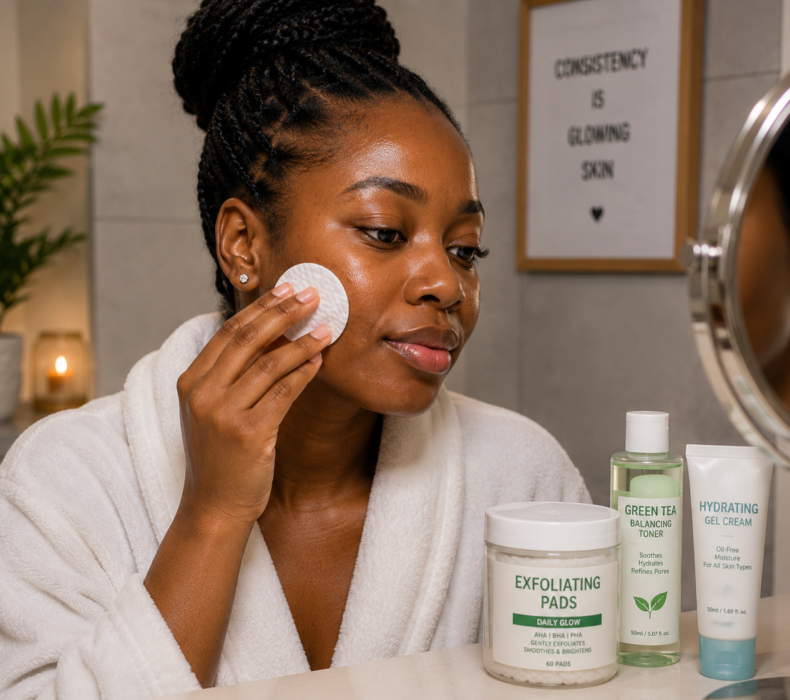
Exfoliating pads are pre-soaked cotton or synthetic pads containing skincare ingredients designed to exfoliate the skin. You normally use them after cleansing by gently sweeping the pad across the face, avoiding the eye and lip areas.
Depending on the formulation, a pad may contain one exfoliating acid or a combination of AHAs, BHAs and PHAs. Some formulas also contain soothing and hydrating ingredients such as aloe vera, glycerin, allantoin, green tea or cica to make exfoliation more comfortable.
The main advantage is convenience. Instead of measuring a liquid exfoliant or using a physical scrub, you simply take one pad and apply it to clean skin.
Modern exfoliating pads are also available in different strengths, making it possible to find options designed for beginners, oily skin, sensitive skin, acne-prone skin or people primarily concerned with uneven texture.
Benefits of the Best Exfoliating Pads in Nigeria
1. Helps Remove Dead Skin Cells
Dead skin cells can accumulate on the surface of your skin, contributing to a rough or dull appearance. Chemical exfoliants help loosen the bonds between surface skin cells so they can be shed more effectively.
This can leave the skin feeling smoother and looking fresher.
2. Improves Skin Texture
If your face feels uneven or rough to the touch, regular but controlled exfoliation may help refine the appearance of your skin.
Glycolic acid, for example, is an AHA that works primarily at the skin’s surface and is commonly used to improve texture and radiance.
3. Helps Unclog Pores
Salicylic acid is a BHA that is particularly useful for oily and congestion-prone skin because it can penetrate oil within pores.
This makes salicylic-acid exfoliating pads a popular choice for people dealing with blackheads, whiteheads and excess oil.
4. Supports a Brighter-Looking Complexion
When dead cells and surface buildup are reduced, skin may appear brighter and more even.
Exfoliating pads containing AHAs such as glycolic or lactic acid can be useful when dull-looking skin is one of your primary concerns.
5. Can Improve the Appearance of Uneven Skin Tone
Some exfoliating ingredients can help improve the appearance of uneven pigmentation over time by encouraging the removal of damaged surface cells.
However, exfoliating pads should not be considered an instant treatment for severe hyperpigmentation. Persistent or significant pigmentation may require professional assessment.
6. Convenient for Busy Skincare Routines
One of the biggest benefits of exfoliating pads is convenience. They are easy to store, easy to apply and useful when travelling.
For people who want a simple skincare routine, a pre-soaked pad can be much easier to use than several separate exfoliating products.
Key Ingredients to Look for in Exfoliating Pads
Choosing the right active ingredient is more important than simply choosing the most expensive product.
Glycolic Acid
Glycolic acid is an AHA commonly used to improve dullness, uneven texture and the appearance of fine lines. Because its molecule is relatively small, it can penetrate the skin more readily than some other AHAs.
It can be effective, but stronger glycolic-acid products may be irritating for beginners or people with sensitive skin.
Salicylic Acid
Salicylic acid is a BHA and one of the most useful exfoliating ingredients for oily and acne-prone skin.
Because it is oil-soluble, it can work within pores and help remove excess oil and buildup.
If your main concerns are blackheads, clogged pores and oily skin, a salicylic-acid exfoliating pad may be a good option.
Lactic Acid
Lactic acid is another AHA and is often considered a gentler exfoliating option than stronger glycolic-acid formulas.
It can help improve rough texture while supporting a smoother, brighter-looking complexion.
Mandelic Acid
Mandelic acid has a larger molecular structure than glycolic acid, meaning it generally penetrates more slowly. This can make it an appealing choice for people looking for a gentler AHA exfoliation.
PHAs
Polyhydroxy acids, or PHAs, are another exfoliating category found in some modern pads. They can provide gentle surface exfoliation and are often included in formulas designed for people who prefer milder products.
Best Exfoliating Pads for Different Skin Types
Best Exfoliating Pads for Oily Skin
If your skin becomes shiny quickly or frequently develops clogged pores, consider pads containing salicylic acid.
A salicylic-acid formula can help remove excess oil and buildup around pores. Combination AHA/BHA pads may also be useful when you want to address both surface texture and congestion.
Best Exfoliating Pads for Acne-Prone Skin
For acne-prone skin, salicylic acid is one of the most useful ingredients to look for.
Some exfoliating pads combine salicylic acid with glycolic acid to address both pore congestion and surface buildup. However, using too many acne treatments simultaneously can cause dryness and irritation.
Best Exfoliating Pads for Dry Skin
Dry skin generally benefits from a gentler approach. Look for products containing milder exfoliating acids, particularly lactic acid or PHAs, alongside hydrating ingredients.
Avoid assuming that a stronger acid will produce faster or better results. Over-exfoliation can damage the skin barrier and make dryness worse.
Best Exfoliating Pads for Sensitive Skin
Sensitive skin requires extra care. Choose a gentle formula with lower-strength exfoliating ingredients and soothing ingredients such as aloe, allantoin, cica or glycerin.
Start slowly and discontinue use if you experience persistent burning, swelling or significant irritation.
Best Exfoliating Pads for Combination Skin
Combination skin can benefit from a balanced exfoliating product. A gentle AHA/BHA formula may help address oily areas while improving overall texture.
However, you do not necessarily need to exfoliate your entire face aggressively.
How to Use Exfoliating Pads Correctly
Using an exfoliating pad correctly is just as important as choosing the right product.
Step 1: Cleanse your face.
Use a gentle cleanser to remove makeup, sweat, sunscreen and surface impurities.
Step 2: Dry your skin if instructed.
Some products are designed for completely dry skin, while others may have specific application instructions. Follow the manufacturer’s directions.
Step 3: Gently swipe the pad across your skin.
Avoid scrubbing aggressively. One gentle pass is generally enough.
Step 4: Avoid sensitive areas.
Keep exfoliating acids away from the eyes, lips and broken or irritated skin.
Step 5: Follow with appropriate skincare.
A gentle moisturiser can help support the skin barrier. If exfoliating during the daytime, finish with broad-spectrum sunscreen.
Step 6: Start slowly.
If you are new to exfoliating pads, begin with a low frequency rather than immediately using them every day.
Dermatology guidance increasingly emphasizes adjusting exfoliation frequency according to skin type and sensitivity rather than assuming that daily exfoliation is necessary.
How Often Should You Use Exfoliating Pads?
There is no single frequency that works for everyone.
A beginner may start with once or twice a week, then gradually increase frequency if the skin tolerates the product well.
People with oily or resilient skin may tolerate exfoliation more frequently, while dry or sensitive skin generally requires a more conservative approach.
Signs that you may be exfoliating too much include:
Persistent redness
Burning or stinging
Excessive dryness
Peeling
Increased sensitivity
Tight or uncomfortable skin
More exfoliation does not necessarily mean better skin. The goal is to remove excess buildup without compromising your skin barrier.
Exfoliating Pads vs Facial Scrubs
Exfoliating pads and physical facial scrubs work differently.
Traditional scrubs use particles and friction to physically remove surface buildup. Exfoliating pads usually rely on acids or other chemical exfoliants to loosen dead skin cells.
For many people, chemical exfoliation can provide a more controlled approach than aggressive scrubbing. However, the best option depends on your skin type, the formulation and how frequently it is used.
If your skin is sensitive or easily irritated, avoid combining multiple aggressive exfoliating methods.
Can You Use Exfoliating Pads Every Day?
Some products are specifically formulated for frequent use, but that does not mean every exfoliating pad should be used daily.
The concentration of acids, product pH, additional ingredients and your individual skin tolerance all matter.
A beginner should generally introduce exfoliation gradually. If your skin remains comfortable, you can follow the product’s recommended frequency.
Do not increase usage simply because you want faster results. Excessive exfoliation can lead to irritation and a weakened skin barrier.
Can Exfoliating Pads Help With Dark Spots?
Exfoliating pads can help improve the appearance of uneven skin tone by removing surface dead cells and supporting skin renewal.
AHAs such as glycolic and lactic acid are particularly relevant when dullness and uneven texture are concerns.
However, sunscreen is essential. Without adequate sun protection, pigmentation can become more noticeable and your skincare results may be harder to maintain.
For persistent dark spots, post-inflammatory hyperpigmentation or melasma, consider consulting a dermatologist for personalised treatment.
Exfoliating Pads in Nigeria: What Should You Consider?
When shopping for the best exfoliating pads in Nigeria, consider more than the product’s popularity.
Look at:
Your skin type
Your primary skincare concern
The exfoliating ingredient
Acid concentration
Whether the product contains soothing ingredients
How frequently the manufacturer recommends using it
Product authenticity and expiry date
Storage instructions
Your overall skincare routine
Nigeria’s warm climate can make sunscreen especially important when using exfoliating acids. A good skincare routine should therefore combine exfoliation with moisturising and daily sun protection.
Common Mistakes to Avoid
Using Too Many Acids
Using an exfoliating pad alongside several acid serums, exfoliating toners and peeling treatments can overwhelm the skin.
Scrubbing the Pad Aggressively
The active ingredients should do the exfoliating work. There is no need to rub forcefully.
Ignoring Sunscreen
Exfoliating without protecting your skin from UV exposure can undermine your skincare routine.
Starting With a Strong Formula
Beginners often make the mistake of choosing the strongest product available. A gentler product used consistently may be more suitable.
Applying on Irritated Skin
Avoid exfoliating skin that is already damaged, sunburned or severely irritated.
Final Thoughts
The best exfoliating pads in Nigeria are not necessarily the strongest or most expensive options. The right choice depends on your skin type, concerns and tolerance.
For oily or acne-prone skin, salicylic acid can be particularly useful for helping to manage excess oil and clogged pores. For dull or rough skin, AHAs such as glycolic or lactic acid may help improve surface texture and radiance. People with sensitive skin may prefer gentler PHA, lactic-acid or mandelic-acid formulas.
The key is consistency without overdoing it. Introduce exfoliating pads gradually, moisturise regularly and use sunscreen during the day.
When selected carefully and incorporated into a balanced routine, exfoliating pads can be a convenient way to support smoother, clearer and more radiant-looking skin in 2026.
Frequently Asked Questions
Are exfoliating pads good for the skin?
Yes. When appropriately formulated and used correctly, exfoliating pads can help remove surface buildup, improve texture and support a brighter-looking complexion.
Which exfoliating pad is best for acne-prone skin?
Look for a formula containing salicylic acid, particularly if clogged pores, blackheads and excess oil are major concerns.
Can dark-skinned people use exfoliating pads?
Yes, but careful product selection is important. Excessive irritation can worsen post-inflammatory pigmentation, so introduce acids gradually and use sunscreen consistently.
How long does it take to see results from exfoliating pads?
Texture may feel smoother relatively quickly, but improvements in uneven tone and other concerns generally require consistent use over time.
Can I use exfoliating pads with vitamin C or retinol?
It depends on the products and your skin tolerance. Combining several active ingredients can increase irritation, so beginners may find it easier to use them on alternate nights.
Where can I buy skincare products in Nigeria?
When purchasing exfoliating pads, choose a reputable Nigerian skincare retailer and check the product’s authenticity, ingredients, expiry date and storage condition before use.














 Get it on
  Download on the