Acne and pimples are among the most common skin concerns, affecting teenagers and adults alike. When breakouts appear, it is natural to look for products that can quickly make the skin feel cleaner, smoother, and less congested. One product that often attracts attention is a face scrub.
But can a face scrub actually help acne and pimples?
The answer is sometimes, but not always. While gentle exfoliation can help remove dead skin cells from the surface of the skin, physical scrubbing can also irritate active acne, especially when the scrub contains rough particles or is used too frequently.
For people with acne-prone skin, choosing the right exfoliation method is important. Dermatologists generally recommend gentle skincare and caution against aggressive scrubbing because irritation can make acne appear worse.
This guide explains how face scrubs work, their potential benefits and risks, when you should avoid them, and better alternatives for managing acne and pimples.
What Is a Face Scrub?
A face scrub is a skincare product designed to physically exfoliate the skin. It usually contains small particles that help loosen and remove dead skin cells from the surface when the product is gently massaged onto the face.
Common physical exfoliating ingredients include:
Fine sugar particles
Rice powder
Jojoba beads
Silica particles
Ground plant-based ingredients
Other exfoliating particles
Unlike chemical exfoliants, which use ingredients such as salicylic acid, glycolic acid, or lactic acid to loosen dead skin cells, physical scrubs rely mainly on friction.
The immediate result can be skin that feels smoother and softer. However, this does not necessarily mean that the underlying cause of acne has been treated.
Can Face Scrub Help Acne and Pimples?
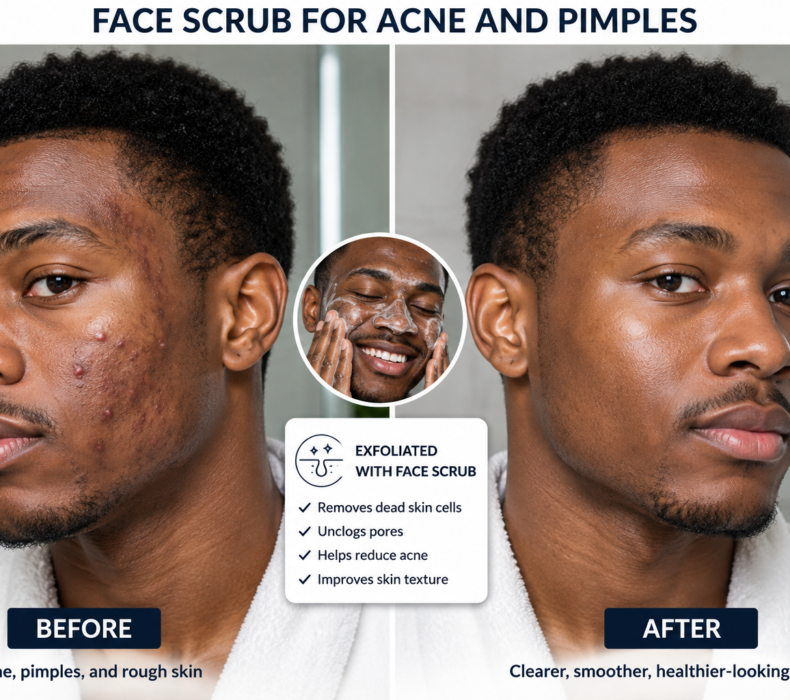
Aface scrub for acne and pimples may provide limited benefits in some situations, particularly when the main concern is surface buildup.
Gentle exfoliation can remove some dead skin cells and excess residue from the skin’s surface. This may make the skin feel smoother and potentially help reduce the appearance of dullness.
However, acne is more complicated than simply having “dirty” or dead skin cells. Acne can involve clogged hair follicles, excess oil, inflammation, bacteria, blackheads, whiteheads, pimples, nodules, or cysts.
Therefore, using a scrub alone is unlikely to provide a complete acne treatment.
For mild blackheads or occasional congestion, carefully chosen exfoliation may have a place in a skincare routine. But aggressive scrubbing is not recommended for inflamed or painful acne.
Potential Benefits of Using a Face Scrub
1. Removes Dead Skin Cells
One of the main purposes of a face scrub is to remove dead cells from the skin’s surface.
When used appropriately, exfoliation can leave the face feeling smoother and fresher.
2. Improves Skin Texture
Regular but gentle exfoliation may help improve the feel of rough or uneven skin.
This can be particularly useful for people whose primary concern is dull-looking or rough skin rather than active inflammatory acne.
3. Helps Remove Surface Buildup
Oil, makeup, sunscreen and dead skin cells can accumulate on the surface of the face. A suitable cleanser should handle most daily buildup, but gentle exfoliation can complement a basic skincare routine.
4. Can Make Skin Feel Smoother
Physical exfoliation can produce an immediately smoother feeling because surface debris is removed.
However, this short-term smoothness should not be confused with long-term acne treatment.
5. May Complement an Acne-Friendly Routine
For some people, occasional gentle exfoliation may complement an otherwise simple skincare routine. The important factor is avoiding excessive exfoliation and choosing products appropriate for the individual’s skin.
Risks of Using Face Scrub on Acne-Prone Skin
Although face scrubs can have benefits, they can also create problems when used incorrectly.
1. Skin Irritation
One of the biggest concerns is irritation.
Scrubbing acne-prone skin aggressively can cause redness, dryness, burning or discomfort. The American Academy of Dermatology recommends applying acne products gently with the fingertips and avoiding practices that irritate the skin.
2. Can Make Inflamed Acne Worse
Active pimples are already inflamed. Rubbing them repeatedly can increase irritation rather than calm the breakout.
This is particularly important for painful pimples, pustules and deeper acne lesions.
3. May Damage the Skin Barrier
Over-exfoliation can strip the skin of protective components and leave it feeling dry, tight or sensitive.
Once the skin barrier becomes irritated, other skincare products may also sting more easily.
4. Can Increase the Risk of Dark Marks
Picking, squeezing or irritating acne can increase the likelihood of post-inflammatory hyperpigmentation and scarring. This is especially important for people with darker skin tones, who may be more prone to noticeable dark marks after inflammation.
The AAD specifically warns that picking or squeezing acne can increase the risk of scarring and dark spots.
5. Overuse Can Cause More Problems
Using a face scrub every day does not necessarily mean faster results.
Repeated physical exfoliation can leave the skin irritated and uncomfortable. If your face becomes red, excessively dry, burning or unusually sensitive, it may be a sign that your routine is too aggressive.
If a pimple is swollen, painful, red or filled with pus, rubbing it with an abrasive product can increase irritation.
Instead, use a gentle cleanser and an appropriate acne treatment.
It is also important to resist the temptation to squeeze or pop pimples. Manipulating acne can delay healing and increase the risk of pigmentation and scarring.
Face Scrub vs Chemical Exfoliant for Acne
There is an important difference between physical and chemical exfoliation.
A physical scrub uses friction to remove surface cells, while chemical exfoliants use active ingredients to loosen dead skin cells.
Salicylic acid is particularly relevant to acne because it can help prevent pores from becoming clogged. NHS guidance lists salicylic acid among topical ingredients used for acne and explains that it helps stop pores from becoming blocked.
Chemical exfoliation is not automatically better for everyone, however. Strong products can still cause irritation when used incorrectly.
The goal should be effective but gentle skincare, rather than using the strongest exfoliant possible.
Better Alternatives to Face Scrub for Acne and Pimples
If your main goal is treating acne, there are several alternatives worth considering.
Salicylic Acid
Salicylic acid is a beta-hydroxy acid commonly used in acne products. It helps unclog pores and can be useful for blackheads, whiteheads and oily skin.
For beginners, a gentle cleanser containing salicylic acid may be easier to introduce than a strong leave-on exfoliant.
Benzoyl Peroxide
Benzoyl peroxide is an established acne treatment. It works partly by reducing bacteria on the skin and can also help with clogged pores and inflammation.
It can cause dryness, redness, peeling or irritation, so it should be introduced carefully.
Adapalene and Other Retinoids
Topical retinoids help prevent dead skin cells from accumulating inside hair follicles. They are commonly used as acne treatments, particularly when blackheads, whiteheads and recurring breakouts are present.
Because retinoids can irritate the skin, follow product directions and seek professional advice when appropriate.
Azelaic Acid
Azelaic acid is another option for acne-prone skin. NHS guidance notes that it can help remove dead skin and reduce bacteria, and it may be considered when other acne treatments cause significant irritation.
Gentle Cleanser
Sometimes, the best alternative to aggressive exfoliation is simply a gentle cleanser.
Look for a cleanser that removes sweat, oil and daily buildup without leaving your skin feeling tight or excessively dry.
How to Build an Acne-Friendly Skincare Routine
A simple routine is often easier to maintain than using several strong products at the same time.
Morning
Step 1: Gentle cleanser
Wash your face gently without scrubbing aggressively.
Step 2: Acne treatment, if appropriate
Use an acne treatment suitable for your skin and follow its instructions.
Step 3: Moisturizer
Use a lightweight, non-comedogenic moisturizer if your skin needs hydration.
Step 4: Sunscreen
Apply broad-spectrum sunscreen during the day. Sun protection is especially important when dealing with acne marks and when using products that may increase sensitivity.
Evening
Step 1: Cleanse
Remove sunscreen, makeup, sweat and daily buildup with a gentle cleanser.
Step 2: Treatment
Apply your chosen acne treatment according to the product instructions.
Step 3: Moisturize
Finish with a moisturizer to help maintain comfortable, hydrated skin.
Avoid introducing several exfoliating products simultaneously. Acne treatments can take several weeks to show noticeable improvement, and constantly changing products may irritate the skin.
If You Still Want to Use a Face Scrub
If you have acne-prone skin but want to use a face scrub, be cautious.
Choose a product with very fine, gentle exfoliating particles rather than a harsh, gritty scrub.
When using it:
Wet your face first.
Apply a small amount of product.
Massage very gently.
Avoid active pimples and irritated areas.
Rinse thoroughly with lukewarm water.
Apply moisturizer afterward.
Stop if you experience burning, persistent redness or excessive dryness.
Most importantly, do not assume that scrubbing harder will produce better results.
Who Should Avoid Face Scrubs?
A physical face scrub may not be appropriate if your skin is:
Very sensitive
Irritated or peeling
Sunburned
Extremely dry
Covered with inflamed acne
Recovering from certain cosmetic procedures
Reacting to other active skincare ingredients
If your skin is already irritated, adding another exfoliating product can make the problem worse.
Can Face Scrub Remove Acne Scars?
A face scrub should not be considered a treatment for acne scars.
It may temporarily make the skin surface feel smoother, but physical exfoliation does not remove established acne scars.
Dark marks left after acne are also different from true acne scars. Persistent pigmentation or scarring may require targeted skincare or professional dermatological treatment.
Avoid aggressively scrubbing dark spots in an attempt to make them disappear faster. Irritation can potentially make pigmentation more noticeable.
When Should You See a Dermatologist?
A healthcare professional can help if your acne is persistent, painful, widespread or leaving scars.
You should consider professional advice if:
You have painful nodules or cysts.
Acne is leaving scars.
Breakouts cover your face, chest or back extensively.
Over-the-counter products are not helping.
Acne is affecting your confidence or quality of life.
You are unsure whether the bumps are actually acne.
Moderate or severe acne may require prescription treatment. NHS guidance also recommends seeking medical advice for severe acne, scarring or acne that does not improve with pharmacy treatments.
Final Verdict: Can Face Scrub Help Acne and Pimples?
So, can face scrub help acne and pimples?
A face scrub can help remove dead skin cells from the surface and temporarily improve skin texture, but it should not be viewed as a primary acne treatment.
For acne-prone skin, aggressive physical exfoliation can cause irritation and potentially make breakouts and dark marks more troublesome. Dermatology guidance generally favors gentle skincare and evidence-based acne treatments over harsh scrubbing.
If you have occasional blackheads or surface buildup, a gentle exfoliating product may have a place in your routine. However, if you have recurring pimples, inflamed acne or painful breakouts, ingredients such as salicylic acid, benzoyl peroxide, azelaic acid or topical retinoids may be more appropriate depending on your skin and the severity of your acne.
The key is to avoid the “more is better” approach. Healthy-looking skin does not require aggressive scrubbing. A consistent routine built around gentle cleansing, appropriate acne treatment, moisturizing and sun protection is usually a better long-term strategy.
For Nigerian skincare shoppers, choosing products based on your specific skin type and acne concern is more useful than simply choosing the strongest scrub available. If acne is persistent or severe, consulting a dermatologist is the safest way to determine the right treatment.
Frequently Asked Questions
Is face scrub good for pimples?
A face scrub may remove surface dead skin cells, but it is not a complete treatment for pimples. Scrubbing active acne aggressively can irritate the skin and potentially worsen inflammation.
Can I use a face scrub if I have acne?
You may be able to use a very gentle scrub occasionally if your skin tolerates it, but avoid scrubbing active or inflamed pimples. Stop if you experience irritation, burning or excessive dryness.
Is salicylic acid better than a face scrub for acne?
Salicylic acid can be more directly useful for acne because it helps prevent pores from becoming clogged. However, the right treatment depends on your skin type and acne severity.
How often should I exfoliate acne-prone skin?
There is no single frequency that works for everyone. If you exfoliate, start conservatively and monitor your skin rather than exfoliating aggressively or daily.
Can scrubbing remove blackheads?
Gentle exfoliation may help with surface buildup, but persistent blackheads are better addressed with acne-focused ingredients such as salicylic acid or retinoids.
Does scrubbing make acne scars disappear?
No. Scrubbing cannot reliably remove established acne scars, and aggressive exfoliation can irritate the skin and potentially worsen pigmentation.
Key Takeaway
Face scrub for acne and pimplescan provide surface exfoliation and smoother-feeling skin, but it is not a cure for acne. For clearer-looking skin, prioritize gentle cleansing, suitable acne-fighting ingredients, moisturizer and daily sunscreen while avoiding aggressive scrubbing and picking.














 Get it on
  Download on the