Finding thebest face scrub for acne-prone skin in Nigeria can be confusing. With so many exfoliating products available in beauty stores, pharmacies, supermarkets and online shops, it is easy to choose a scrub that promises smoother, brighter skin but actually leaves your face irritated.
Acne-prone skin needs careful exfoliation. The right product can help remove dead skin cells, excess oil and buildup that may contribute to clogged pores. However, using a harsh scrub too frequently can damage the skin barrier, increase irritation and potentially make breakouts look worse.
So, what actually works?
The answer is not necessarily the roughest or strongest scrub. For acne-prone skin, the best approach is usually to choose gentle exfoliation with skin-friendly ingredients, use it correctly and combine it with a simple skincare routine.
In this guide, we explain how to choose the best face scrub for acne-prone skin in Nigeria, which ingredients to look for, what to avoid and how to exfoliate safely.
What Is a Face Scrub?
A face scrub is an exfoliating skincare product designed to remove dead skin cells from the surface of the skin. Physical scrubs typically contain small particles that manually loosen and remove surface buildup when massaged onto the skin.
Common exfoliating particles may include:
Rice powder
Sugar
Jojoba beads
Walnut particles
Apricot kernels
Bamboo powder
Fine mineral particles
Some facial exfoliators also combine physical exfoliation with ingredients such as salicylic acid, glycolic acid or fruit-derived acids.
While exfoliation can make the skin feel smoother, acne-prone skin requires extra care because excessive rubbing can cause irritation.
Is Face Scrub Good for Acne-Prone Skin?
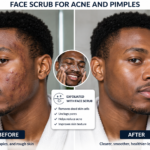
A face scrub can be useful for some people with acne-prone skin, but it is not a treatment for acne itself.
Gentle exfoliation may help remove dead skin cells and excess surface buildup. This can make the skin feel smoother and may help reduce the appearance of dullness.
However, aggressive scrubbing can cause problems.
If you have active, inflamed pimples, rubbing the skin repeatedly can increase irritation. It may also cause discomfort and make your skincare routine harder for your skin to tolerate.
For this reason, people with acne-prone skin should prioritize gentle exfoliation rather than aggressive physical scrubbing.
If you have persistent, painful, cystic or severe acne, it is better to speak with a dermatologist rather than relying on a face scrub.
What Makes the Best Face Scrub for Acne-Prone Skin in Nigeria?
The best face scrub should match your skin type, acne concerns and tolerance.
When shopping for an exfoliator, consider these characteristics.
1. Gentle Exfoliating Particles
Avoid facial scrubs containing extremely rough or sharp particles.
A good exfoliating product should feel comfortable rather than scratchy. Scrubbing harder does not necessarily mean you are getting better results.
Look for products containing fine, smooth particles that are designed specifically for facial skin.
2. Non-Comedogenic Ingredients
If your skin is prone to clogged pores, consider products labelled non-comedogenic.
Non-comedogenic products are formulated to be less likely to clog pores. However, the label is not an absolute guarantee that a product will work perfectly for everyone.
Your individual skin can still react differently to a particular formula.
3. Salicylic Acid
Salicylic acid is one of the most useful ingredients to understand if you have acne-prone skin.
Unlike a traditional physical scrub, salicylic acid is a chemical exfoliant. It can penetrate into oily pores and help remove excess oil and dead skin cells.
For acne-prone skin, a salicylic-acid-based exfoliant may be more appropriate than a very abrasive physical scrub.
4. Niacinamide
Niacinamide is another useful skincare ingredient for people dealing with oily or blemish-prone skin.
It can support the skin barrier and help improve the appearance of uneven skin tone and excess oil. It is not an exfoliant itself, but it can complement an acne-friendly skincare routine.
5. Soothing Ingredients
Acne-prone skin can become irritated easily, so ingredients that support a comfortable skin barrier can be beneficial.
Depending on the formulation, you may find soothing ingredients such as:
Aloe vera
Panthenol
Glycerin
Ceramides
Centella asiatica
The overall formula matters more than one individual ingredient.
7 Best Types of Face Scrub and Exfoliators for Acne-Prone Skin in Nigeria
There is no single product that is automatically the best for everyone. Instead, look for exfoliating products that suit your specific skin concerns.
1. Salicylic Acid Exfoliator
A salicylic acid exfoliant is a strong option for people concerned about oily skin and clogged pores.
It works differently from a traditional physical scrub because it chemically exfoliates the skin rather than relying primarily on rubbing.
This can make it a useful alternative for acne-prone skin that does not tolerate abrasive scrubs.
2. Gentle Rice-Based Face Scrub
Rice powder is commonly used in facial exfoliating products.
A finely milled rice-based scrub can provide gentle physical exfoliation. However, avoid products containing coarse particles and do not apply excessive pressure while massaging the face.
3. Jojoba Bead Facial Scrub
Jojoba beads are sometimes used as a gentler alternative to rough natural particles.
If you prefer a physical exfoliator, look for a product with smooth, rounded particles rather than sharp or irregular pieces.
4. Enzyme Exfoliator
Enzyme exfoliators use ingredients derived from fruits or other sources to loosen dead skin cells.
They can provide exfoliation without the same physical rubbing associated with traditional scrubs.
People with sensitive, acne-prone skin may prefer this type of exfoliation, although individual tolerance varies.
5. Gentle AHA Exfoliant
Alpha hydroxy acids such as lactic acid and glycolic acid exfoliate the surface of the skin.
Lactic acid may be a particularly useful option for people who want a gentler exfoliating experience.
Glycolic acid can be more potent and should be introduced carefully, especially if your skin is sensitive.
6. Clay-Based Exfoliating Mask
Clay-based products can be useful for people with oily skin because they can help absorb excess surface oil.
However, clay masks should not be allowed to excessively dry out the skin. Follow the product’s instructions and moisturize afterward.
7. Gentle Exfoliating Cleanser
Some cleansers contain mild exfoliating ingredients and can be easier to incorporate into a skincare routine.
However, avoid combining several exfoliating products at the same time. Using an exfoliating cleanser alongside a strong acid and physical scrub may cause unnecessary irritation.
Face Scrub Ingredients to Avoid for Acne-Prone Skin
Not every popular exfoliating ingredient is suitable for acne-prone skin.
Be cautious with products containing very coarse particles such as crushed nutshells or rough fruit pits. Their irregular edges can create excessive friction.
You should also be careful with products that contain:
Strong fragrances
Excessive alcohol
Very harsh detergents
Large abrasive particles
Multiple strong exfoliating acids
Extremely drying ingredients
The goal should be to remove excess dead skin cells without stripping the skin.
How Often Should You Use a Face Scrub?
One of the biggest mistakes people make is exfoliating too frequently.
You do not need to scrub your face every day.
For beginners, once a week may be enough to determine how your skin responds to a physical scrub. Some people may tolerate exfoliation more frequently, while others may need less.
Always follow the specific product instructions.
If your skin becomes:
Red
Burning
Tight
Peeling
Painful
Excessively dry
reduce or stop exfoliation and allow your skin to recover.
How to Use a Face Scrub Correctly
Using the best face scrub for acne-prone skin in Nigeria will not help much if you use it incorrectly.
Follow these basic steps:
Step 1: Cleanse Your Face
Start with a gentle facial cleanser to remove sweat, makeup, sunscreen and surface impurities.
Step 2: Apply the Scrub Gently
Apply a small amount of the scrub to damp skin if the product instructions recommend it.
Use your fingertips and gentle circular motions. Do not press hard.
Step 3: Avoid Active Pimples
Do not aggressively scrub inflamed, painful or broken pimples.
Step 4: Rinse Thoroughly
Use lukewarm water to remove the product.
Avoid very hot water because it can leave the skin feeling dry and uncomfortable.
Step 5: Moisturize
Apply a lightweight moisturizer after exfoliating.
Even oily and acne-prone skin needs hydration.
Step 6: Use Sunscreen During the Day
If you exfoliate, protecting your skin from UV exposure becomes especially important.
Use a broad-spectrum sunscreen during the day and reapply as directed.
Best Face Scrub for Oily and Acne-Prone Skin
If your skin is oily and prone to breakouts, avoid choosing a product simply because it says “deep cleansing.”
A better approach is to look for gentle exfoliation and ingredients that support clogged-pore management.
Salicylic acid products may be particularly useful for oily, acne-prone skin, while gentle physical or enzyme exfoliation may work better for people who prefer non-acid options.
Do not assume that extremely dry skin is cleaner or healthier. Over-drying the face can compromise the skin barrier and make your routine uncomfortable.
Best Face Scrub for Sensitive and Acne-Prone Skin
Sensitive acne-prone skin requires even more caution.
Choose fragrance-free or low-irritant formulas where possible, avoid rough particles and introduce one exfoliating product at a time.
Patch testing a new skincare product can also help you determine whether your skin tolerates it.
If you experience persistent irritation, stop using the product.
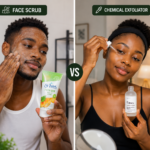
Face Scrub vs Chemical Exfoliant: Which Is Better for Acne?
For acne-prone skin, chemical exfoliants can sometimes be preferable to traditional physical scrubs because they do not require vigorous rubbing.
Salicylic acid is particularly relevant for clogged pores and oily skin.
However, chemical exfoliants are not automatically safer. Strong acids or excessive use can also irritate the skin.
The best option depends on your skin type, sensitivity and the rest of your skincare routine.
Common Mistakes When Using Face Scrubs
Scrubbing Too Hard
More pressure does not mean better exfoliation.
Exfoliating Every Day
Daily physical exfoliation can be too aggressive for many people.
Using Multiple Exfoliants
Combining a face scrub with several acids, retinoids or other active ingredients can increase irritation.
Ignoring Moisturizer
Exfoliation should be followed by appropriate hydration.
Skipping Sunscreen
Daily sun protection is an important part of any skincare routine.
Using Body Scrubs on Your Face
Body scrubs are generally designed for thicker skin and may be too abrasive for the face.
Simple Acne-Prone Skincare Routine for Nigerians
A simple routine can be more effective than using too many products.
Morning
Gentle facial cleanser
Niacinamide serum, if suitable
Lightweight moisturizer
Broad-spectrum sunscreen
Evening
Gentle cleanser
Acne treatment or exfoliant, if appropriate
Moisturizer
If you use a physical face scrub, avoid using it on the same night as other strong exfoliating treatments unless a skincare professional recommends the combination.
Does Climate in Nigeria Affect Acne-Prone Skin?
Nigeria’s warm and humid climate can influence how your skin feels and behaves.
Heat and humidity may increase sweating and make oily skin feel more uncomfortable. Dust, pollution, sunscreen and makeup can also contribute to surface buildup.
However, this does not mean you should scrub your face aggressively.
Instead, focus on cleansing appropriately, using lightweight skincare products, changing sweaty clothing when necessary and maintaining a consistent routine.
How to Choose a Face Scrub in Nigeria
When shopping for a facial exfoliator in Nigeria, consider:
Your skin type
Whether you have active acne
Ingredient quality
Particle size if it is a physical scrub
Fragrance level
Whether it is suitable for sensitive skin
Product authenticity
Expiration date
Seller reputation
Buying skincare from a reliable retailer is especially important because counterfeit or poorly stored products may irritate the skin.
Frequently Asked Questions
Can I use a face scrub if I have acne?
Yes, but choose gentle exfoliation and avoid aggressively scrubbing active, inflamed pimples.
How many times a week should I scrub my face?
Start conservatively, such as once a week, and follow the product instructions. Your skin’s tolerance should determine frequency.
Is salicylic acid better than a face scrub for acne?
Salicylic acid can be particularly useful for acne-prone and clogged skin because it exfoliates without the physical friction of a traditional scrub.
Can face scrub remove acne scars?
A face scrub cannot reliably remove acne scars. Some exfoliating ingredients may improve the appearance of uneven texture or pigmentation over time, but significant scarring may require professional treatment.
Can face scrubs make acne worse?
Yes. Over-scrubbing or using harsh abrasive products can irritate acne-prone skin and potentially worsen the appearance of breakouts.
Final Verdict: What Actually Works?
Thebest face scrub for acne-prone skin in Nigeria is not necessarily the product with the strongest exfoliating action. What works best is a gentle, consistent approach that removes excess dead skin cells without damaging the skin barrier.
For oily and clogged skin, salicylic acid-based exfoliation can be particularly useful. For people who prefer physical exfoliation, choose a gentle scrub with smooth, fine particles and avoid excessive pressure.
Most importantly, remember that a face scrub is only one part of an acne-friendly skincare routine. A gentle cleanser, suitable moisturizer, sunscreen and appropriate acne treatment can be more important for maintaining healthy-looking skin.
If your acne is persistent, painful, severe or leaving significant scars, consider consulting a dermatologist for personalized treatment rather than relying solely on exfoliation.
For Nigerian skincare shoppers, the smartest choice is to focus less on aggressive “deep scrubbing” claims and more on gentle exfoliation, suitable ingredients, authentic products and consistent skincare habits.














 Get it on
  Download on the