






- Peculiar
- August 10, 2026
- No Comments
Introduction
Lighting can completely change how a home looks and feels. The right lighting makes rooms more comfortable, functional, and attractive. However, choosing the best fixtures and brightness for each space can sometimes feel difficult.
Fortunately, you do not need to be a lighting expert to make great choices. By understanding how each room is used, you can select lighting that works beautifully with your furniture, colors, and overall decor.
In this guide, we explore ten practical lighting ideas to help you create the perfect atmosphere in every room.
1. Consider the Purpose of Each Room
Before choosing a light fixture, think about how the room is used. Different spaces require different levels and types of lighting.
For example, a living room may need soft ambient lighting for relaxation, while a kitchen requires brighter lighting for cooking and food preparation. Similarly, a home office needs focused light that makes reading and working easier.
Therefore, always consider the main purpose of the room first.
Match Lighting to Your Activities
Think about the activities that happen most often in the space. This will help you decide whether you need ambient, task, or accent lighting.
2. Use Layered Lighting
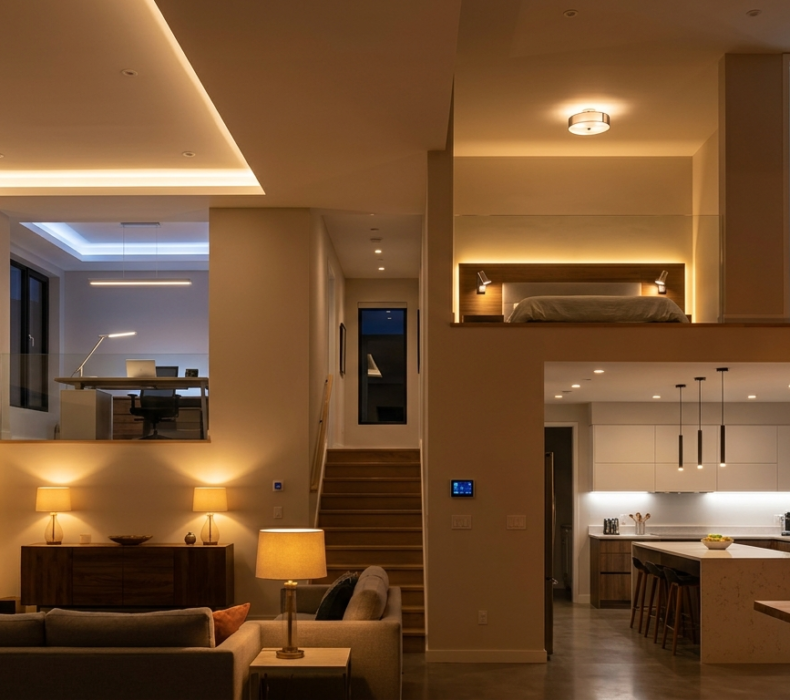
One of the most effective lighting ideas ideas is to combine several types of lighting instead of depending on one fixture.
Layered lighting usually includes ambient, task, and accent lighting. Together, these layers create a balanced and flexible atmosphere.
For instance, a living room could have a ceiling light for general illumination, floor lamps for reading, and wall lights to highlight artwork.
3. Choose Warm Lighting for Relaxing Spaces
Bedrooms and living rooms generally benefit from warm, comfortable lighting. Warm bulbs can create a cozy atmosphere that makes the space feel more inviting.
Furthermore, warm lighting works especially well with wood furniture, neutral colors, and soft textiles.
Create a Cozy Bedroom
Use bedside lamps or wall-mounted lights instead of relying only on a bright ceiling fixture. This gives you more control over the atmosphere, especially in the evening.
4. Choose Brighter Lighting for Work Areas
Kitchens, offices, and study areas usually require stronger lighting. Good visibility is important when preparing food, reading, studying, or completing detailed tasks.
Consequently, consider pendant lights, under-cabinet lighting, or adjustable desk lamps for these areas.
The goal is to make the workspace bright enough without creating uncomfortable glare.
5. Think About the Size of the Room
The size of a room should influence the size and number of lighting fixtures you choose.
A large room may look better with a statement chandelier or multiple fixtures. On the other hand, a small room can benefit from compact ceiling lights, wall sconces, or slim floor lamps.
Additionally, using several smaller fixtures can sometimes distribute light more effectively than using one large light.
6. Consider Your Ceiling Height
Ceiling height is another important factor when selecting lighting.
For rooms with high ceilings, chandeliers and pendant lights can add visual interest while filling the vertical space. Meanwhile, flush-mount and semi-flush fixtures are often practical for rooms with lower ceilings.
Therefore, always check the proportions of the fixture before purchasing it.
7. Use Accent Lighting to Highlight Decor
Accent lighting is perfect for drawing attention to beautiful features in your home.
You can use it to highlight artwork, shelves, architectural details, plants, or decorative walls. As a result, even simple decor can become a noticeable focal point.
Highlight Your Favorite Features
Try directional spotlights or wall lights around artwork and decorative displays. This simple approach can make your interior feel more carefully designed.
8. Match Lighting With Your Interior Style
Your lighting should complement the existing style of your home.
For a modern interior, consider sleek pendant lights, minimalist ceiling fixtures, or simple floor lamps. Alternatively, traditional spaces may look better with classic chandeliers, elegant wall sconces, or decorative table lamps.
Moreover, matching the finish of your lighting with other metal details can create a more coordinated appearance.
9. Pay Attention to Light Placement
Even a beautiful fixture may not work well if it is placed incorrectly.
For example, kitchen lights should illuminate countertops rather than create shadows. In a bedroom, bedside lighting should be positioned where it is easy to reach. Likewise, dining room lighting should provide enough illumination without overwhelming the table.
As a result, always think about where the light will fall before installing a fixture.
10. Choose Energy-Efficient Lighting
Finally, consider energy efficiency when selecting your lighting.
LED bulbs are a popular option because they generally use less energy and last longer than traditional incandescent bulbs. They are also available in different brightness levels and color temperatures.
Therefore, energy-efficient lighting can help create a comfortable home while supporting more practical energy use.
How to Combine Different Lighting Fixtures
The best lighting ideas ideas often involve combining different fixtures throughout the same room.
For example, you could combine a ceiling light with table lamps, floor lamps, wall lights, or accent lighting. This allows you to adjust the brightness depending on the time of day and activity.
Living Room
Use a combination of ceiling lighting, floor lamps, and accent lights to create a flexible and welcoming space.
Bedroom
Combine a soft ceiling fixture with bedside lamps or wall sconces for a relaxing atmosphere.
Kitchen
Use bright ceiling lighting together with under-cabinet or pendant lighting to improve visibility.
Dining Room
A pendant or chandelier above the dining table can become an attractive focal point while providing useful illumination.
Bathroom
Use bright, even lighting around the vanity and combine it with suitable overhead lighting.
Final Thoughts
Choosing the right lighting does not have to be complicated. By considering the purpose, size, style, and layout of each room, you can create a home that feels both beautiful and practical.
Most importantly, experiment with different lighting ideas and combine ambient, task, and accent lighting where appropriate. With the right approach, lighting can transform ordinary rooms into comfortable and stylish spaces.






 Get it on
  Download on the