





Every Nigerian smartphone owner shopping for a new charging solution needs to read this comprehensive guide first, because knowing how to choose the right charger for your smartphone is one of the most important consumer decisions you can make in 2026. Furthermore, with hundreds of charger options flooding Nigerian markets, choosing the wrong charger can dramatically reduce your smartphone’s battery lifespan, deliver painfully slow charging speeds, or even damage your device permanently. Moreover, understanding key charger specifications, compatibility requirements, and safety features empowers Nigerian buyers to make confident purchasing decisions. Therefore, this authoritative guide reveals exactly how to select the perfect charger for your specific smartphone needs.
Why Choosing the Right Charger Matters
First and foremost, using the wrong charger significantly impacts your smartphone’s overall performance and longevity. In fact, incompatible chargers can reduce battery lifespan by up to 40% within just one year of regular use.
Moreover, the right charger delivers maximum fast charging speeds supported by your specific smartphone model. Consequently, choosing appropriately ensures you never wait longer than necessary for your device to reach full charge during busy Nigerian workdays.
Additionally, quality chargers protect against dangerous electrical incidents including overheating, short circuits, and battery damage. Therefore, understanding proper charger selection safeguards both your device investment and personal safety.
Step 1: Identify Your Smartphone’s Charging Specifications
Before purchasing any charger, understanding your smartphone’s specific requirements is absolutely essential.
Check Maximum Charging Wattage
Above all, verify your smartphone’s maximum supported charging wattage through official manufacturer specifications. Specifically, common wattage ratings include:
- iPhone 15/16 series: Up to 27W
- Samsung Galaxy S24 Ultra: Up to 45W
- Xiaomi 14 Pro: Up to 120W
- Tecno Camon Series: Up to 33W
- Infinix Note Series: Up to 45W
Identify Charging Port Type
Furthermore, determine whether your smartphone uses USB-C, Lightning, or Micro-USB charging ports. Moreover, most modern smartphones in 2026 use USB-C, making this the most future-proof choice.
Check Fast Charging Standard
Additionally, verify which fast charging standards your smartphone supports including USB Power Delivery (PD), Quick Charge (QC), or proprietary standards like Samsung Super Fast Charging or Xiaomi HyperCharge.
Step 2: Choose the Right Wattage Output
Now let us examine how to match charger wattage to your smartphone requirements.
Match or Exceed Your Device Requirements
Specifically, always choose chargers meeting or slightly exceeding your smartphone’s maximum wattage. Consequently, a phone supporting 45W fast charging needs at least a 45W charger to achieve full fast charging speeds.
Higher Wattage Is Safe
Furthermore, using a higher-wattage charger than required is completely safe because smartphones only draw their maximum supported wattage regardless of charger capacity. Therefore, buying a 65W charger for a 30W phone works perfectly while future-proofing for upcoming devices.
Lower Wattage Slows Charging
On the other hand, using a lower-wattage charger significantly slows charging speeds. Moreover, a 20W charger on a 45W phone will charge slowly and inefficiently despite technically working.
Step 3: Select the Right Fast Charging Standard
Additionally, matching fast charging standards ensures optimal performance.
USB Power Delivery (PD)
Specifically, USB Power Delivery has become the universal fast charging standard supported by virtually all modern smartphones. Consequently, PD chargers offer maximum compatibility across iPhone, Samsung, Google Pixel, and most Android devices.
Quick Charge (QC)
Moreover, Quick Charge remains widely supported by older Android smartphones and many current devices. Furthermore, QC 4.0+ chargers work with most Qualcomm-powered smartphones popular across Nigerian markets.
Proprietary Standards
Additionally, some brands use proprietary fast charging including Samsung Super Fast Charging, Xiaomi HyperCharge, and OPPO SuperVOOC. Therefore, brand-specific chargers deliver optimal performance for their respective devices.
Step 4: Verify Safety Certifications
Similarly, safety certifications separate reliable chargers from dangerous alternatives.
Essential Certifications to Look For
- CE Marking: European conformity standard
- FCC Certification: Federal Communications Commission approval
- UL Listed: Underwriters Laboratories safety certification
- RoHS Compliance: Restriction of hazardous substances
Furthermore, quality chargers display these certifications prominently on packaging and product labels. Consequently, chargers lacking certifications should be avoided entirely.
Step 5: Choose Between Single-Port and Multi-Port Options
Additionally, deciding between single-port and multi-port chargers depends on your specific usage patterns.
Single-Port Chargers
Above all, single-port chargers work perfectly for users who charge one device at a time and prioritize maximum portability. Moreover, they offer excellent value for straightforward smartphone-only charging needs.
Multi-Port Chargers
On the other hand, multi-port chargers benefit Nigerian users owning multiple devices including smartphones, tablets, laptops, and wireless earbuds. Furthermore, they eliminate cable clutter while providing simultaneous charging capabilities.
Step 6: Consider Portability Requirements
Furthermore, portability significantly impacts which charger best suits your lifestyle.
Compact GaN Chargers
Specifically, Gallium Nitride (GaN) chargers deliver premium performance in remarkably compact designs. Consequently, GaN chargers perfectly suit Nigerian users who carry chargers between home, office, and travel destinations.
Foldable Plug Design
Moreover, chargers featuring foldable plugs travel more comfortably in laptop bags and travel kits without protruding awkwardly.
Weight Considerations
Additionally, consider total charger weight if you regularly travel with your charging solutions. Therefore, GaN technology dramatically reduces weight compared to traditional silicon alternatives.
Step 7: Set Your Budget Wisely
Similarly, budget considerations should balance quality against affordability.
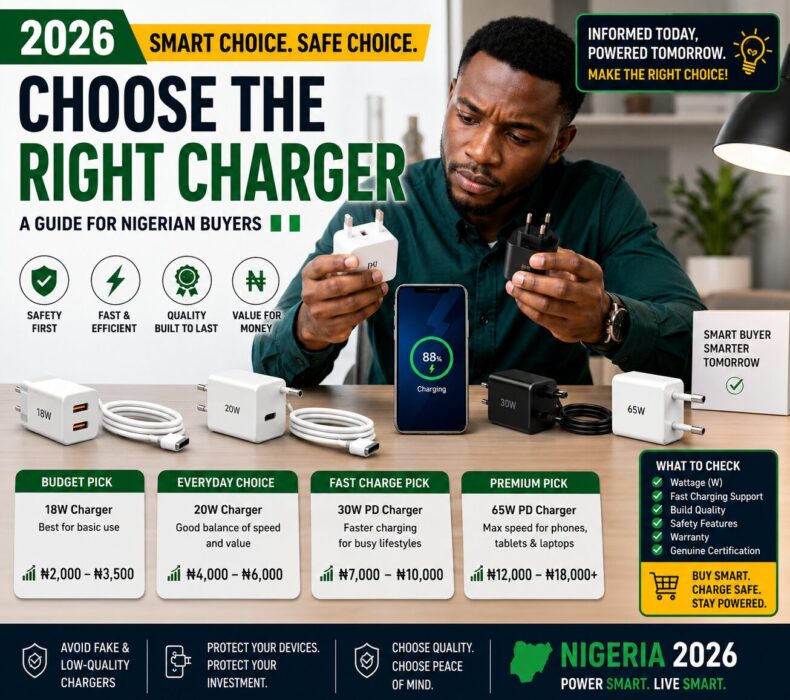
Premium Range (₦25,000 – ₦65,000)
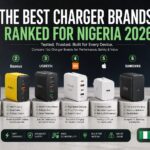
Furthermore, premium chargers from Anker, Baseus, and Ugreen deliver exceptional performance, reliability, and long-term warranty support. Consequently, they represent smart long-term investments for Nigerian consumers.
Mid-Range (₦15,000 – ₦25,000)
Additionally, mid-range chargers from Xiaomi and Samsung provide reliable performance at more accessible pricing. Moreover, they offer excellent value for everyday smartphone charging needs.
Budget-Friendly (₦8,000 – ₦15,000)
Finally, budget-friendly chargers from Oraimo deliver dependable performance with accessible Nigerian warranty support. Therefore, they suit budget-conscious buyers without compromising essential safety features.
Complete Charger Selection Checklist 2026
| Consideration | What to Check | Priority |
|---|---|---|
| Smartphone Compatibility | Wattage support | Essential |
| Port Type | USB-C, Lightning, Micro-USB | Essential |
| Fast Charging Standard | PD, QC, Proprietary | High |
| Safety Certifications | CE, FCC, UL, RoHS | Essential |
| Port Configuration | Single or Multi-Port | Medium |
| Portability | GaN, Foldable plug | Medium |
| Brand Reputation | Established brands | High |
| Warranty Coverage | 12-24 months | High |
| Budget | ₦8,000–₦65,000 | Personal |
Common Mistakes to Avoid
Furthermore, avoiding these frequent mistakes ensures maximum value from your charger investment.
Mistake 1: Buying cheap unbranded chargers from street vendors
Mistake 2: Ignoring your smartphone’s actual wattage requirements
Mistake 3: Skipping safety certifications to save money
Mistake 4: Using low-quality cables with premium chargers
Mistake 5: Assuming all fast charging standards are compatible
Where to Buy Genuine Chargers in Nigeria
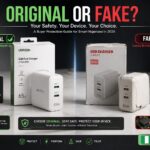
Fortunately, several trusted Nigerian retailers consistently stock genuine chargers from all major brands. Specifically, Jumia Nigeria, ThePhoneprenuer, Konga, Slot, and authorized brand retailers nationwide offer verified authentic products. Furthermore, always purchase exclusively from verified sellers providing original packaging and warranty documentation.
Final Thoughts
In conclusion, knowing how to choose the right charger for your smartphone is one of the most valuable consumer skills every Nigerian buyer must develop in 2026. Whether you invest in premium Anker chargers from ₦25,000, mid-range Xiaomi options from ₦15,000, or budget-friendly Oraimo alternatives from ₦8,000, following the seven-step selection process outlined in this guide ensures you make the smartest possible charger purchase for your specific smartphone and lifestyle needs.

 Get it on
  Download on the