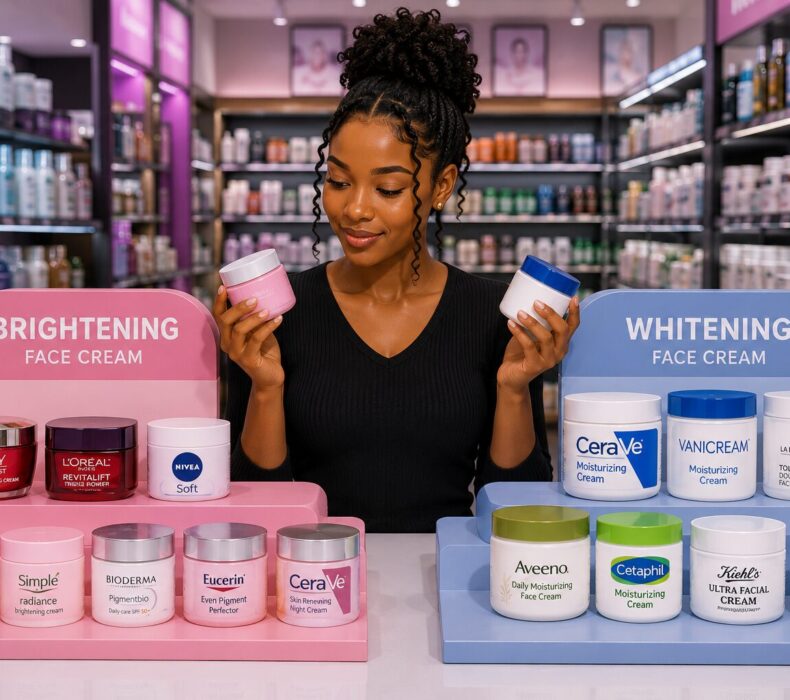
When shopping for skincare products, you’ve probably come across the terms brightening face cream and whitening face cream. Although these products are often displayed side by side and sometimes marketed interchangeably, they are not exactly the same. Understanding the difference can help you choose the right product for your skin concerns and avoid unrealistic expectations.
Many people in Nigeria and around the world want healthier, more radiant skin, but there is often confusion about whether to buy a brightening cream or a whitening cream. Some people are looking to reduce dark spots and acne scars, while others want a lighter overall complexion. The skincare industry uses various terms that can sometimes be misleading, making it even more important to know what each product is designed to do.
In this comprehensive guide, we’ll explain the differences between brightening face cream vs whitening face cream, how they work, their ingredients, benefits, potential side effects, and how to choose the best one for your skin type.
What Is a Brightening Face Cream?
Abrightening face cream is formulated to improve your skin’s natural radiance by reducing dullness, uneven skin tone, and hyperpigmentation without changing your natural complexion.
Rather than making your skin lighter than its natural color, brightening creams help your skin look healthier, fresher, and more luminous.
How Brightening Face Cream Works
Brightening face creams work by:
Reducing excess melanin production in dark spots
Increasing skin cell turnover
Hydrating dry skin
Protecting the skin from environmental damage
Improving overall skin texture
The goal is to reveal your healthiest version of your natural skin tone.
What Is a Whitening Face Cream?
Awhitening face cream is designed to reduce overall skin pigmentation by decreasing melanin production across larger areas of the skin.
Many whitening creams aim to make the skin appear several shades lighter than its natural complexion.
Depending on the formulation, whitening creams may work gradually or provide faster results through stronger active ingredients.
Brightening Face Cream vs Whitening Face Cream: The Main Difference
The biggest difference lies in their purpose.
Brightening Face Cream
Whitening Face Cream
Restores natural glow
Lightens overall complexion
Targets dark spots
Reduces overall skin pigmentation
Improves uneven skin tone
Makes skin appear lighter
Focuses on healthy-looking skin
Focuses on lighter-looking skin
Usually gentler
May contain stronger active ingredients
Simply put:
Brightening = Glow
Whitening = Lighter Skin
Why Do People Confuse Them?
Many cosmetic brands use the words brightening, lightening, whitening, and radiance interchangeably.
In recent years, many international skincare companies have moved away from the word whitening and now use:
Brightening
Radiance
Glow
Even Tone
Illuminating
This change reflects a growing emphasis on healthy skin rather than promoting lighter skin tones.
Common Ingredients in Brightening Face Creams
Brightening creams often contain ingredients that safely improve skin tone.
Vitamin C
Vitamin C is one of the most popular brightening ingredients.
Benefits include:
Reduces dark spots
Boosts collagen production
Protects against UV damage
Brightens dull skin
Niacinamide
Niacinamide helps:
Fade acne scars
Reduce pigmentation
Improve skin barrier
Control excess oil
It is suitable for almost every skin type.
Alpha Arbutin
Alpha Arbutin works by slowing melanin production, helping fade:
Sunspots
Acne marks
Age spots
without bleaching the skin.
Kojic Acid
Derived from fermented rice and mushrooms, Kojic Acid helps reduce pigmentation and brighten uneven skin tone.
Licorice Root Extract
A natural ingredient known for:
Calming irritated skin
Brightening dark spots
Reducing inflammation
Hyaluronic Acid
Although it doesn’t lighten skin, it hydrates deeply, making the skin appear smoother, healthier, and naturally radiant.
Common Ingredients in Whitening Face Creams
Some whitening creams contain ingredients that significantly reduce melanin production.
Examples include:
Glutathione
Alpha Arbutin
Kojic Acid
Vitamin C
Tranexamic Acid
Unfortunately, some unregulated products may contain harmful substances such as:
Mercury
Hydroquinone (without medical supervision)
High-potency steroids
These ingredients can damage the skin if used improperly.
Benefits of Brightening Face Cream
Choosing a brightening cream offers several advantages.
1. Improves Skin Radiance
Brightening creams restore the skin’s healthy glow.
2. Fades Acne Scars
They gradually reduce post-inflammatory hyperpigmentation.
3. Evens Skin Tone
Uneven patches become less noticeable over time.
4. Hydrates the Skin
Many formulations contain moisturizing ingredients that strengthen the skin barrier.
5. Suitable for Daily Use
Most brightening creams are gentle enough for everyday skincare routines.
Benefits of Whitening Face Cream
Whitening creams may help individuals seeking:
Reduced pigmentation
Lighter complexion
Treatment of stubborn melasma
Reduction of extensive sun damage
However, they should always be used carefully and according to the product instructions.
Brightening Face Cream vs Whitening Face Cream for Dark Spots
If your primary concern is:
Acne scars
Sun spots
Hyperpigmentation
Uneven skin tone
A brightening face cream is usually the better option.
It focuses treatment only where pigmentation exists rather than attempting to lighten your entire complexion.
Which One Is Better for Melasma?
Melasma often requires targeted ingredients such as:
Tranexamic Acid
Azelaic Acid
Niacinamide
Vitamin C
Some whitening creams are formulated specifically for melasma, but treatment is often most effective when guided by a dermatologist. Brightening products with these active ingredients can also help improve melasma over time.
Are Whitening Creams Safe?
Not all whitening creams are harmful.
The safety depends entirely on the ingredients.
Safe whitening products avoid:
Mercury
Illegal steroids
Excessive hydroquinone
Always purchase products from reputable retailers and choose brands that clearly disclose their ingredients.
Side Effects of Low-Quality Whitening Creams
Poor-quality or counterfeit whitening creams may cause:
Skin thinning
Permanent sensitivity
Redness
Stretch marks
Acne
Uneven bleaching
Increased sun sensitivity
Long-term use of products containing mercury or potent steroids can also have serious health consequences.
Can Brightening Cream Lighten My Skin?
Brightening creams generally do not change your natural skin color.
Instead, they remove:
Dullness
Dead skin buildup
Dark spots
Uneven pigmentation
As your complexion becomes more even, your skin may appear brighter, but it remains your natural tone.
Can You Use Brightening and Whitening Cream Together?
In some cases, yes.
For example:
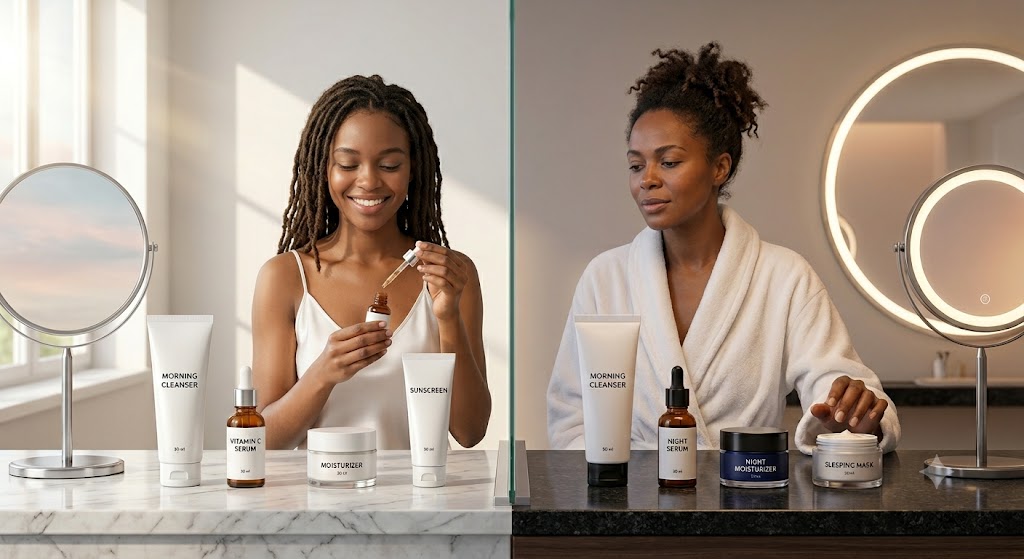
Morning:
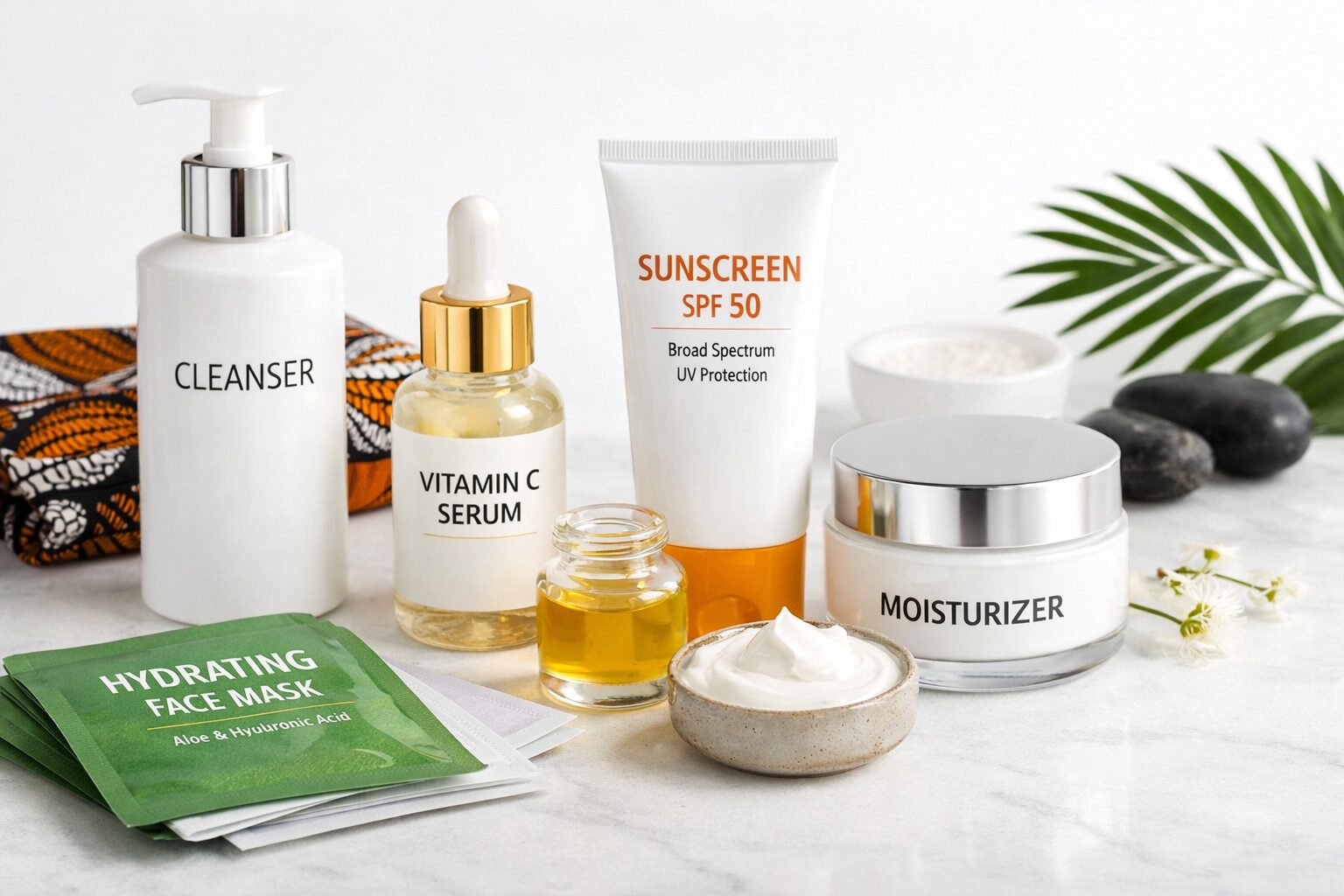
Gentle cleanser
Vitamin C brightening cream
Sunscreen
Night:
Whitening treatment (if recommended)
Moisturizer
However, avoid combining multiple strong active ingredients without understanding how they interact, as this may increase irritation. If you’re unsure, consult a dermatologist.
Best Skin Types for Brightening Cream
Brightening creams are excellent for:
Oily skin
Dry skin
Combination skin
Sensitive skin (with gentle formulations)
Acne-prone skin
Look for products tailored to your skin type to minimize irritation.
Best Skin Types for Whitening Cream
Whitening creams may be more suitable for individuals with:
Persistent pigmentation
Melasma
Sun damage
Age spots
Those with sensitive skin should introduce these products slowly and monitor for irritation.
How to Choose the Right Face Cream
Before purchasing any face cream, ask yourself:
Are you trying to:
Get glowing skin?
Fade acne scars?
Remove dark spots?
Improve dullness?
Choose a brightening face cream.
Or are you trying to:
Lighten your overall complexion?
Treat extensive pigmentation?
A whitening face cream may be more appropriate, provided it contains safe, well-researched ingredients.
Tips for Better Results
Regardless of which cream you choose:
Wear sunscreen every morning.
Cleanse your face twice daily.
Stay hydrated.
Exfoliate gently once or twice a week.
Avoid harsh scrubs that damage the skin barrier.
Be consistent—visible improvements often take several weeks.
Common Myths About Brightening and Whitening Creams
Myth 1: Brightening Cream Bleaches the Skin
False. Brightening creams are designed to enhance your natural complexion by reducing dullness and uneven pigmentation, not by bleaching the skin.
Myth 2: Whitening Cream Works Overnight
False. Safe products require consistent use over weeks or months. Be cautious of products that promise dramatic overnight results.
Myth 3: Natural Ingredients Can’t Cause Irritation
False. Even natural ingredients like citrus extracts or essential oils can irritate sensitive skin. Always perform a patch test before using a new product.
Myth 4: Sunscreen Isn’t Necessary
False. Whether you use a brightening or whitening cream, sunscreen is essential. UV exposure can worsen pigmentation and reduce the effectiveness of your skincare routine.
Final Thoughts
Understanding the difference between brightening face cream vs whitening face cream can help you make smarter skincare decisions. While both products aim to improve the appearance of your skin, they serve different purposes.
A brightening face cream is ideal if your goal is to restore your skin’s natural glow, fade dark spots, and achieve a more even complexion without changing your natural skin tone. It is generally the preferred choice for everyday skincare and is suitable for most skin types.
A whitening face cream, on the other hand, is intended to reduce overall pigmentation and lighten the complexion. Choosing a product with safe, transparent ingredients and purchasing it from a trusted retailer is essential to minimize the risk of adverse effects.
Ultimately, healthy, well-protected skin is more important than chasing unrealistic beauty standards. Focus on products that nourish your skin, protect it from sun damage, and address your specific concerns. By understanding your skin type, selecting high-quality formulations, and maintaining a consistent skincare routine, you can enjoy a clearer, brighter, and healthier complexion over time.











 Get it on
  Download on the