Preparing ingredients is one of the most time-consuming parts of cooking. Many home cooks often wonder, Food Processor vs Manual Chopping: which one saves time and energy? The answer depends on your cooking habits, kitchen routine, and the amount of food you prepare. While manual chopping has been a traditional method for generations, food processors have transformed meal preparation by making it faster, easier, and more efficient.
Moreover, both methods have their advantages. Therefore, understanding their differences will help you choose the option that best suits your lifestyle and cooking needs.
What is Manual Chopping?
Manual chopping involves using a kitchen knife and chopping board to cut, dice, slice, or mince ingredients by hand. Although it requires skill and patience, many people still enjoy the control it offers.
Manual chopping is commonly used for:
Cutting vegetables
Slicing fruits
Dicing onions
Mincing garlic
Preparing small portions
Additionally, it requires minimal equipment, making it suitable for simple cooking tasks.
What is a Food Processor?
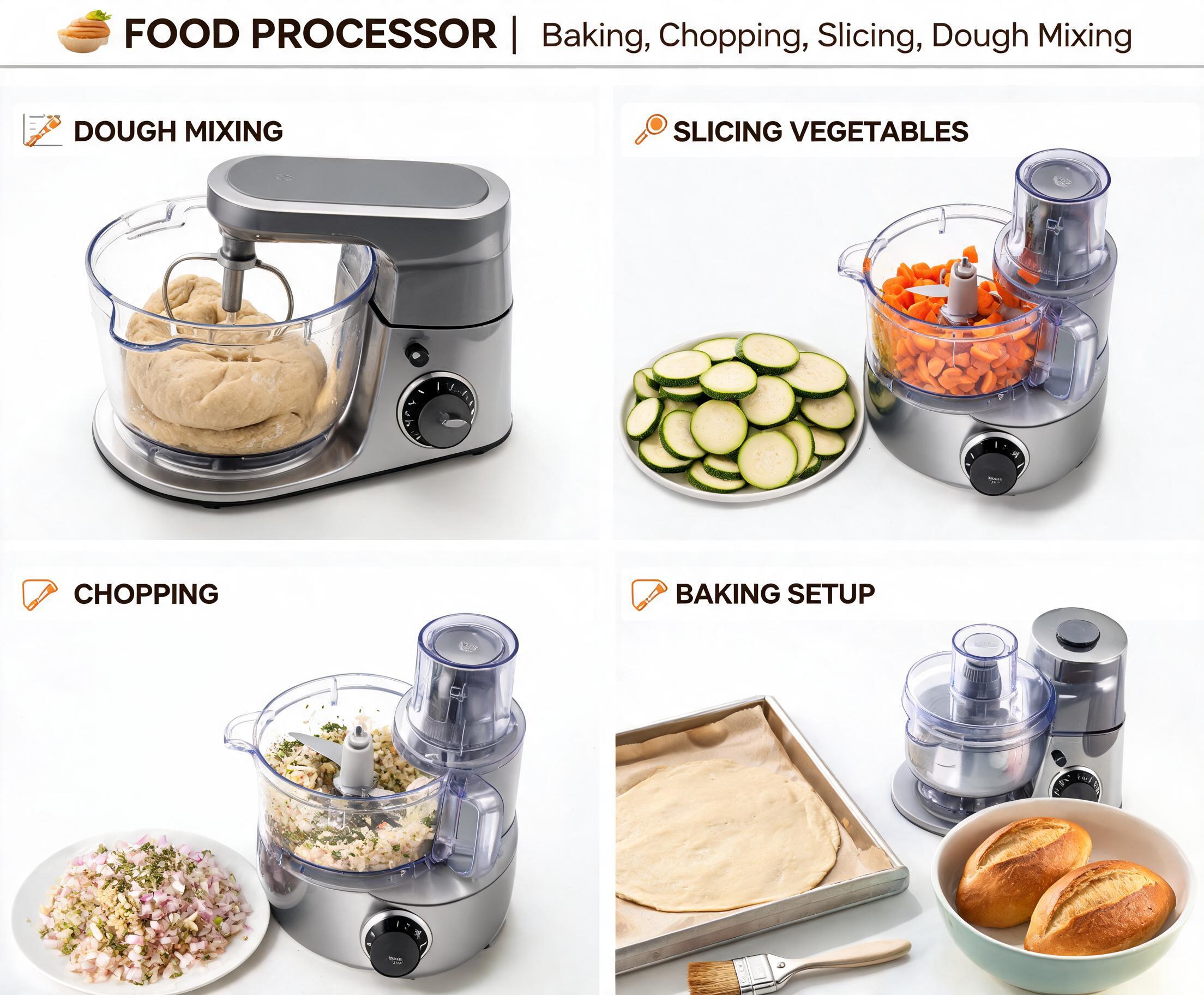
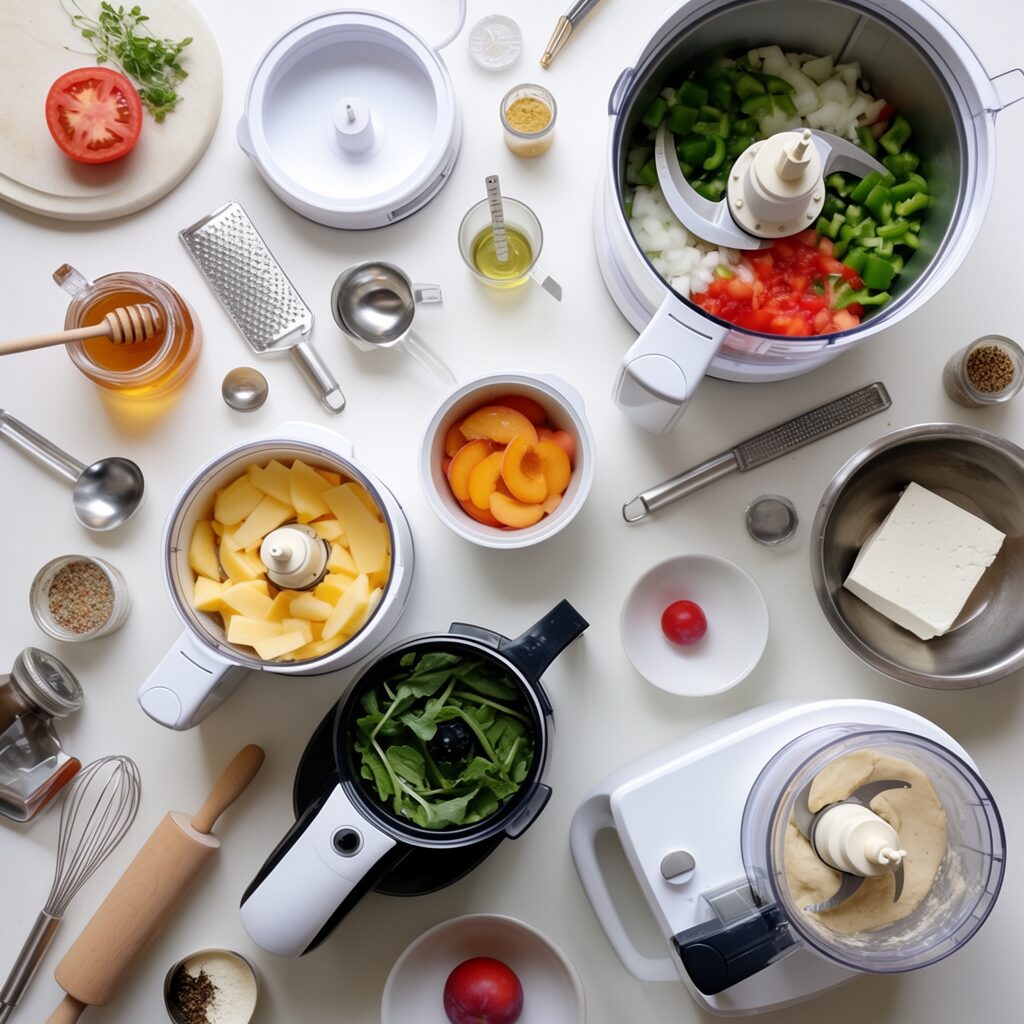
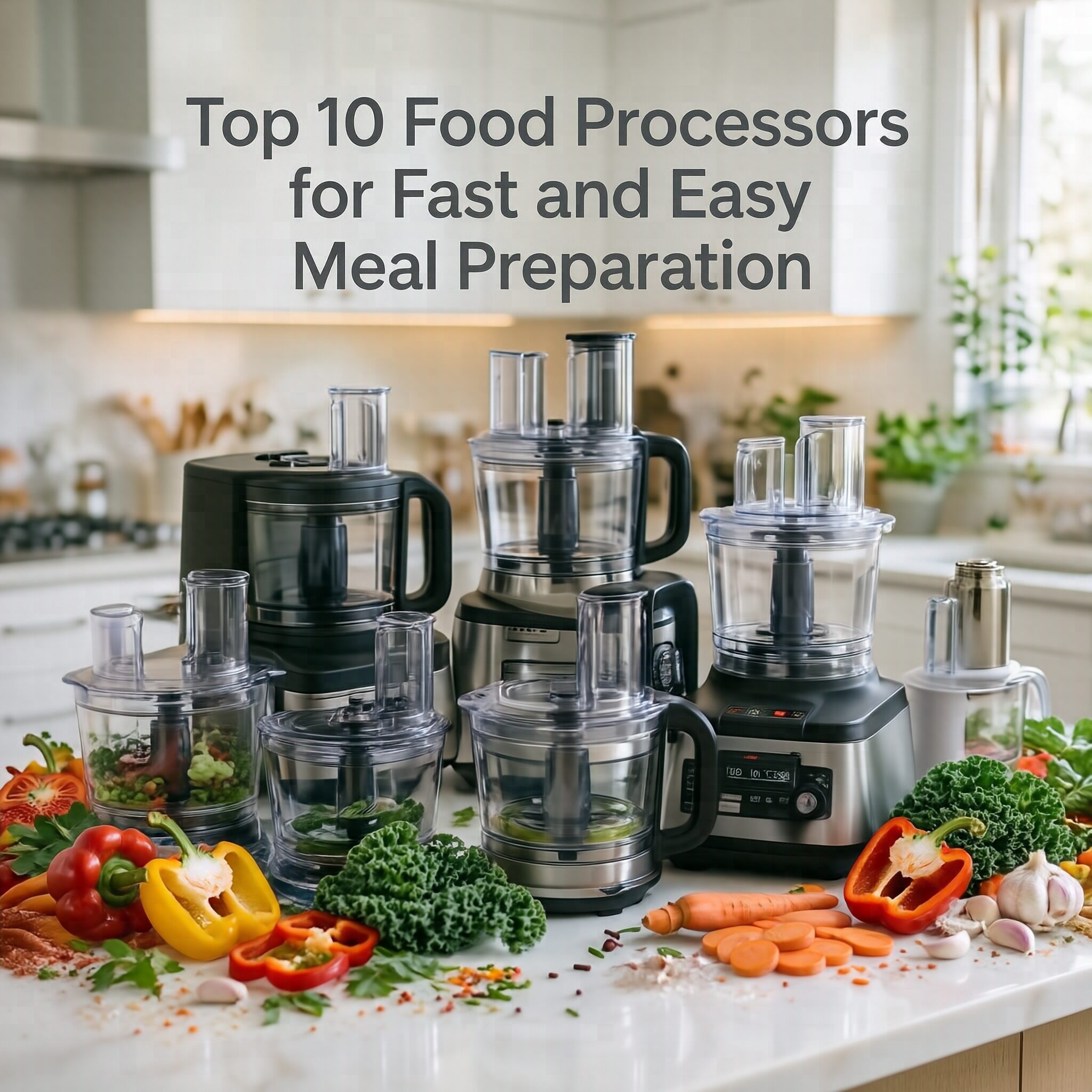
A food processor is an electric kitchen appliance designed to automate food preparation. It comes with sharp blades and multiple attachments that chop, slice, shred, grate, and even knead dough within seconds.
A food processor can handle:
Vegetables
Fruits
Cheese
Nuts
Herbs
Dough
Meat for mincing
As a result, it significantly reduces preparation time, especially when cooking large meals.
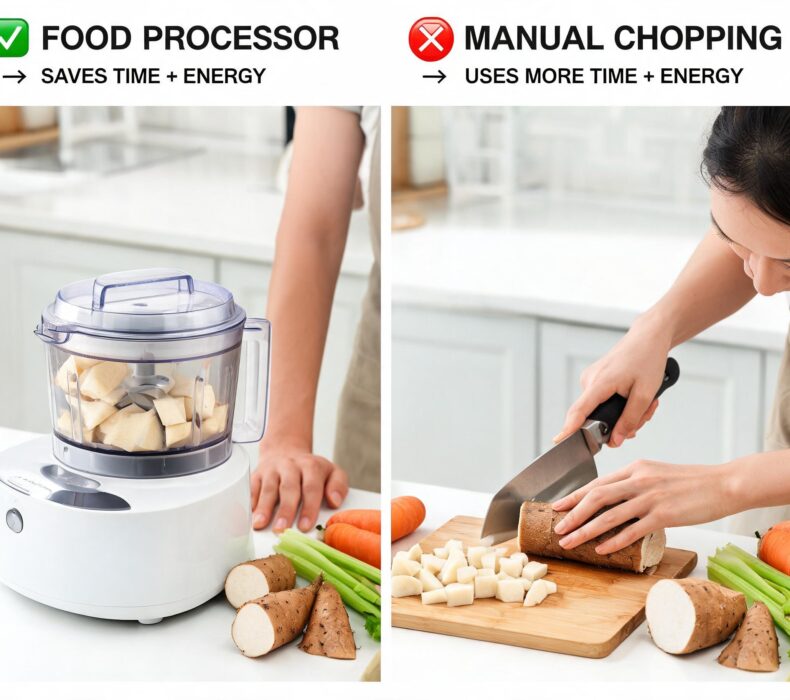
Food Processor vs Manual Chopping: which one saves time and energy?
When comparing Food Processor vs Manual Chopping: which one saves time and energy, several important factors should be considered.
Speed
A food processor completes chopping tasks in just a few seconds. In contrast, manual chopping can take several minutes, particularly when preparing large quantities of ingredients.
Therefore, if speed is your priority, the food processor is the clear winner.
Physical Effort
Manual chopping requires continuous hand movement and concentration. Consequently, preparing several vegetables can become tiring.
On the other hand, a food processor performs most of the work with the press of a button, saving both energy and effort.
Consistency
Food processors produce evenly chopped, sliced, or shredded ingredients, creating a more professional appearance in your meals.
Meanwhile, manual chopping often results in uneven pieces, especially if knife skills are limited.
Versatility
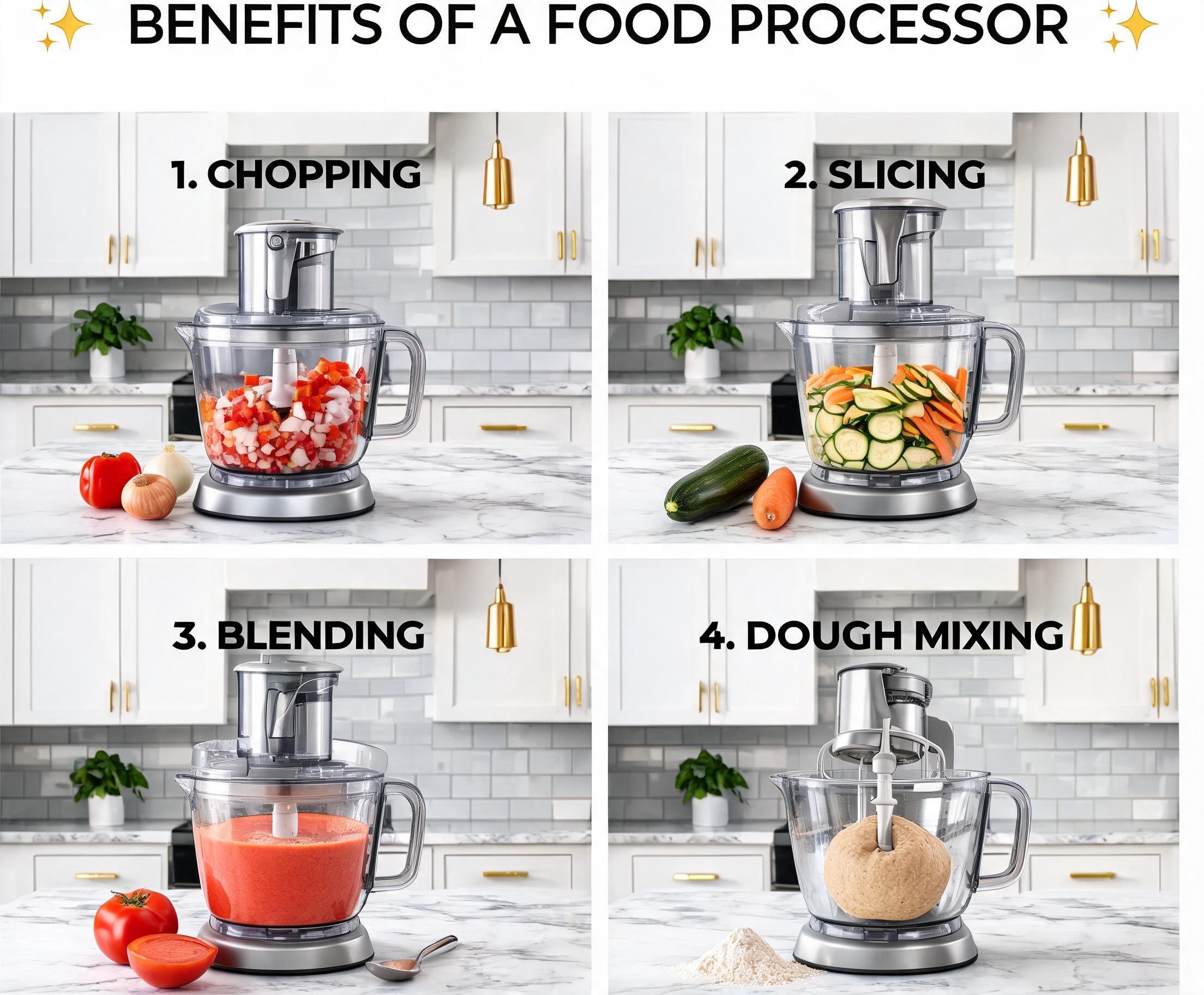
A kitchen knife can perform many tasks, but a food processor offers much greater versatility.
Besides chopping, it can:
Slice vegetables
Shred cheese
Knead dough
Grind nuts
Mix ingredients
Prepare sauces
Therefore, one appliance replaces several manual kitchen tasks.
Cleaning
Manual chopping requires washing only a knife and chopping board.
However, a food processor has multiple removable parts that must be cleaned after use. Fortunately, many modern models feature dishwasher-safe components, making cleanup much easier.
When Manual Chopping is the Better Choice
Despite the convenience of food processors, manual chopping is still useful in certain situations.
It is ideal when:
Preparing small portions
Cutting delicate herbs
Working with soft fruits
You need precise control over ingredient size
Electricity is unavailable
Additionally, experienced cooks often prefer manual chopping for recipes requiring exact knife techniques.
When a Food Processor is the Better Choice
A food processor is the better option when:
Cooking for large families
Preparing multiple ingredients
Hosting parties or events
Batch cooking
Baking regularly
Saving time during busy weekdays
Furthermore, it reduces kitchen fatigue and makes meal preparation much more enjoyable.
Cost Comparison
A kitchen knife is more affordable and requires no electricity.
However, although a food processor costs more initially, it provides long-term value by saving time, reducing effort, and performing multiple kitchen tasks. Consequently, many homeowners consider it a worthwhile investment.
Which Option is Best for Nigerian Homes?
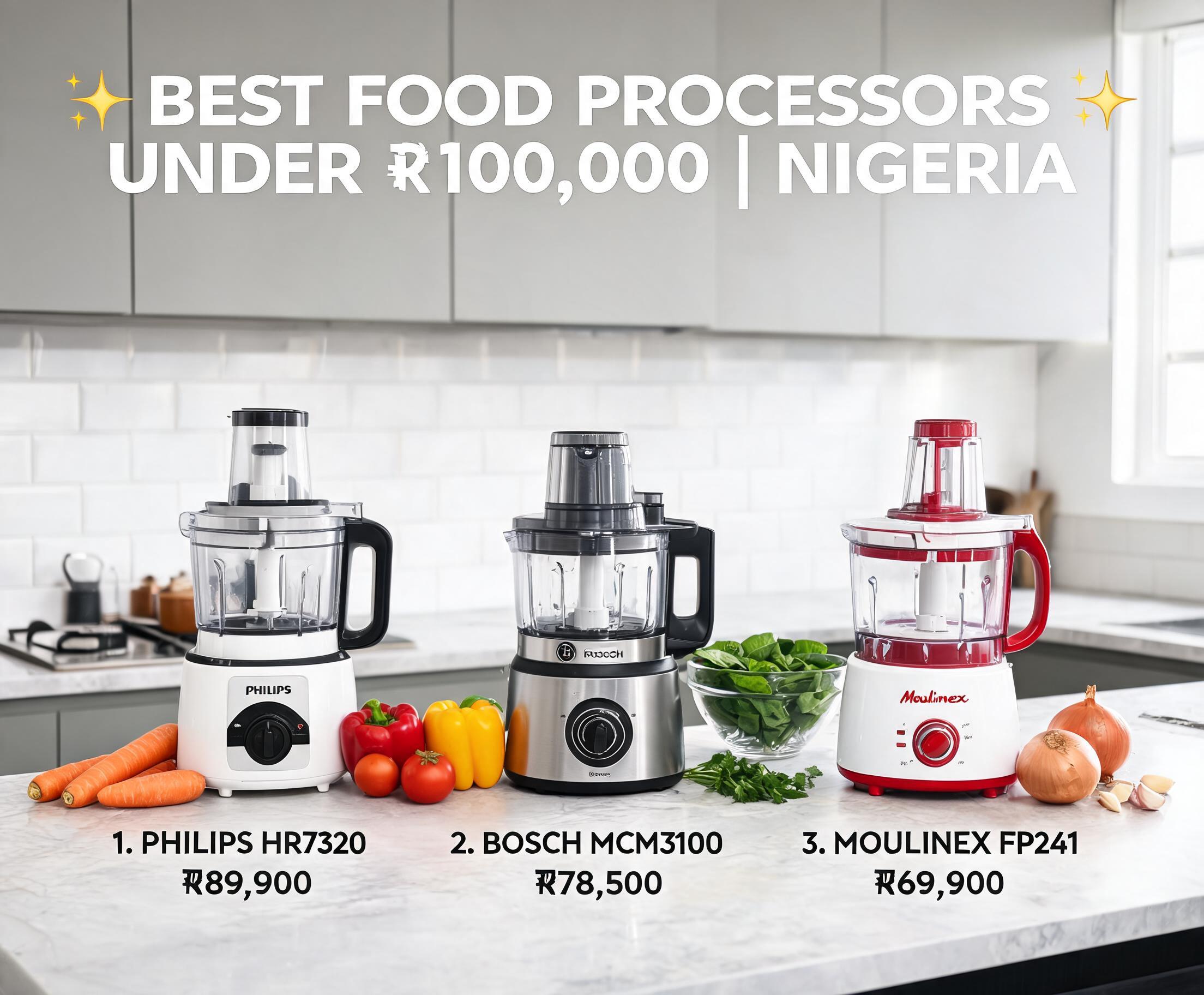
For many Nigerian households, cooking often involves preparing large quantities of vegetables, peppers, onions, and other ingredients. As a result, a food processor can greatly reduce preparation time and make cooking more convenient.
Nevertheless, manual chopping remains practical for quick meals or when preparing small portions. In many kitchens, using both methods provides the greatest flexibility.
Conclusion
When comparing Food Processor vs Manual Chopping: which one saves time and energy, the food processor clearly stands out for speed, convenience, and versatility. It simplifies meal preparation, reduces physical effort, and delivers consistent results in a fraction of the time.









 Get it on
  Download on the