






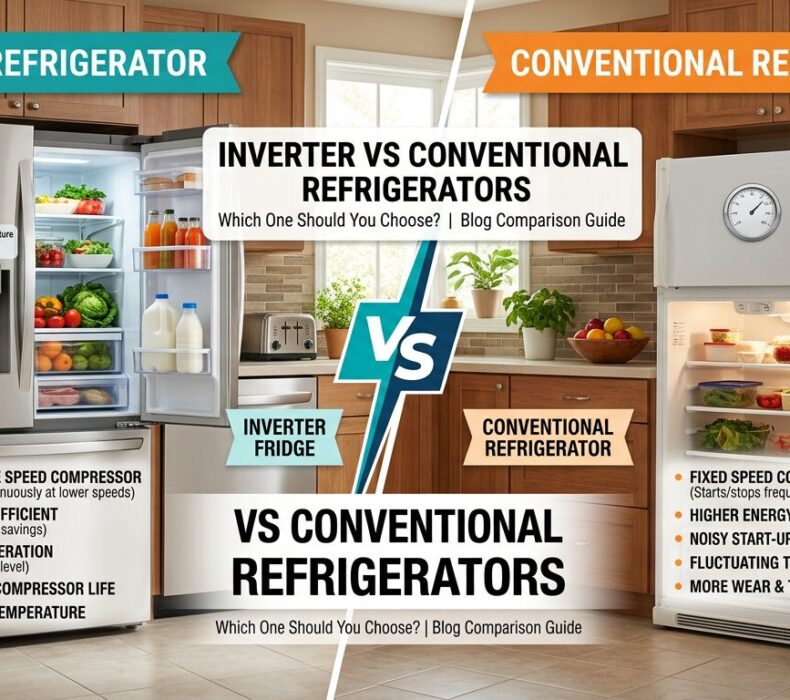
When comparing Inverter Refrigerators vs Conventional Refrigerators, many homeowners want to know which option provides better energy efficiency, cooling performance, and long-term value. While both refrigerator types serve the same purpose of preserving food, they operate differently. Therefore, understanding these differences can help you choose the right refrigerator for your home and budget.
What Is an Inverter Refrigerator?
An inverter refrigerator uses a variable-speed compressor that automatically adjusts its operation based on cooling requirements.
Instead of turning completely on and off, the compressor continuously runs at different speeds to maintain a stable temperature.
Key Features of Inverter Refrigerators
- Energy-efficient operation
- Consistent cooling performance
- Quieter operation
- Longer compressor lifespan
- Lower electricity consumption
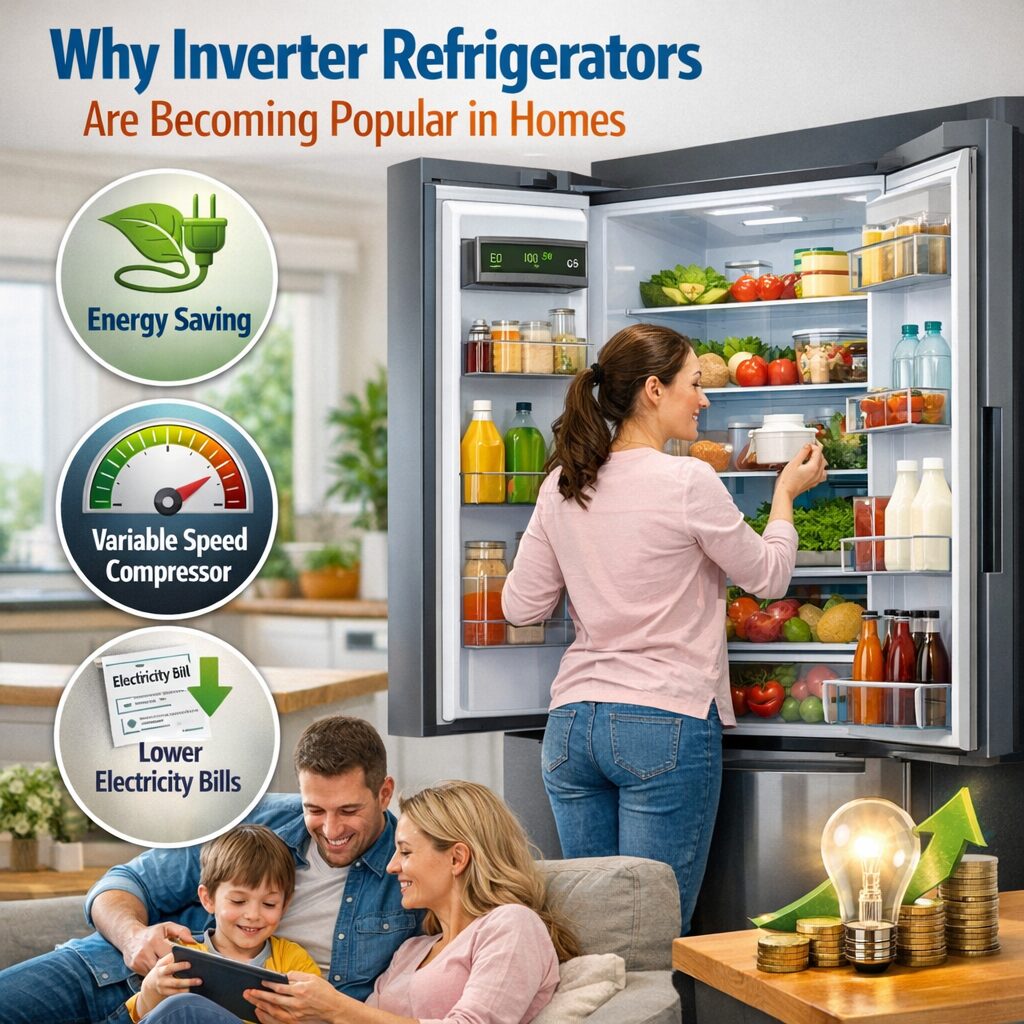
As a result, inverter refrigerators have become increasingly popular in modern households.
What Is a Conventional Refrigerator?
A conventional refrigerator uses a standard compressor that repeatedly switches on and off to maintain cooling.
When the temperature rises above a set level, the compressor starts. Once the desired temperature is reached, it shuts off.
Key Features of Conventional Refrigerators
- Lower initial purchase cost
- Simple technology
- Widely available
- Basic cooling functionality
However, frequent compressor cycling can increase energy consumption and wear over time.
Inverter Refrigerators vs Conventional Refrigerators: Major Differences
1. Energy Efficiency
Energy consumption is one of the biggest differences between these refrigerator types.
Inverter Refrigerators
- Consume less electricity
- Adjust compressor speed automatically
- Reduce power wastage
- Lower monthly energy bills
Conventional Refrigerators
- Consume more electricity
- Compressor constantly switches on and off
- Higher power usage during startup
Therefore, inverter refrigerators are generally more cost-effective over the long term.
2. Cooling Performance
Maintaining a stable temperature is essential for preserving food freshness.
Inverter Refrigerators
The compressor continuously adjusts cooling levels.
Benefits include:
- Consistent temperature control
- Better food preservation
- Reduced temperature fluctuations
Conventional Refrigerators
Cooling occurs in cycles.
As a result:
- Temperature variations may occur
- Food freshness may be affected over time
Consequently, inverter refrigerators typically provide superior cooling performance.
3. Noise Levels
Many homeowners value a quiet kitchen environment.
Inverter Refrigerators
Because the compressor runs smoothly at varying speeds, operation is generally quieter.
Conventional Refrigerators
Frequent starting and stopping can produce noticeable noise.
Therefore, inverter refrigerators are often preferred for open-plan homes and apartments.
4. Durability and Lifespan
The way a compressor operates affects its longevity.
Inverter Refrigerators
Benefits include:
- Reduced mechanical stress
- Less wear and tear
- Longer lifespan
- Lower maintenance requirements
Conventional Refrigerators
Frequent compressor cycling may increase component wear.
As a result, maintenance needs may arise sooner.
5. Initial Cost
Price is often a deciding factor when purchasing a refrigerator.
Inverter Refrigerators
- Higher upfront cost
- Advanced technology
- Long-term energy savings
Conventional Refrigerators
- Lower purchase price
- Affordable for budget-conscious buyers
- Basic cooling capabilities
However, lower energy costs can help offset the higher purchase price of inverter models over time.
Comparison Table
| Feature | Inverter Refrigerator | Conventional Refrigerator |
|---|---|---|
| Energy Efficiency | Excellent | Moderate |
| Electricity Consumption | Lower | Higher |
| Cooling Consistency | Excellent | Good |
| Noise Level | Very Quiet | Moderate |
| Compressor Lifespan | Longer | Standard |
| Maintenance Costs | Lower | Higher |
| Purchase Price | Higher | Lower |
Advantages of Inverter Refrigerators
Choosing an inverter refrigerator offers several benefits.
Benefits Include:
- Reduced electricity bills
- Consistent cooling
- Longer appliance lifespan
- Quieter operation
- Better food preservation
- Environmentally friendly performance
Furthermore, many inverter refrigerators include modern features such as smart controls and frost-free technology.
Advantages of Conventional Refrigerators
Conventional refrigerators still remain a practical choice for many households.
Benefits Include:
- Lower purchase cost
- Easy maintenance
- Simple operation
- Widely available models
Therefore, they can be suitable for buyers with limited budgets.
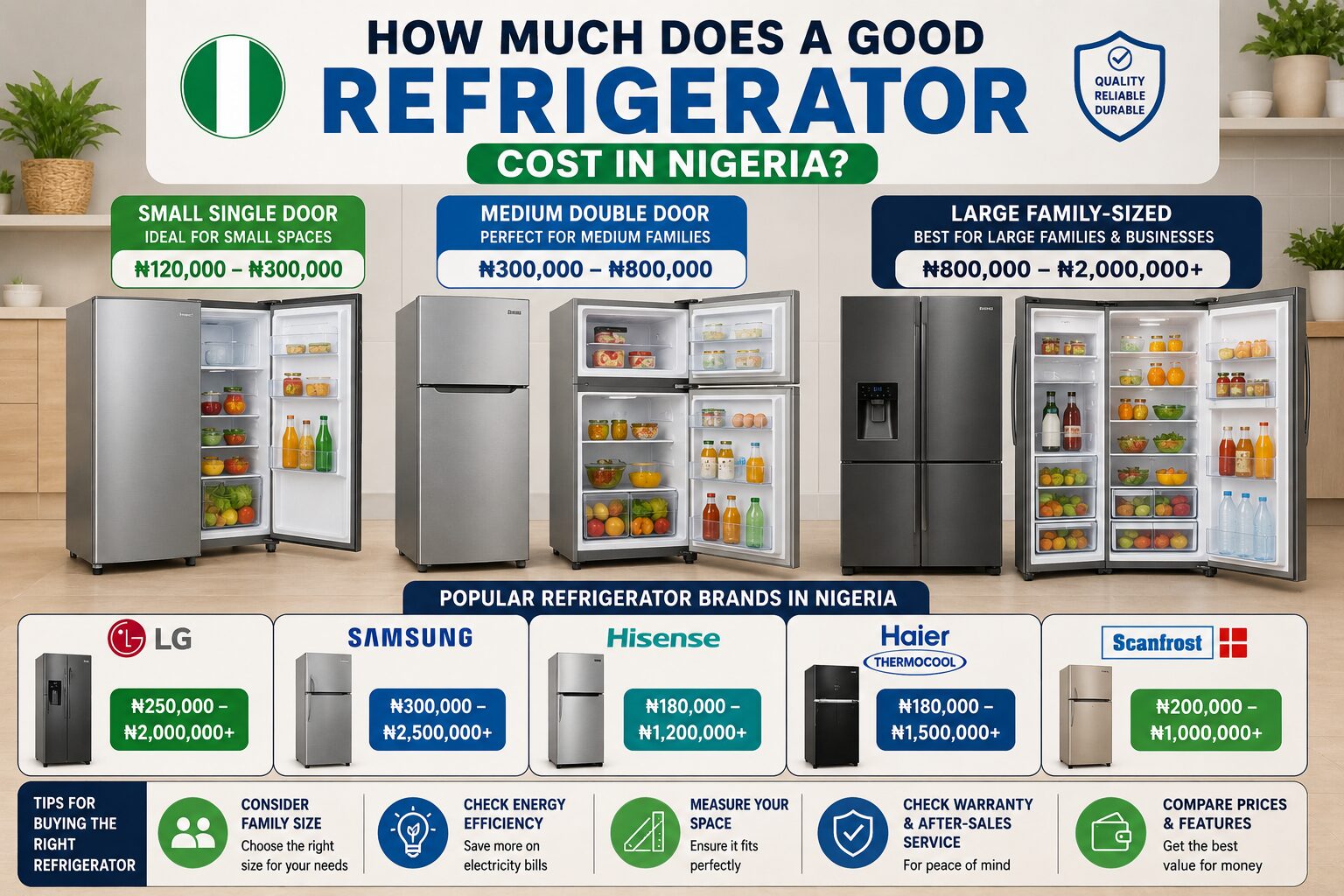
Which Refrigerator Is Better for Nigerian Homes?
In many Nigerian households, electricity costs and power fluctuations are important considerations.
Inverter refrigerators are often preferred because they:
- Use less electricity
- Handle varying power conditions better
- Reduce long-term operating costs
However, conventional refrigerators may still be a good option for users seeking affordable upfront pricing.
Ultimately, the best choice depends on your budget and long-term priorities.
Tips for Choosing the Right Refrigerator
Before making a purchase:
Consider Household Size
Choose a refrigerator with adequate storage capacity for your family’s needs.
Check Energy Ratings
Higher efficiency ratings can reduce operating costs.
Evaluate Features
Look for:
- Inverter technology
- Frost-free operation
- Adjustable shelving
- Smart temperature controls
Additionally, compare warranties and service support before making a final decision.
Conclusion
When comparing Inverter Refrigerators vs Conventional Refrigerators, inverter models generally offer better energy efficiency, quieter operation, and longer-lasting performance. Although they typically cost more initially, their lower electricity consumption and reduced maintenance needs often provide greater value over time. Meanwhile, conventional refrigerators remain an affordable solution for households focused on upfront savings. Ultimately, selecting the right refrigerator depends on your budget, energy requirements, and long-term household needs.



 Get it on
  Download on the