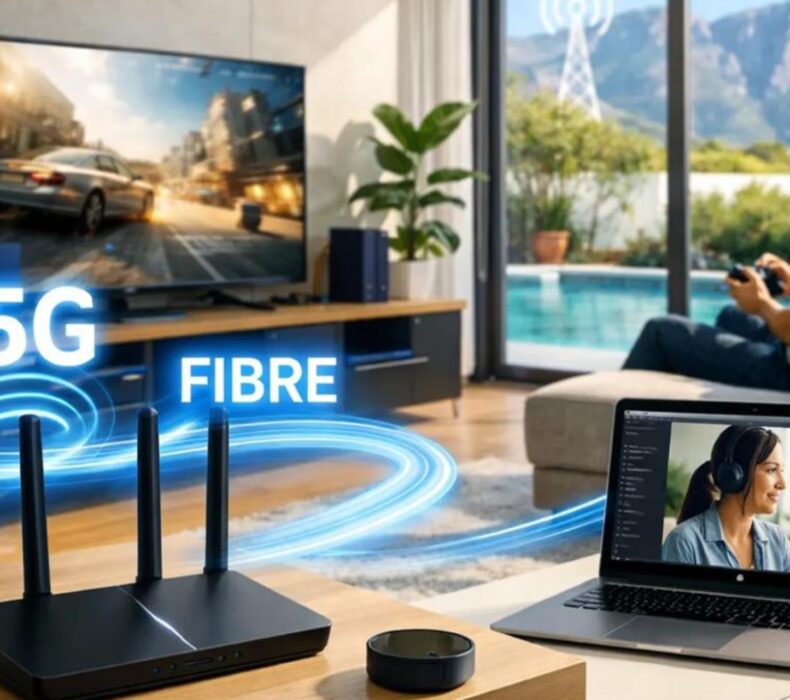
Reliable internet has become essential for work, education, entertainment, and communication. However, choosing between Fiber vs 4G vs 5Gcan be confusing because each technology offers different advantages. While fiber internet delivers unmatched speed and stability, 4G provides widespread wireless coverage, and 5G introduces the next generation of ultra-fast connectivity. Therefore, understanding how each option works will help you make the best decision for your internet needs.
What Is Fiber Internet?
Fiber internet uses fiber-optic cables to transmit data through light signals instead of electrical signals. As a result, it delivers exceptionally fast speeds and low latency.
Unlike traditional broadband, fiber maintains consistent performance even when multiple devices are connected simultaneously.
Some benefits include:
Ultra-fast download speeds
High upload speeds
Stable connection
Low latency
Excellent reliability
Consequently, fibre is an excellent choice for homes and businesses that rely heavily on the internet.
What Is 4G Internet?
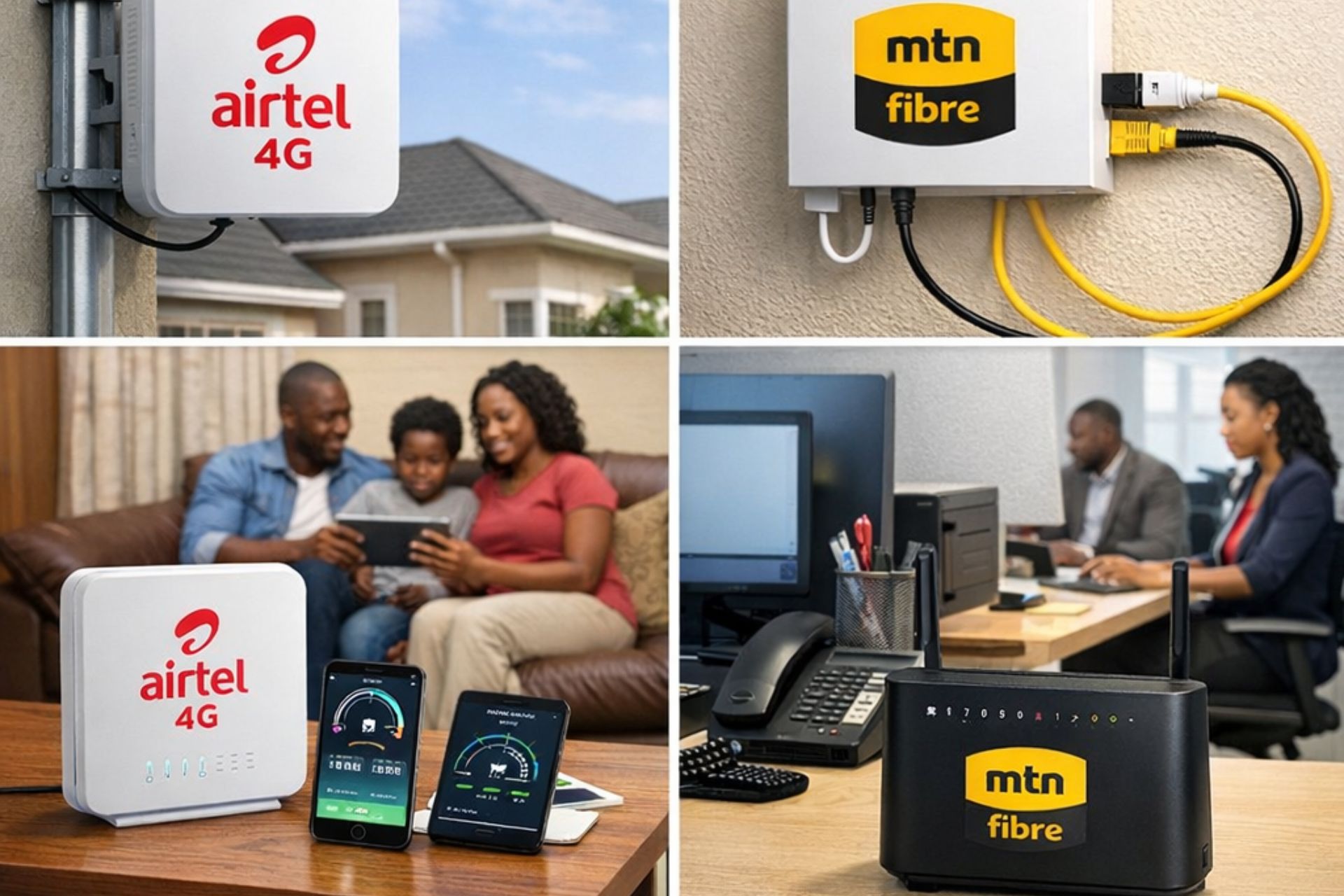
4G internet is a wireless broadband technology that connects users through nearby cellular towers.
Instead of physical cables, users access the internet using SIM-enabled routers, mobile hotspots, or smartphones.
Some advantages include:
Wide network coverage
Easy installation
Portable connectivity
Affordable setup costs
Suitable for rural areas
Moreover, 4G remains one of the most accessible internet technologies across Nigeria.
What Is 5G Internet?
5G is the latest generation of mobile network technology designed to deliver significantly faster speeds and lower latency than 4G.
It supports modern applications such as:
Smart homes
Cloud gaming
Virtual reality
Remote work
4K and 8K streaming
Although 5G is expanding rapidly, coverage is still limited in many areas.
Fiber vs 4G vs 5G: Speed Comparison
When comparing , speed is often the first factor people consider.
Fibre Internet
Typical speed:
100 Mbps to over 1 Gbps
Extremely stable
Consistent throughout the day
4G Internet
Typical speed:
10 Mbps to 100 Mbps
Depends on network congestion
Performance varies by location
5G Internet
Typical speed:
100 Mbps to over 1 Gbps
Very low latency
Faster than most 4G networks
Overall, fibre and 5G generally outperform 4G in terms of speed.
Reliability Comparison
Reliability is just as important as speed.
Fibre
Because it uses physical fibre-optic cables, fibre internet experiences fewer interruptions and is less affected by weather or network congestion.
4G
4G performance depends on signal strength, nearby users, and tower congestion.
Therefore, speeds may fluctuate during busy hours.
5G
5G provides excellent reliability where coverage exists.
However, obstacles such as buildings and distance from transmission towers can reduce performance.
Coverage varies significantly between these technologies.
Fibre
Available mainly in urban centres where fibre infrastructure has been deployed.
4G
Offers the widest nationwide coverage, making it ideal for both cities and rural communities.
5G
Coverage continues to expand but remains limited to selected locations.
Therefore, checking service availability before purchasing is essential.
Which Is Best for Streaming?
Streaming requires stable internet and sufficient bandwidth.
For streaming:
Fibre delivers the best overall experience.
5G performs exceptionally well where available.
4G comfortably supports HD streaming under good network conditions.
If multiple users stream simultaneously, fibre remains the strongest option.
Which Is Best for Gaming?
Online gaming benefits from:
Low latency
Stable connections
Fast downloads
Fibre is generally the preferred choice because of its minimal latency.
Meanwhile, 5G also performs well for cloud gaming.
Although 4G supports gaming, network congestion can occasionally increase response times.
Which Is Best for Working From Home?
Remote workers require reliable internet for:
Video meetings
File uploads
Cloud applications
Email
Team collaboration
Fibre provides the most dependable performance.
However, 5G offers an excellent alternative where fibre is unavailable.
4G also supports remote work but may struggle with heavy workloads during peak periods.
Cost Comparison
Pricing depends on your provider and location.
Generally:
Fibre Internet
Higher installation costs
Excellent long-term value
Unlimited packages often available
4G Internet
Lower startup costs
Flexible prepaid options
Data usage may be limited
5G Internet
Competitive pricing
Newer equipment required
Growing range of unlimited plans
Ultimately, compare available packages before deciding.
Pros and Cons
Fibre Internet
Pros
Fastest speeds
Excellent reliability
Low latency
Unlimited data options
Ideal for businesses
Cons
Limited coverage
Installation required
4G Internet
Pros
Widely available
Easy installation
Portable
Affordable
Cons
Variable speeds
Higher latency than fibre
5G Internet
Pros
Very fast speeds
Low latency
Excellent for streaming
Supports many connected devices
Cons
Limited availability
Requires compatible equipment
Which Internet Option Should You Choose?
Your ideal choice depends on your needs.
Choose Fibre if you:
Work from home full-time
Own a business
Need unlimited internet
Stream in 4K regularly
Play competitive online games
Choose 4G if you:
Live in rural areas
Need portable internet
Want affordable broadband
Frequently move locations
Choose 5G if you:
Have 5G coverage
Want fibre-like speeds without cables
Enjoy gaming and streaming
Use many smart home devices
Tips Before Choosing an Internet Connection
Before subscribing, consider the following:
Check network availability in your area.
Compare monthly plans.
Estimate your data consumption.
Consider the number of connected devices.
Read customer reviews.
Compare installation costs.
Taking these steps ensures you choose the most suitable internet service.
Conclusion
Choosing between Fiber vs 4G vs 5G depends on your location, budget, and internet usage. Fibre remains the best option for users who prioritize speed, reliability, and unlimited connectivity. Meanwhile, 4G continues to offer excellent nationwide coverage and affordability, making it ideal for many households. On the other hand, 5G combines impressive speed with wireless flexibility and is becoming an increasingly attractive option as coverage expands. By evaluating your needs carefully, you can confidently select the internet technology that delivers the best online experience.
Frequently Asked Questions
Which is faster, Fibre or 5G?
Fibre generally provides more consistent high-speed performance, while 5G can achieve similar speeds where network coverage is strong.
Is 4G still good for home internet?
Yes. 4G remains an excellent option for browsing, streaming, online learning, and remote work in many locations.
Does 5G replace fibre internet?
Not completely. While 5G offers impressive wireless speeds, fibre usually provides greater stability and reliability.
Which internet technology has the widest coverage?
4G currently offers the broadest coverage, especially in developing regions.
Which option is best for businesses?
Fibre is typically the preferred choice for businesses because of its speed, reliability, and ability to support multiple users.












 Get it on
  Download on the