






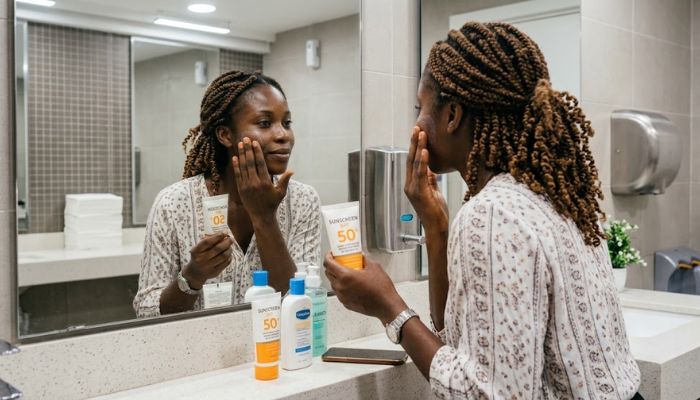
Finding the best sunscreen in Nigeria can make a significant difference to your daily skincare routine. Nigeria’s warm, sunny climate means that many people are exposed to ultraviolet (UV) radiation during everyday activities such as commuting, shopping, working outdoors, exercising or simply walking around the neighborhood.
Daily sunscreen is important because UV exposure can contribute to sunburn, premature skin ageing, uneven pigmentation and dark spots. Dermatologists generally recommend choosing a sunscreen with SPF 30 or higher, broad-spectrum protection and water resistance.
For people with darker skin tones, sunscreen is particularly important when dealing with hyperpigmentation, acne marks and melasma. Visible light can also contribute to darkening of pigmentation, which is one reason some people may prefer tinted sunscreens containing iron oxides.
With so many products available, however, choosing the right sunscreen can be confusing. In this 2026 guide, we look at 10 popular sunscreen options worth considering in Nigeria, including products suitable for oily, dry, acne-prone, sensitive and combination skin.
What Makes a Good Sunscreen for Daily Use in Nigeria?
Before choosing a sunscreen, there are several important features to consider.
1. SPF 30 or Higher
SPF measures protection against UVB radiation, which is strongly associated with sunburn. The American Academy of Dermatology recommends using sunscreen with an SPF of at least 30. SPF 30 filters approximately 97% of UVB radiation when used as directed.
For Nigeria’s sunny conditions, many shoppers prefer SPF 50 or SPF 50+ for everyday facial protection.
2. Broad-Spectrum Protection
Look for a sunscreen labelled broad spectrum. This means it protects against both UVA and UVB radiation.
UVA rays contribute significantly to premature skin ageing and pigmentation, while UVB rays are a major cause of sunburn.
3. Lightweight Texture
A sunscreen that feels heavy, greasy or sticky may discourage daily use. Gel, fluid, milk and serum-like formulas can be particularly comfortable for people living in hot and humid environments.
4. Water Resistance
If you sweat frequently, exercise outdoors or spend time around water, consider a water-resistant sunscreen. Remember that water-resistant does not mean waterproof. Sunscreen still needs to be reapplied after swimming or excessive sweating.
5. Skin-Type Compatibility
Oily and acne-prone skin may benefit from lightweight, non-comedogenic or oil-control formulas. Dry skin may prefer sunscreen with moisturising ingredients, while sensitive skin may respond better to gentle mineral or fragrance-free formulas.
10 Best Sunscreens in Nigeria for Daily Sun Protection
1. La Roche-Posay Anthelios UVMune 400 Invisible Fluid SPF50+
La Roche-Posay Anthelios UVMune 400 Invisible Fluid SPF50+ is a strong option for people looking for high facial sun protection in a lightweight formula.
Its fluid texture makes it particularly appealing for everyday use under makeup or as the final step of a morning skincare routine. It is also a popular choice among people who want high UVA protection.
Best for: Daily facial protection, combination skin and people concerned about pigmentation.
Why consider it: Lightweight feel, high SPF and strong broad-spectrum protection.
2. Eucerin Sun Oil Control Dry Touch SPF50+
Eucerin Sun Oil Control Dry Touch SPF50+ is especially worth considering if you have oily or acne-prone skin.
Instead of leaving the skin feeling heavily moisturised or greasy, its dry-touch concept is designed for a more comfortable finish. This can make it a practical choice for Nigeria’s hot weather.
Best for: Oily, combination and acne-prone skin.
Why consider it: Lightweight finish and oil-control positioning make it suitable for people who dislike greasy sunscreen.
3. Bioderma Photoderm Aquafluide SPF50+
Bioderma Photoderm Aquafluide SPF50+ is another facial sunscreen worth considering for daily use.
The lightweight fluid format can be convenient for people who want strong sun protection without using a thick cream. Depending on the specific version available, shoppers may also find tinted options that can help minimise visible residue.
Best for: Combination, oily and normal skin.
Why consider it: Fluid texture and high SPF make it suitable for everyday facial protection.
4. NIVEA Sun UV Face Shine Control SPF50
NIVEA Sun UV Face Shine Control SPF50 is an accessible option for shoppers searching for an everyday facial sunscreen.
Its shine-control positioning makes it particularly attractive to people with combination or oily skin who want to avoid an excessively glossy appearance during the day.
Best for: Oily and combination skin.
Why consider it: Designed for facial use and suitable for people who prefer a less shiny finish.
5. Neutrogena Ultra Sheer Dry-Touch Sunscreen SPF50+
Neutrogena Ultra Sheer is a widely recognised sunscreen range and is popular among people who prefer a dry-touch sunscreen texture.
The formula is designed to provide high SPF protection while feeling lighter than traditional heavy sunscreens. It can be used on exposed areas of the body and, depending on the specific product version, may also be suitable for facial use.
Best for: Everyday outdoor protection and people who prefer dry-touch formulas.
Why consider it: High SPF and a lightweight sunscreen concept.
Tip: Always check the exact product label and instructions before applying a particular version to your face.
6. CeraVe Hydrating Mineral Sunscreen SPF50
CeraVe Hydrating Mineral Sunscreen SPF50 is an option worth considering if your skin is dry or sensitive.
Mineral sunscreens commonly use active filters such as zinc oxide and/or titanium dioxide. The American Academy of Dermatology notes that mineral sunscreens may be a suitable choice for people with sensitive skin.
The major consideration for people with deeper skin tones is that some mineral sunscreens can leave a visible white cast.
Best for: Dry and sensitive skin.
Why consider it: Mineral UV filters and a moisturising skincare approach.
7. Beauty of Joseon Relief Sun: Rice + Probiotics SPF50+ PA++++
Beauty of Joseon Relief Sun is a popular Korean sunscreen that has attracted attention because of its lightweight, moisturising texture.
It is particularly appealing to people who dislike the traditional heavy feel of sunscreen. The formula is often incorporated into skincare routines as a comfortable final morning step.
Best for: Normal, dry and combination skin.
Why consider it: Lightweight, moisturising texture that can make daily sunscreen application easier.
Important: Product availability and packaging can vary among Nigerian retailers, so check that you are purchasing an authentic product from a reliable seller.
8. Isntree Hyaluronic Acid Watery Sun Gel SPF50+ PA++++
If your skin tends to feel dry or dehydrated, Isntree Hyaluronic Acid Watery Sun Gel SPF50+ PA++++ is another sunscreen worth considering.
Its watery-gel style texture is designed to feel comfortable as part of a daily skincare routine. This type of lightweight formula can be especially appealing in hot weather because it does not have the heavy sensation associated with some traditional sunscreens.
Best for: Normal, dry and dehydrated skin.
Why consider it: Hydrating feel and lightweight texture.
9. SKIN1004 Madagascar Centella Hyalu-Cica Water-Fit Sun Serum SPF50+ PA++++
SKIN1004 Hyalu-Cica Water-Fit Sun Serum is designed to feel more like a skincare product than a traditional thick sunscreen.
Its serum-like texture makes it attractive to people who want to combine sun protection with a comfortable skincare experience.
Best for: Normal, dry and combination skin.
Why consider it: Lightweight serum texture and comfortable everyday application.
For Nigerian shoppers, authenticity is important when purchasing popular imported skincare products. Buy from reputable retailers and inspect packaging carefully.
10. Garnier Ambre Solaire Super UV Facial Sunscreen SPF50+
Garnier’s Super UV facial sunscreen range offers another option for shoppers searching for high-SPF daily facial protection.
Some versions are formulated around concerns such as dark spots and daily exposure, making the range potentially interesting for people who are concerned about uneven pigmentation.
Best for: Everyday facial sun protection and people concerned about pigmentation.
Why consider it: High SPF facial formulas designed for regular daytime use.
As with all sunscreen recommendations, check the exact formulation available in Nigeria because product versions and ingredients can differ between markets.
How to Choose the Best Sunscreen for Your Skin Type
The best sunscreen is not necessarily the most expensive one. The best option is usually one that provides appropriate protection and is comfortable enough for you to use consistently.
Best Sunscreen for Oily Skin
If you have oily skin, look for lightweight, non-comedogenic and oil-control formulas.
Good options to consider include:
- Eucerin Oil Control SPF50+
- NIVEA UV Face Shine Control SPF50
- Bioderma Photoderm Aquafluide SPF50+
- Neutrogena Ultra Sheer
Avoid choosing a sunscreen simply because it says “SPF 50.” The texture and finish matter if you want to use it every day.
Best Sunscreen for Dry Skin
Dry skin may benefit from a more moisturising sunscreen.
Consider:
- CeraVe Hydrating Mineral Sunscreen SPF50
- Beauty of Joseon Relief Sun SPF50+
- Isntree Hyaluronic Acid Watery Sun Gel SPF50+
- SKIN1004 Hyalu-Cica Sun Serum SPF50+
You can also apply your normal moisturiser before sunscreen if your skin needs additional hydration.
Best Sunscreen for Sensitive Skin
People with sensitive skin should pay attention to fragrance, alcohol and other ingredients that may trigger irritation.
Mineral sunscreen containing zinc oxide or titanium dioxide may be preferable for some sensitive-skin users.
However, individual reactions vary, so patch testing and professional advice can be useful if your skin reacts easily.
Best Sunscreen for Dark Skin and Hyperpigmentation
People with darker skin tones should not skip sunscreen simply because their skin naturally contains more melanin.
UV exposure can worsen uneven pigmentation, while visible light may also contribute to darkening. Tinted sunscreens containing iron oxide can offer additional protection against visible light and may be particularly useful for people dealing with hyperpigmentation.
If you have dark spots, acne marks or melasma, consistent sunscreen use should be part of your overall skincare strategy.
How to Apply Sunscreen Correctly
Even the best sunscreen cannot provide its labelled protection if you apply too little.
Apply sunscreen before going outdoors, ideally around 15 minutes beforehand. For the face, neck and other exposed areas, use a generous amount rather than applying a very thin layer. The AAD recommends approximately 1 ounce for the exposed body of an average adult and advises using enough to adequately cover exposed skin.
Do not forget commonly missed areas such as:
- Ears
- Neck
- Hairline
- Forehead
- Around the eyes, while avoiding direct eye contact
- Hands
- Tops of the feet when exposed
When spending extended time outdoors, reapply approximately every two hours, and reapply sooner after swimming, sweating or towelling off.
Should You Wear Sunscreen Every Day in Nigeria?
For most people, daily sunscreen is a practical part of a complete skincare routine, particularly when spending time outdoors.
UV exposure does not stop because the weather is cloudy. The AAD recommends sunscreen whenever you are going outside, including on cloudy days.
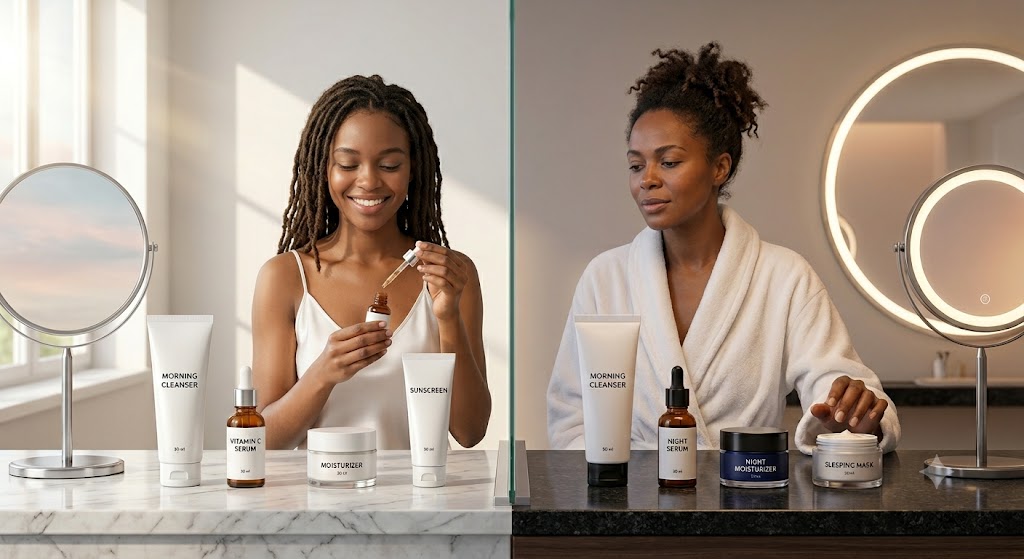
A simple morning routine can look like this:
Cleanser → Serum/Treatment → Moisturiser → Sunscreen
Sunscreen should generally be the final skincare step before makeup.
If you use active ingredients such as vitamin C, glycolic acid, salicylic acid or retinoids, consistent daytime sun protection becomes especially important because these products may be incorporated into routines targeting pigmentation, acne or skin texture.
Common Sunscreen Mistakes to Avoid
Using Too Little Sunscreen
Applying a tiny amount may not provide the protection indicated on the label. Generous application is essential.
Applying Sunscreen Only When It Is Very Sunny
UV radiation can still reach exposed skin on cloudy days. Make sunscreen part of your normal daytime routine when you expect to be outdoors.
Forgetting to Reapply
Sunscreen wears away through time, sweating, swimming and towelling. Reapply approximately every two hours while outdoors.
Choosing a Product Only Because It Has SPF 50
SPF is important, but it is not the only factor. Look for broad-spectrum protection, suitable texture, water resistance where needed and compatibility with your skin type.
Ignoring Your Neck and Ears
Your skincare routine should not stop at your jawline. Exposed areas such as the neck and ears also need protection.
Final Thoughts: Which Is the Best Sunscreen in Nigeria?
The best sunscreen in Nigeria depends on your skin type, budget, lifestyle and personal preference.
For oily skin, an oil-control or dry-touch sunscreen may be the most comfortable choice. For dry skin, a hydrating sunscreen may work better. Sensitive skin may benefit from a gentle mineral formula, while people concerned about hyperpigmentation may want to consider a tinted sunscreen containing iron oxide.
Among the options discussed, La Roche-Posay Anthelios UVMune 400, Eucerin Oil Control SPF50+, Bioderma Photoderm Aquafluide, NIVEA UV Face Shine Control, Neutrogena Ultra Sheer, CeraVe Mineral SPF50, Beauty of Joseon Relief Sun, Isntree Watery Sun Gel, SKIN1004 Hyalu-Cica Sun Serum and Garnier Super UV SPF50+ are all worth considering when shopping for daily sun protection.
Most importantly, choose a sunscreen you genuinely enjoy using. Consistent application is more useful than owning an expensive sunscreen that stays unopened in your bathroom cabinet.
Remember that sunscreen is only one part of sun protection. When possible, combine it with shade, protective clothing, a wide-brimmed hat and UV-protective sunglasses. Dermatologists recommend broad-spectrum, water-resistant sunscreen with SPF 30 or higher as part of a comprehensive approach to protecting your skin.
For Nigerian shoppers, always purchase sunscreen from reputable retailers and check the product’s packaging, expiry information and storage condition before use.



 Get it on
  Download on the