







Many aspiring farmers believe that livestock farming requires a huge investment, but that is not always true. With proper planning, the right livestock choice, and effective management, it is possible to Start an Animal Farming Business with Low Capital and build a profitable enterprise over time. Animal farming remains one of the most rewarding sectors in agriculture, providing opportunities for income generation, food production, and business growth.
For beginners, the key is to start small, minimize unnecessary expenses, and gradually expand operations as profits increase.
Why Consider Animal Farming?
Livestock farming offers several advantages for entrepreneurs with limited financial resources.
Benefits include:
- Steady income opportunities
- High demand for animal products
- Flexible startup options
- Business scalability
- Contribution to food security
- Employment creation
Many successful farmers began with only a few animals and expanded their operations through careful planning and reinvestment.
Choose the Right Livestock
One of the most important decisions when planning to Start an Animal Farming Business with Low Capital is selecting the appropriate livestock.
Some animals require less investment and management than others.
Poultry Farming
Poultry farming is often considered one of the easiest and most affordable livestock businesses to start.
Advantages include:
- Low startup costs
- Fast growth cycle
- Strong market demand
- Quick returns on investment
Rabbit Farming
Rabbit farming is suitable for beginners due to its low space and feeding requirements.
Benefits include:
- Rapid reproduction
- Minimal housing needs
- Affordable management costs
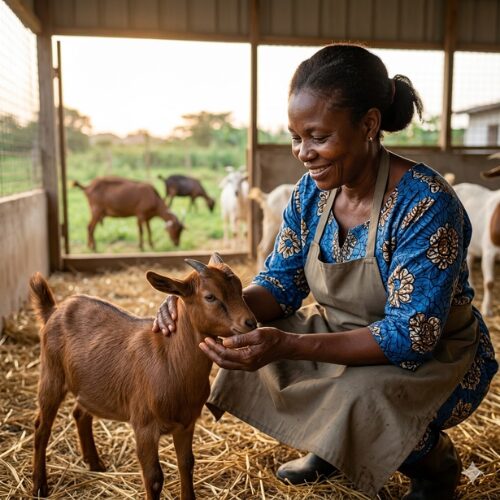
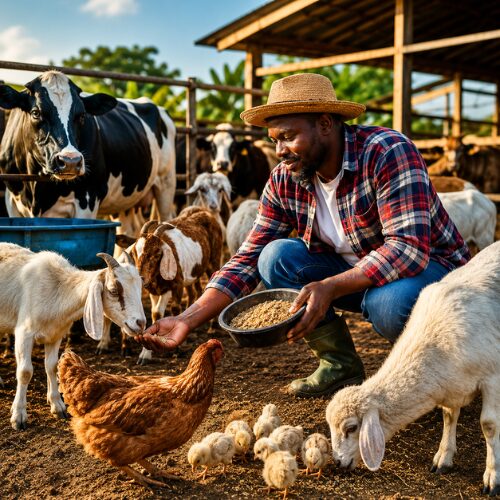
Goat Farming
Goats are hardy animals that adapt well to different environments.
Advantages include:
- Lower feeding expenses
- High market demand
- Easy management
Snail Farming
Snail farming requires relatively little capital and space.
Benefits include:
- Low maintenance costs
- Growing consumer demand
- Attractive profit margins
Choosing the right livestock can significantly reduce startup expenses and improve profitability.
Start Small and Grow Gradually
A common mistake among new farmers is trying to begin on a large scale.
Instead:
- Purchase a manageable number of animals
- Learn proper management techniques
- Build experience gradually
- Reinvest profits into expansion
Starting small reduces financial risks while providing valuable practical knowledge.
Use Available Resources
To successfully Start an Animal Farming Business with Low Capital, take advantage of resources already available to you.
Examples include:
- Family-owned land
- Existing farm structures
- Local feed sources
- Community support networks
Using available resources can help lower startup costs and improve profitability.
Create a Simple Business Plan
Even a small livestock operation should have a clear business plan.
Your plan should include:
Business Goals
Define what you want to achieve in the short and long term.
Budget
Estimate:
- Livestock purchase costs
- Feed expenses
- Housing requirements
- Veterinary costs
Marketing Strategy
Identify where and how you will sell your products.
A well-prepared plan helps guide decision-making and improve business performance.
Minimize Housing Costs
Animal housing does not need to be expensive when starting out.
Consider:
- Renovating existing structures
- Using locally available materials
- Building simple shelters
- Expanding facilities gradually
The goal is to provide a safe and comfortable environment without overspending.
Reduce Feed Expenses
Feed is often the largest recurring cost in livestock farming.
Ways to lower feed costs include:
Growing Your Own Feed
Cultivating grasses and forage crops can reduce feeding expenses.
Utilizing Agricultural By-Products
Some livestock can benefit from:
- Crop residues
- Kitchen waste (where appropriate)
- Agricultural processing by-products
Preventing Feed Waste
Proper storage and feeding systems help minimize losses.
Controlling feed costs is essential when attempting to Start an Animal Farming Business with Low Capital.
Focus on Animal Health
Healthy animals are more productive and profitable.
Basic health management practices include:
- Routine vaccinations
- Clean housing conditions
- Adequate nutrition
- Access to clean water
- Regular health monitoring
Preventive healthcare is usually less expensive than treating diseases after outbreaks occur.
Learn Modern Farming Practices
Knowledge is one of the most valuable assets for any farmer.
You can learn through:
- Agricultural workshops
- Online training programs
- Farming blogs
- Local extension services
- Experienced livestock farmers
Continuous learning helps improve productivity and reduce costly mistakes.
Develop Reliable Markets
Before expanding production, identify potential buyers for your products.
Potential markets include:
- Local consumers
- Restaurants
- Hotels
- Supermarkets
- Food processors
- Livestock traders
Having a reliable customer base improves cash flow and business stability.
Challenges of Starting with Low Capital
While affordable livestock farming is possible, challenges may arise.
Limited Resources
Small budgets may restrict expansion opportunities.
Feed Price Increases
Rising feed costs can affect profitability.
Disease Risks
Disease outbreaks can result in significant losses if not properly managed.
Market Competition
Competition may affect pricing and sales opportunities.
Proper planning and management can help overcome these challenges.
Tips for Long-Term Success
Farmers who want to grow their operations should:
Keep Accurate Records
Track:
- Expenses
- Income
- Breeding records
- Feed usage
Reinvest Profits
Use profits to improve infrastructure and increase livestock numbers.
Build Strong Relationships
Develop connections with suppliers, veterinarians, and customers.
Stay Consistent
Success in livestock farming requires patience and commitment.
These practices support sustainable business growth.
The Future of Small-Scale Animal Farming
The future looks promising for entrepreneurs who Start an Animal Farming Business with Low Capital. Growing demand for meat, eggs, milk, fish, and other animal products continues to create opportunities for small-scale farmers. Advances in technology, improved livestock breeds, and better farm management practices are making animal farming more accessible and profitable than ever before.
Conclusion
It is entirely possible to Start an Animal Farming Business with Low Capital by choosing affordable livestock, utilizing available resources, controlling costs, and focusing on proper animal management. Poultry, rabbits, goats, and snails are excellent options for beginners seeking low-cost entry into livestock farming. With dedication, continuous learning, and strategic reinvestment, small-scale farmers can gradually build profitable and sustainable animal farming enterprises that provide long-term income and growth opportunities.


 Get it on
  Download on the