






Introduction
For many businesses, purchasing cleaning machines often feels like a major financial commitment. Whether it’s an industrial vacuum cleaner, a floor scrubber, or a carpet cleaning machine, the upfront cost can seem high—especially for small and medium-sized businesses.
However, the real question is not:
“How much does this machine cost?”
But rather:
“What return on investment (ROI) will this machine deliver over time?”
In today’s fast-paced business environment—especially in cities like Lagos—efficiency, hygiene, and cost control are critical. This is where modern cleaning machines come into play.
In this article, we will break down the ROI of cleaning machines, explore real cost-benefit scenarios, and help you determine whether investing in cleaning equipment is truly worth it for your business.
📊 What Is ROI in Cleaning Equipment?
ROI (Return on Investment) measures how much value or profit you gain compared to the cost of your investment.
Simple ROI formula:
ROI=Net ProfitInvestment Cost×100ROI = \frac{\text{Net Profit}}{\text{Investment Cost}} \times 100
In the context of cleaning machines, ROI includes:
- Cost savings from reduced labor
- Increased efficiency
- Lower maintenance expenses
- Improved business productivity
- Enhanced customer satisfaction
👉 The higher the ROI, the more valuable the investment.
⚙️ 1. Initial Cost vs Long-Term Value
One of the biggest misconceptions is focusing only on the purchase price.
Upfront costs may include:
- Machine purchase price
- Delivery and setup
- Staff training
- Initial maintenance
However, these are one-time or short-term costs.
Long-term value includes:
- Reduced labor expenses
- Faster cleaning operations
- Lower recurring costs
- Improved durability
👉 Businesses that focus only on upfront cost often miss the bigger financial picture.
🏢 2. Labor Cost Reduction
Labor is one of the highest recurring costs in cleaning operations.
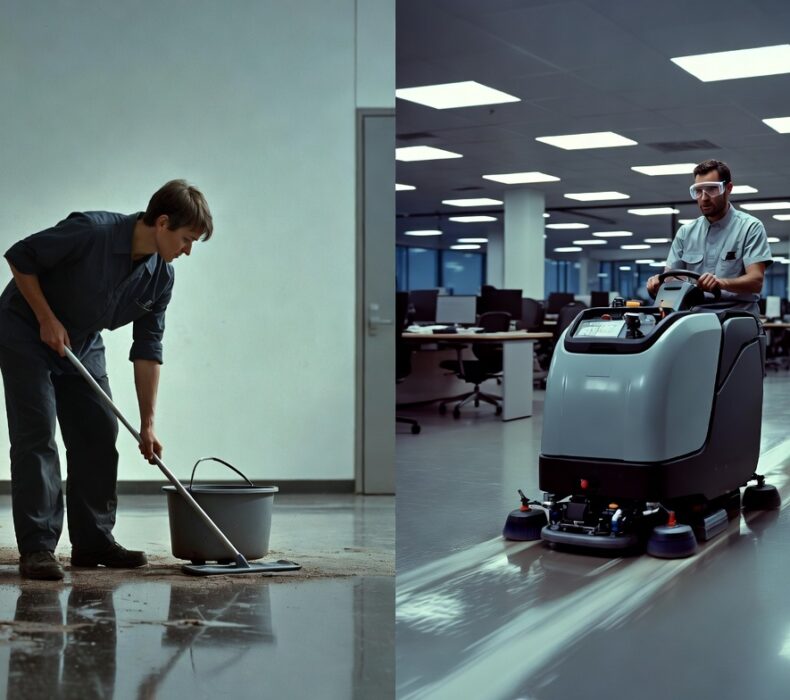
Without machines:
- More staff required
- Longer cleaning hours
- Increased payroll expenses
With machines:
- Fewer workers needed
- Faster cleaning
- Higher productivity per worker
Example Scenario:
A manual cleaning team may take 4 hours to clean a large office space.
A floor scrubber can reduce this to 1 hour.
👉 That’s a 75% time saving, which directly translates into cost savings.
⏱️ 3. Increased Cleaning Efficiency
Time is money in business.
Cleaning machines significantly improve efficiency by:
- Covering larger areas quickly
- Delivering consistent results
- Reducing repeat cleaning
Examples:
- Industrial vacuum cleaners clean carpets faster
- Floor scrubbers clean and dry simultaneously
- Pressure washers remove dirt instantly
👉 Efficiency leads to higher operational productivity.
🦠 4. Improved Hygiene and Business Reputation
Cleanliness is directly linked to brand perception.
Benefits of better hygiene:
- Healthier work environment
- Reduced spread of germs
- Improved customer experience
- Better employee satisfaction
In sectors like hospitality and healthcare, hygiene can directly impact revenue.
👉 Investing in professional cleaning equipment improves both safety and brand image.
💸 5. Reduced Long-Term Maintenance Costs
High-quality cleaning machines are built for durability.
Compared to manual tools:
- Less wear and tear
- Fewer replacements needed
- More consistent performance
Cheap tools often require frequent replacement, increasing long-term costs.
👉 Durable equipment reduces total cost of ownership.
🔄 6. Multi-Functionality and Versatility
Modern cleaning machines are designed to perform multiple functions.
Examples:
- Floor scrubbers that wash and dry
- Vacuum cleaners with wet and dry capabilities
- Steam cleaners that sanitize and clean
👉 One machine can replace multiple tools, reducing overall expenses.
🏨 7. ROI Across Different Industries
Offices:
- Faster daily cleaning
- Improved employee productivity
Hotels:
- Quick room turnaround
- Better guest experience
Hospitals:
- Improved infection control
- Compliance with hygiene standards
Warehouses:
- Efficient large-area cleaning
- Reduced dust accumulation
👉 ROI varies by industry but remains consistently high.
📈 8. Energy Efficiency and Cost Savings
Modern machines are designed to be energy-efficient.
Benefits include:
- Lower electricity consumption
- Reduced operational costs
- Sustainable business practices
👉 Energy-efficient machines contribute to long-term ROI.
🧠 9. Reduced Human Error
Manual cleaning often leads to:
- Inconsistent results
- Missed areas
- Overuse of cleaning chemicals
Machines provide:
- Consistent cleaning patterns
- Controlled usage of resources
- Standardized performance
👉 This improves quality and reduces waste.
🔐 10. Safety and Risk Reduction
Cleaning can be physically demanding and risky.
Machines reduce:
- Physical strain on workers
- Risk of workplace injuries
- Exposure to harmful chemicals
👉 Safer workplaces reduce liability and associated costs.
🧾 11. Real-Life Example: Business ROI
Scenario:
A business invests ₦1,500,000 in cleaning equipment.
Savings:
- Reduced labor costs: ₦100,000/month
- Reduced maintenance costs: ₦20,000/month
Annual savings:
₦120,000 × 12 = ₦1,440,000
👉 The investment pays for itself in about 12–15 months.
After that, it becomes profit.
🏢 12. Case Insight: Cleaneat Integrated Services
Companies like Cleaneat Integrated Services understand the value of investing in modern cleaning equipment.
By combining:
- Skilled workforce
- Advanced machines
- Efficient processes
They deliver high-quality cleaning while maintaining strong operational efficiency.
👉 This is a practical example of ROI-driven cleaning operations.
⚠️ 13. When Cleaning Machines May NOT Be Worth It
Although cleaning machines offer strong ROI, they may not be ideal in some cases:
- Very small spaces
- Low-frequency cleaning needs
- Limited budget without financing options
👉 In such cases, outsourcing to professional cleaning companies may be a better option.
🔮 14. Future ROI: Automation and Smart Cleaning
The future of cleaning machines includes:
- AI-powered automation
- Smart sensors
- Robotic cleaning systems
👉 These technologies will further increase ROI by reducing labor and improving efficiency.
🧾 Conclusion
So, are cleaning machines worth the investment?
👉 Yes—when chosen correctly and used effectively.
The ROI of cleaning machines comes from:
- Labor cost savings
- Increased efficiency
- Improved hygiene
- Reduced maintenance costs
- Better business performance
Instead of viewing cleaning equipment as an expense, businesses should see it as a strategic investment that delivers long-term value.
Related Posts:


 Get it on
  Download on the