



Swimming pools provide fun, relaxation, exercise, and recreation for people of all ages. However, they can also become locations for preventable accidents when safety precautions are ignored. One of the most common pool-related incidents involves slips and falls around wet surfaces. Implementing effective poolside slip prevention measures helps reduce injuries, protects facility users, and creates a safer environment for everyone.
At Cleaneat, we understand that swimming pool safety extends beyond water quality and cleanliness. The condition of pool decks, walkways, entry points, and surrounding areas plays a major role in preventing accidents. Whether the facility is located in a hotel, school, sports center, residential estate, or recreational club, safety should always remain a top priority.
Why Poolside Slips and Falls Are So Common
Water naturally creates slippery conditions around swimming pools. Every swimmer entering or leaving the pool carries water onto surrounding surfaces. Combined with heavy foot traffic, this increases the likelihood of slips and falls.
Unlike many workplace or public facility accidents, poolside incidents can occur within seconds. A person may lose balance while walking, running, climbing steps, or entering changing areas. Children are particularly vulnerable because they often move quickly around pool environments without recognizing hazards.
The good news is that most of these incidents can be prevented through proper planning, maintenance, and user education.
Understanding the Risks of Poolside Accidents
A slip may appear minor, but the consequences can sometimes be serious. Falls near pools can result in:
- Cuts and bruises
- Sprains and strains
- Head injuries
- Fractures
- Back injuries
- Emergency medical situations
Beyond physical injuries, accidents can create legal liabilities for facility owners and damage the reputation of the property.
Preventing accidents is therefore both a safety responsibility and a smart operational decision.
Common Causes of Poolside Slips and Falls
Understanding the root causes of accidents is the first step toward prevention.
Wet and Smooth Surfaces
Many pool decks become slippery when water accumulates on smooth flooring materials. Surfaces that lack proper grip increase the likelihood of falls.
Running Around the Pool
Children and even adults sometimes run around pool areas despite warning signs. Wet surfaces combined with speed create dangerous conditions.
Poor Drainage
Water that remains on walkways due to inadequate drainage systems creates persistent slip hazards.
Inadequate Lighting
Poor visibility makes it difficult for users to identify wet spots, obstacles, or uneven surfaces.
Lack of Maintenance
Cracked tiles, damaged flooring, loose covers, and neglected surfaces can contribute to accidents.
Improper Footwear
Walking barefoot or wearing unsuitable footwear can reduce traction and increase the risk of slipping.
Creating a Safety-First Pool Environment
The safest swimming facilities adopt a proactive approach rather than reacting after accidents occur.
A safety-first environment begins with identifying hazards before they cause injuries. Regular inspections help facility managers detect potential problems early and address them promptly.
Safety should be incorporated into every aspect of pool management, including design, maintenance, cleaning, signage, and user education.
Essential Poolside Slip Prevention Measures
Implementing effective poolside slip prevention measures requires a combination of physical improvements and behavioral controls.
No single solution can eliminate all risks. Instead, multiple safety practices should work together to create a safer environment.
Install Non-Slip Flooring
One of the most effective ways to reduce accidents is by using flooring materials specifically designed for wet environments.
Textured surfaces provide better grip and help users maintain stability even when the area is wet.
Improve Drainage Systems
Standing water should never be allowed to accumulate around pool decks.
Proper drainage channels help remove excess water quickly and reduce slippery conditions.
Conduct Routine Safety Inspections
Regular inspections allow facility managers to identify damaged flooring, loose tiles, blocked drains, and other hazards before they become dangerous.
Maintain Clear Walkways
Poolside areas should remain free of obstacles such as cleaning equipment, storage items, and furniture that could create tripping hazards.
Use Safety Signage
Visible signs reminding users not to run can significantly reduce risky behavior around the pool.
Signs should be placed at entrances, pool decks, and high-traffic areas.
Why Cleaning Plays a Major Role in Accident Prevention
Many people associate cleaning primarily with appearance. However, cleanliness also contributes directly to safety.
Dirt, algae, soap residue, sunscreen buildup, and other contaminants can make surfaces more slippery than water alone.
Regular cleaning helps maintain proper traction while improving the overall condition of poolside surfaces.
At Cleaneat, we view cleaning as an important component of risk management. Proper maintenance helps create environments that are both visually appealing and safer for users.
The Importance of Pool Design in Preventing Falls
Safety begins long before a pool opens to the public.
Well-designed pool facilities incorporate features that reduce accident risks from the start. These include:
- Slip-resistant deck materials
- Effective drainage systems
- Adequate lighting
- Safe stairways
- Clearly marked walking paths
- Handrails at entry and exit points
Design decisions have a long-term impact on safety performance.
Facilities that invest in safer infrastructure often experience fewer incidents over time.
Poolside Slip Prevention Measures for Children
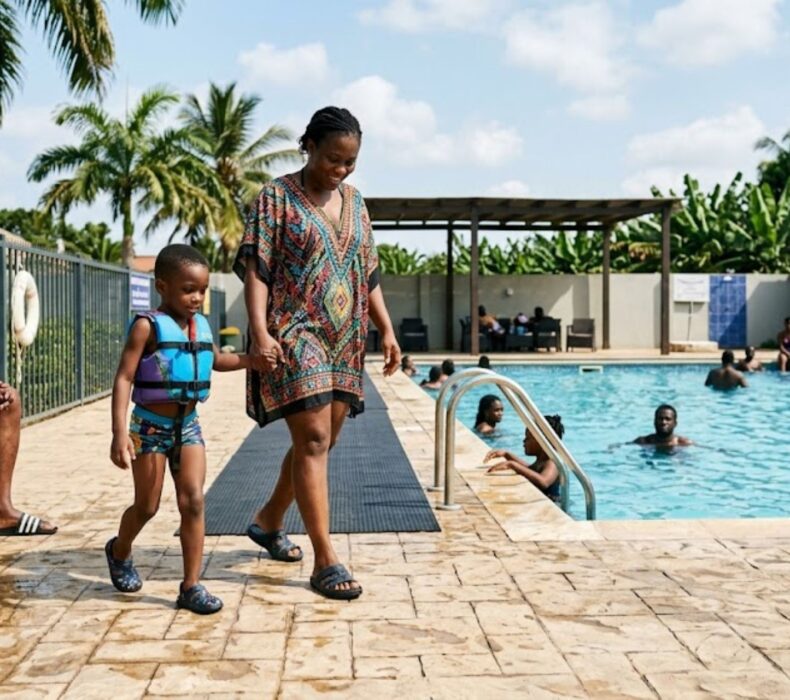
Children are among the most frequent users of swimming pools and often face the highest risk of slip-related injuries. Effective poolside slip prevention measures should therefore include child-focused safety strategies.
Parents and facility operators can improve safety by:
- Teaching children to walk instead of run
- Establishing pool safety rules
- Supervising children at all times
- Providing designated play areas away from slippery walkways
- Encouraging the use of appropriate footwear
Children learn through repetition and observation. Consistent safety messaging helps build responsible habits that can prevent accidents.
Training Staff to Identify Hazards
Facility employees play a critical role in accident prevention.
Staff members should be trained to recognize and address hazards immediately. This includes:
- Cleaning spills promptly
- Reporting damaged surfaces
- Monitoring user behavior
- Performing routine inspections
- Responding quickly to safety concerns
Well-trained staff act as an important layer of protection for facility users.
The Role of Visitors in Maintaining Pool Safety
Safety is a shared responsibility. Visitors also contribute to reducing accident risks.
Simple actions can make a significant difference, including:
- Following posted rules
- Walking carefully around the pool
- Wearing suitable footwear
- Reporting hazards to management
- Supervising children closely
When users cooperate with facility safety measures, the overall environment becomes safer for everyone.
Technology and Modern Safety Solutions
Many modern swimming facilities are adopting technology to improve safety.
Examples include:
- Slip-resistant surface coatings
- Water detection systems
- Enhanced drainage monitoring
- LED safety lighting
- Digital maintenance tracking systems
These innovations help facility managers identify and address risks more efficiently.
How Cleaneat Supports Safer Pool Environments
At Cleaneat, we understand that safety and cleanliness work hand in hand. Our professional cleaning services help swimming facilities maintain safe walking surfaces while supporting overall facility management goals.
Our team assists clients through:
- Poolside cleaning and maintenance
- Surface sanitation
- Drainage area cleaning
- Routine inspections support
- Preventive maintenance recommendations
By helping facilities maintain safer environments, we contribute to reducing accident risks and improving user confidence.
Conclusion
Slips and falls remain among the most common accidents around swimming pools, yet they are often preventable. Through proper facility design, regular maintenance, effective cleaning, user education, and consistent supervision, swimming facilities can significantly reduce accident risks.
Implementing strong poolside slip prevention measures protects children, adults, staff, and visitors while creating a more enjoyable swimming experience. At Cleaneat, we believe that every swimming facility should prioritize safety as highly as it prioritizes recreation, helping users enjoy the benefits of swimming with greater confidence and peace of mind.

 Get it on
  Download on the