Your dishwasher is designed to make kitchen cleanup easier, but improper use can shorten its lifespan and reduce its cleaning performance. Understanding the Common Dishwasher Mistakes That Can Damage Your Appliance can help you avoid costly repairs and keep your dishwasher running efficiently for years. Moreover, using your appliance correctly not only improves cleaning results but also saves water, energy, and money. Whether you own a built-in or freestanding dishwasher, avoiding these common mistakes will help you get the best performance from your investment.
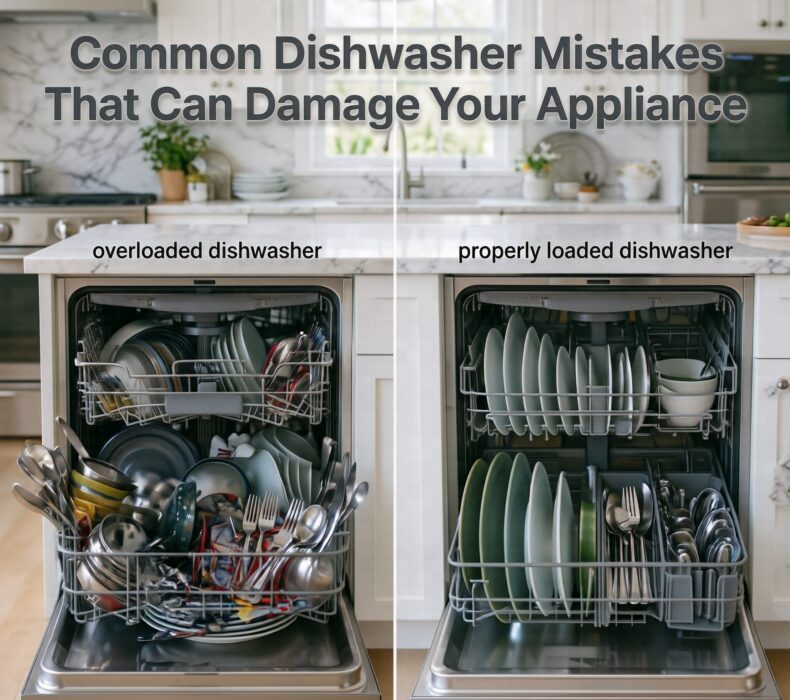
1. Overloading the Dishwasher
One of the most common mistakes homeowners make is overloading the dishwasher.
Although it may seem like a good way to wash more dishes at once, overcrowding prevents water and detergent from reaching every item properly. Consequently, dishes may come out dirty, and the appliance has to work harder.
Instead, leave enough space between plates, bowls, and utensils so water can circulate freely.
2. Not Scraping Off Food Residue
While modern dishwashers can handle small food particles, large leftovers should always be removed before loading.
Food scraps can clog the filter and spray arms over time. As a result, cleaning performance decreases, and unpleasant odors may develop inside the dishwasher.
Simply scrape excess food into the trash before placing dishes inside.
3. Using the Wrong Detergent
Using regular dishwashing liquid instead of dishwasher detergent is a serious mistake.
Hand-washing soap creates excessive foam, which can overflow and damage your appliance. Therefore, always use detergent specifically designed for automatic dishwashers.
Additionally, follow the manufacturer’s recommended amount to avoid detergent buildup.
4. Ignoring the Dishwasher Filter
Many people forget that the dishwasher filter requires regular cleaning.
Over time, grease, food particles, and debris collect in the filter, reducing water flow and cleaning efficiency.
To prevent this, remove and clean the filter at least once every week or according to the manufacturer’s instructions.
5. Blocking the Spray Arms
The spray arms distribute water throughout the dishwasher.
However, placing large pots, trays, or cutting boards incorrectly can block the spray arms from rotating.
Consequently, dishes may remain dirty after the wash cycle.
Always ensure nothing prevents the spray arms from moving freely.
6. Loading Dishes Incorrectly
Proper loading makes a significant difference in cleaning performance.
For example:
Place plates facing the center.
Put cups upside down.
Position bowls at an angle.
Separate spoons and forks.
Keep large utensils away from spray arms.
Correct loading allows water to reach every surface effectively.
7. Running Half-Empty Loads Too Often
Although it may be tempting to run the dishwasher after every meal, doing so wastes water and electricity.
Instead, wait until the dishwasher is reasonably full unless your appliance has a Half Load setting. This simple habit improves efficiency and reduces operating costs.
8. Forgetting Regular Cleaning
Even though a dishwasher cleans dishes, it also needs cleaning.
Grease, detergent residue, and mineral deposits gradually build up inside the appliance.
Therefore, run a dishwasher cleaning cycle once a month using a recommended dishwasher cleaner to keep the interior fresh and functioning efficiently.
9. Using Too Much Detergent
More detergent does not always mean cleaner dishes.
In fact, excessive detergent can leave residue on dishes and inside the dishwasher. Furthermore, it may reduce washing efficiency over time.
Always measure detergent according to the manufacturer’s guidelines.
10. Neglecting the Door Seals
The rubber seals around the dishwasher door help prevent leaks.
However, dirt and food particles often accumulate around these seals.
Regularly wiping them with a soft cloth keeps them clean and extends their lifespan.
11. Washing Items That Are Not Dishwasher Safe
Not every kitchen item belongs inside a dishwasher.
Avoid washing:
Wooden utensils.
Cast iron cookware.
Sharp kitchen knives.
Fine crystal.
Certain plastics without dishwasher-safe labels.
Delicate non-stick cookware if the manufacturer advises against it.
Washing unsuitable items may damage both the items and your dishwasher.
12. Ignoring Hard Water Problems
Hard water can leave mineral deposits inside your dishwasher and on your dishes.
Over time, these deposits reduce cleaning performance and may affect important components.
If you live in an area with hard water, use dishwasher salt or a suitable rinse aid if recommended for your appliance.
13. Skipping Routine Maintenance
Routine maintenance is essential for keeping your dishwasher in excellent condition.
Regularly inspect:
Spray arms.
Filters.
Water inlet.
Drain hose.
Door seals.
Interior walls.
Small maintenance tasks can prevent major repairs in the future.
14. Ignoring Unusual Noises or Leaks
If your dishwasher suddenly becomes noisy or starts leaking, do not ignore the problem.
Addressing minor issues early can prevent expensive repairs later. Therefore, inspect the appliance promptly or contact a qualified technician if necessary.
Tips to Extend Your Dishwasher’s Lifespan
To keep your dishwasher working like new:
Load dishes correctly.
Clean the filter regularly.
Use the correct detergent.
Avoid overloading.
Run monthly cleaning cycles.
Inspect spray arms.
Wipe door seals.
Perform routine maintenance.
Follow the manufacturer’s care instructions.
These simple habits improve performance and help your appliance last much longer.
Conclusion
Understanding the Common Dishwasher Mistakes That Can Damage Your Appliance is the first step toward protecting your investment. By avoiding common errors such as overloading, using the wrong detergent, neglecting routine cleaning, and blocking the spray arms, you can enjoy better cleaning results and extend the life of your dishwasher.












 Get it on
  Download on the