






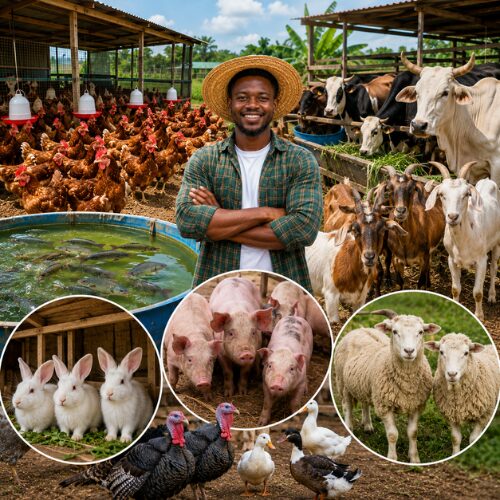
Nigeria’s growing population and increasing demand for animal products have created enormous opportunities in the livestock sector. Entrepreneurs and farmers looking to invest in agriculture can benefit significantly from Profitable Animal Farming Businesses that generate consistent income and support food security. With proper planning, management, and market access, animal farming can become a highly rewarding venture.
Whether you’re a beginner or an experienced farmer seeking diversification, several livestock enterprises offer excellent profit potential in Nigeria.
Why Invest in Animal Farming in Nigeria?
Animal farming remains one of the most lucrative sectors in Nigerian agriculture due to:
- High demand for animal protein
- Growing population
- Expanding food industry
- Employment opportunities
- Quick return on investment in some livestock sectors
- Government support for agriculture
These factors make livestock production one of the most attractive agribusiness opportunities in the country.
1. Poultry Farming
Poultry farming is one of the most popular and Profitable Animal Farming Businesses in Nigeria. Farmers raise chickens for meat (broilers) or egg production (layers).
Benefits
- High market demand
- Relatively low startup capital
- Fast growth cycle
- Multiple income streams
Products include:
- Eggs
- Chicken meat
- Day-old chicks
- Poultry manure
2. Fish Farming
Fish farming, particularly catfish production, continues to thrive due to increasing demand for fish across Nigeria.
Benefits
- Strong market demand
- Fast production cycles
- Suitable for small and large-scale operations
- High profit margins
Popular fish species include:
- Catfish
- Tilapia
- Heterobranchus
3. Goat Farming
Goat farming is increasingly recognized among Profitable Animal Farming Businesses because goats require relatively low maintenance and adapt well to various climates.
Benefits
- Low feeding costs
- High reproductive rates
- Growing demand for goat meat
- Suitable for small-scale farmers
Goat meat remains highly consumed in many Nigerian communities.
4. Pig Farming
Pig farming offers excellent income potential because pigs grow quickly and reproduce efficiently.
Benefits
- Rapid growth rate
- Large litter sizes
- High feed conversion efficiency
- Strong market demand
Pig farming can generate substantial profits when properly managed.
5. Cattle Farming
Cattle farming remains one of the largest livestock sectors in Nigeria.
Farmers raise cattle for:
- Beef production
- Dairy production
- Breeding purposes
Benefits
- High-value products
- Strong market demand
- Long-term profitability
- Multiple revenue streams
Although startup costs can be higher, cattle farming offers significant long-term returns.
6. Rabbit Farming
Rabbit farming is becoming increasingly popular due to its low space requirements and fast reproduction rates.
Benefits
- Low startup costs
- Rapid breeding
- High-quality meat
- Easy management
Rabbit meat is gaining popularity among health-conscious consumers.
7. Sheep Farming
Sheep farming provides opportunities for meat production and breeding operations.
Benefits
- Adaptability to local conditions
- Relatively low maintenance
- Consistent market demand
- Efficient grazing habits
Sheep are particularly popular during festive and religious celebrations.
8. Snail Farming
Snail farming, also known as heliciculture, is one of the emerging Profitable Animal Farming Businesses in Nigeria.
Benefits
- Low capital investment
- Minimal space requirements
- High market value
- Export opportunities
Snail meat is valued for its nutritional benefits and growing consumer demand.
9. Turkey Farming
Turkey farming is another lucrative poultry enterprise that offers higher profit margins than conventional chicken production.
Benefits
- Premium market prices
- Growing demand
- Disease resistance
- Attractive profit potential
Turkey meat is especially popular during festive periods.
10. Duck Farming
Duck farming provides opportunities for meat and egg production.
Benefits
- Hardy birds
- Lower disease susceptibility
- Efficient feeding habits
- Multiple income sources
Duck products serve niche markets and can provide attractive returns.
Factors to Consider Before Starting an Animal Farming Business
Before investing in livestock production, farmers should evaluate several important factors.
Market Demand
Research local demand for livestock products before choosing a farming enterprise.
Capital Requirements
Different animal farming ventures require varying levels of investment.
Available Land
Ensure sufficient space for housing and managing livestock.
Feed Availability
Reliable feed supply is critical for maintaining productivity and profitability.
Animal Health Management
Investing in proper veterinary care helps prevent disease outbreaks and production losses.
Challenges Facing Animal Farming in Nigeria
While livestock farming offers excellent opportunities, farmers may face certain challenges.
Rising Feed Costs
Feed expenses often represent the largest operating cost.
Disease Outbreaks
Animal diseases can significantly affect production and profits.
Security Concerns
Some livestock farmers face challenges related to theft and farm security.
Climate Change
Changing weather patterns can impact animal health and feed availability.
Proper planning and risk management can help farmers overcome these obstacles.
Tips for Success in Profitable Animal Farming Businesses
To maximize success:
Start Small
Begin with a manageable number of animals and expand gradually.
Maintain Proper Records
Track expenses, production levels, breeding records, and sales.
Invest in Quality Stock
Healthy animals improve productivity and profitability.
Learn Modern Farming Techniques
Stay informed about industry best practices and emerging technologies.
Focus on Biosecurity
Implement measures to prevent disease outbreaks and protect livestock.
These strategies can help farmers build sustainable and profitable operations.
The Future of Animal Farming in Nigeria
The future of Profitable Animal Farming Businesses in Nigeria remains promising. Growing demand for animal protein, technological advancements, improved breeding programs, and government support for agriculture continue to create new opportunities for livestock farmers.
As more Nigerians embrace agribusiness, animal farming will remain a key contributor to food security, employment, and economic development.
Conclusion
Investing in Profitable Animal Farming Businesses can provide a reliable source of income while contributing to Nigeria’s agricultural growth. From poultry and fish farming to goat, cattle, pig, and snail production, numerous opportunities exist for aspiring farmers. By choosing the right livestock enterprise, adopting modern management practices, and focusing on animal health, entrepreneurs can build successful and sustainable farming businesses in 2026 and beyond.






 Get it on
  Download on the